The Article
STUDIO 89 SPEAKERS REVIEW FROM MONITOR AUDIO
14th July 2026
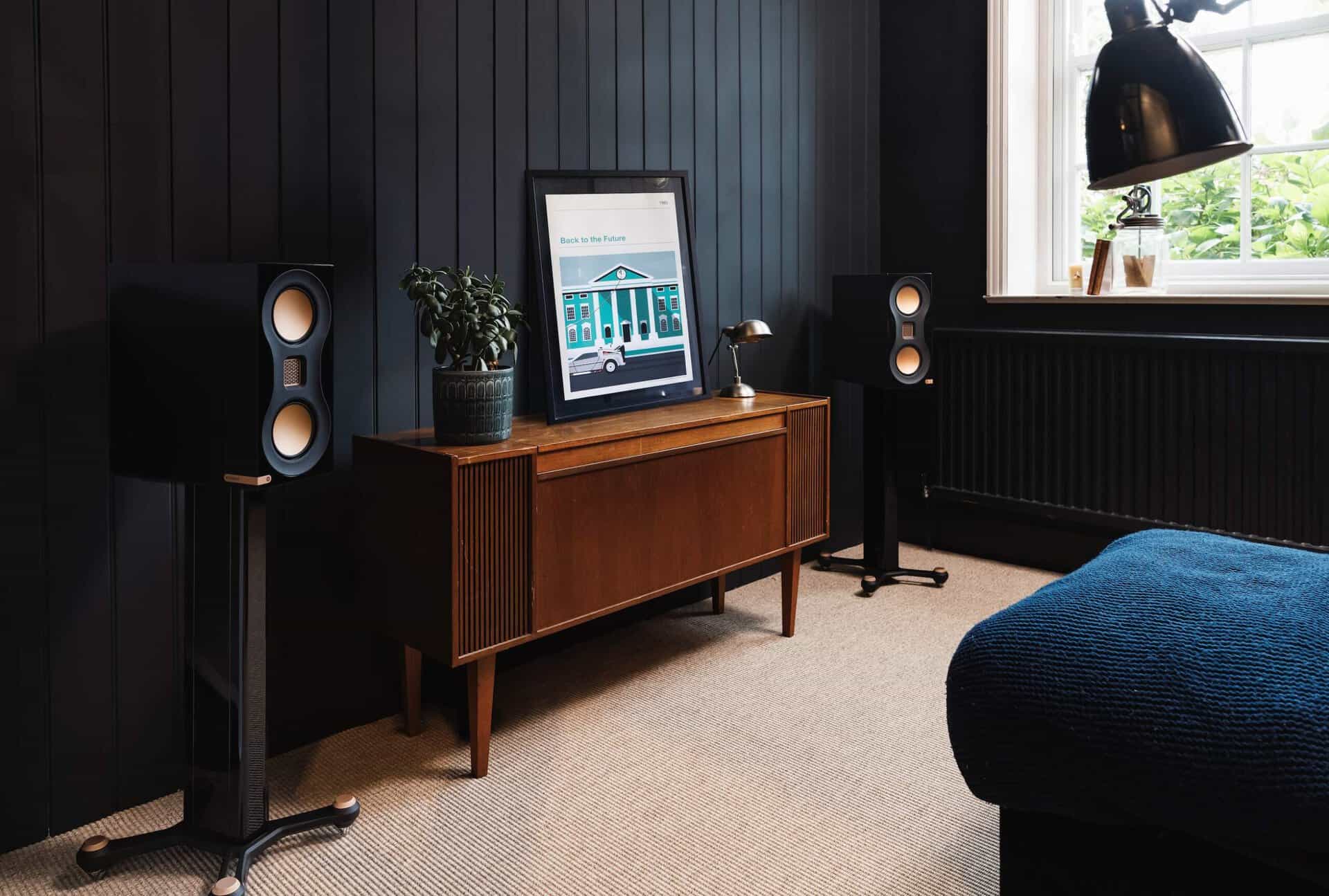
Harking back to Monitor Audio’s studio past with design and tech elements derived from the high-end Hyphn speakers, Paul Rigby comes over all D’Appolito
Dappa whatee? It’s the basic layout of the drivers on the front of these speakers. Invented by audio engineer Joseph D’Appolito.
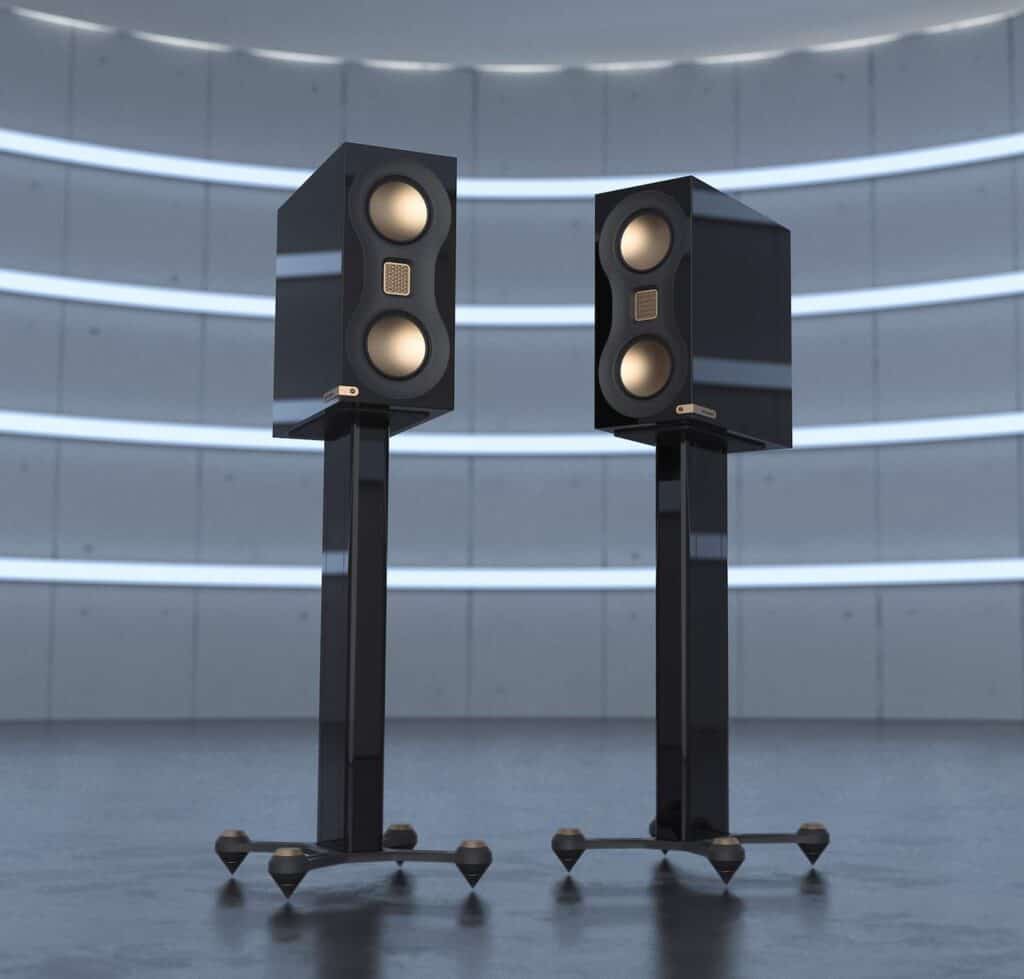
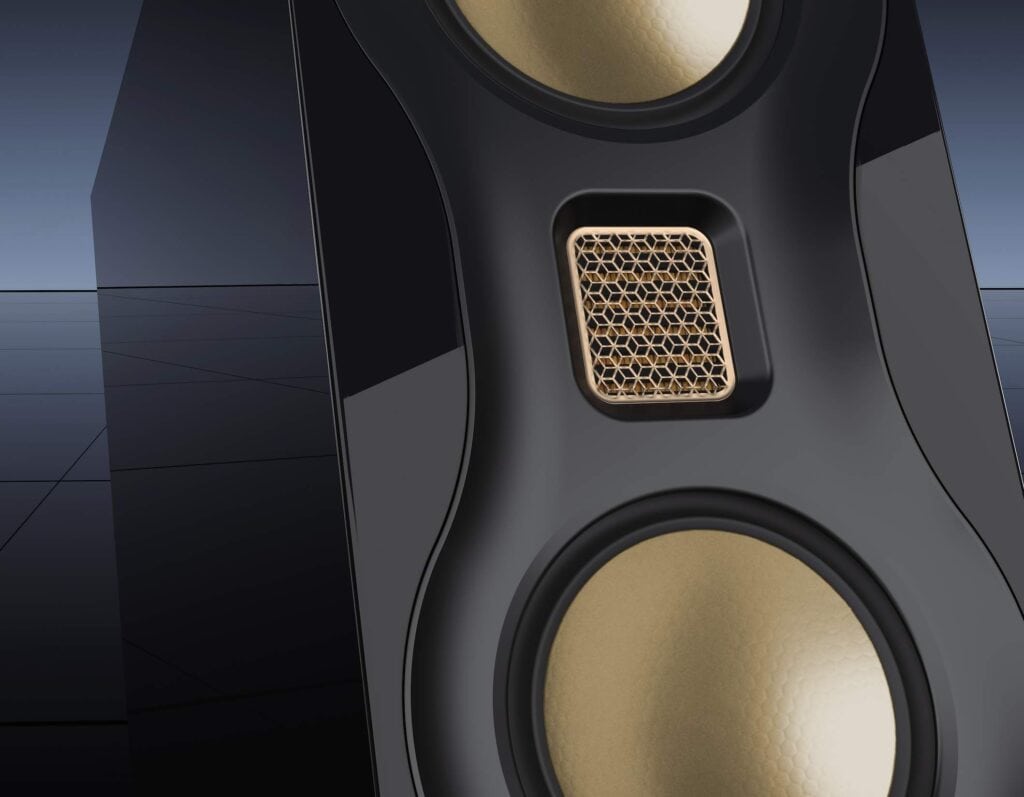
The D’Appolito configuration inserts a single tweeter between two identical mid-range or mid-bass drivers. The latter in this case. The idea is to narrow sound dispersion while increasing its accuracy, it’s also supposed to enhance imaging and reduce sound reflections.
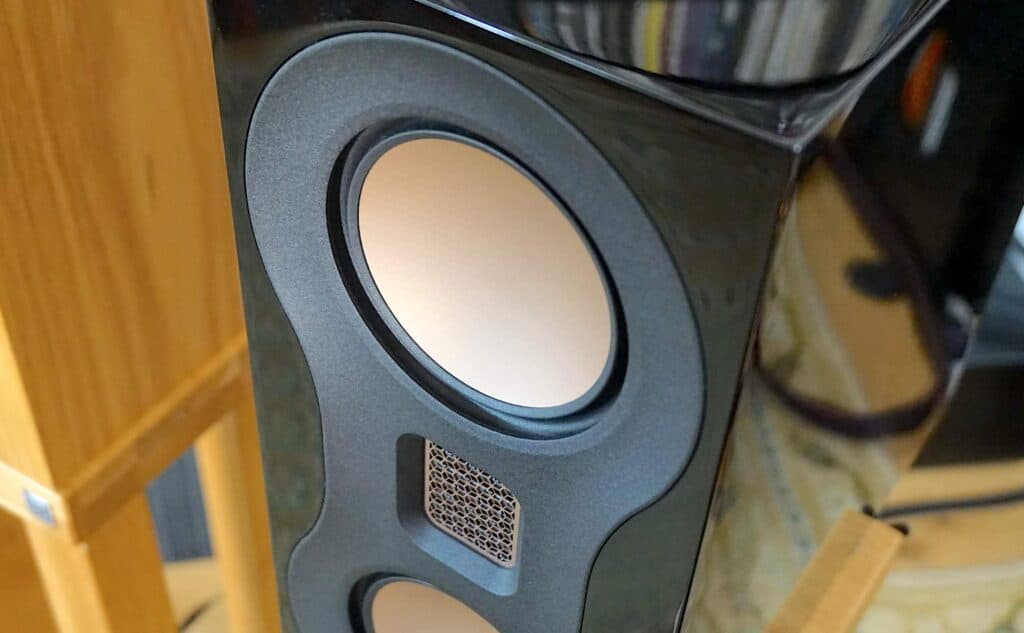
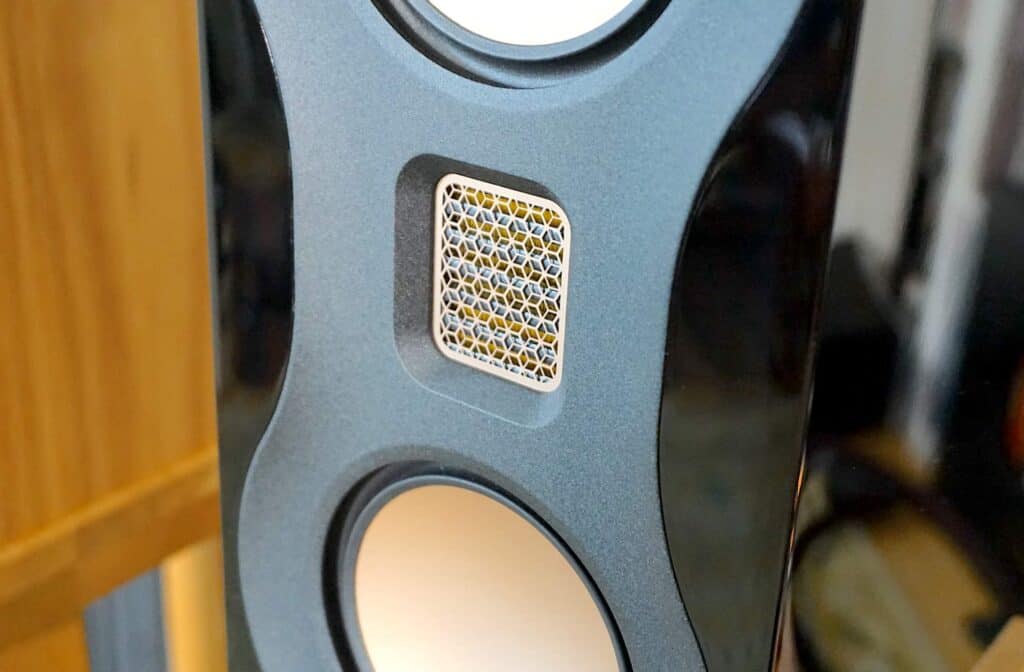
The tweeter is a rather lovely MPD (Micro Pleated Diaphragm) tweeter the company’s own AMT (Air Motion Transformer). The company says that the tweeter’s dispersion characteristics are even. That’s down to the waveguide and tweeter grille taken from the the flagship Hyphn speakers.
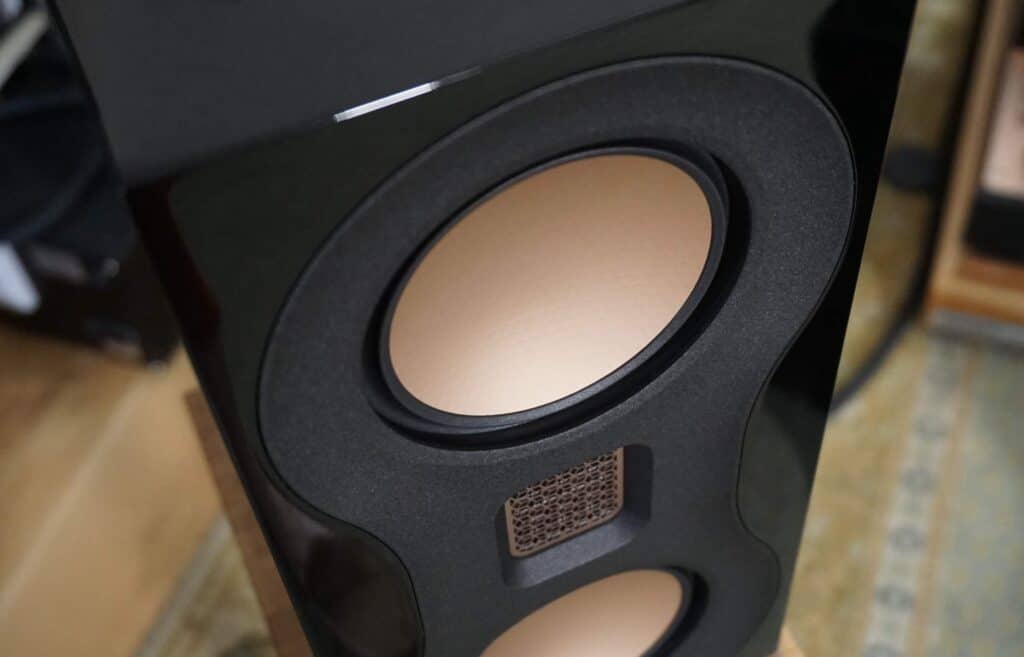
Also mounted within the aluminium front baffle, are two 108mm RDT III C-CAM mid/bass drivers featuring a Nomex honeycomb core sandwiched between a ceramic-coated aluminium magnesium layer and a carbon-fibre weave.
SLOTS AND BASS
Part of the reason you have two of these units is down to the tower-like design of the cabinet. This is a slim design, much slimmer than you’re basic stand-mounted speaker cabinet.
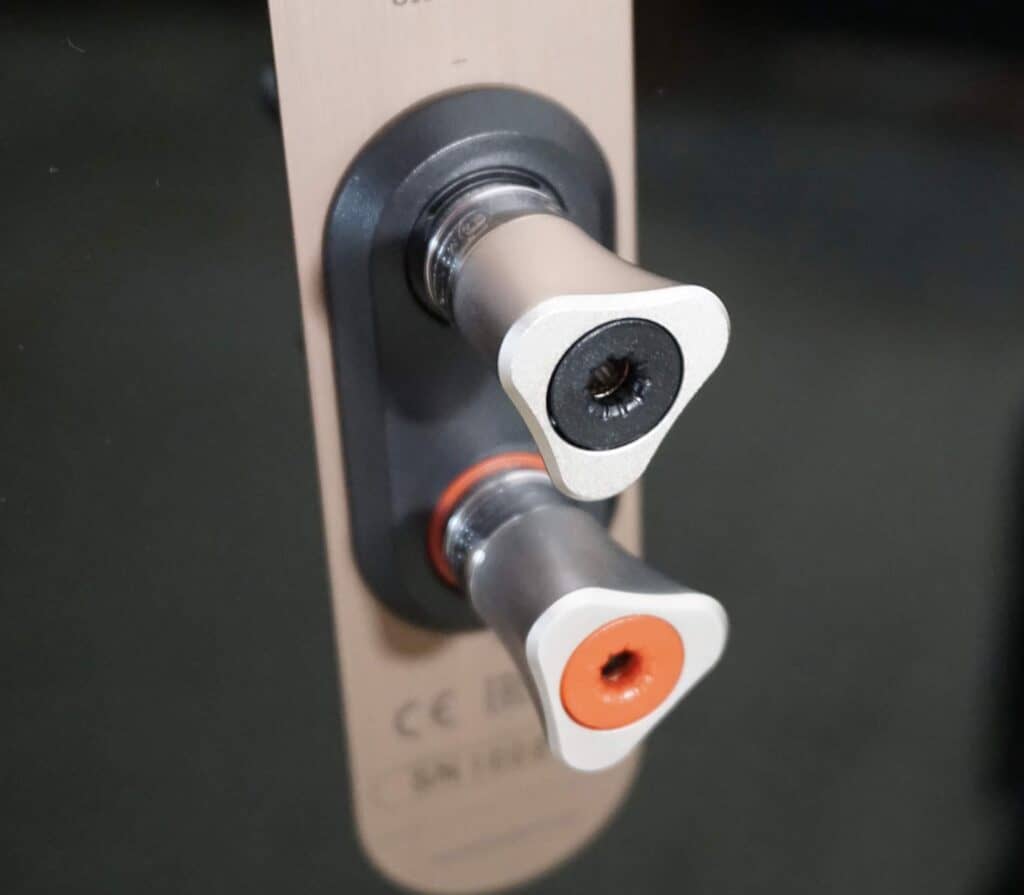
Bass is enhanced via two rear-firing bass slots. Two long bolts run inside this cabinet, front to back, to both compress the cabinet and to add rigidity.
Sensitivity is a basic 86db into 6 Ohms. In terms of an amplifier to run these speakers? Look at a unit pushing out 50W or more.
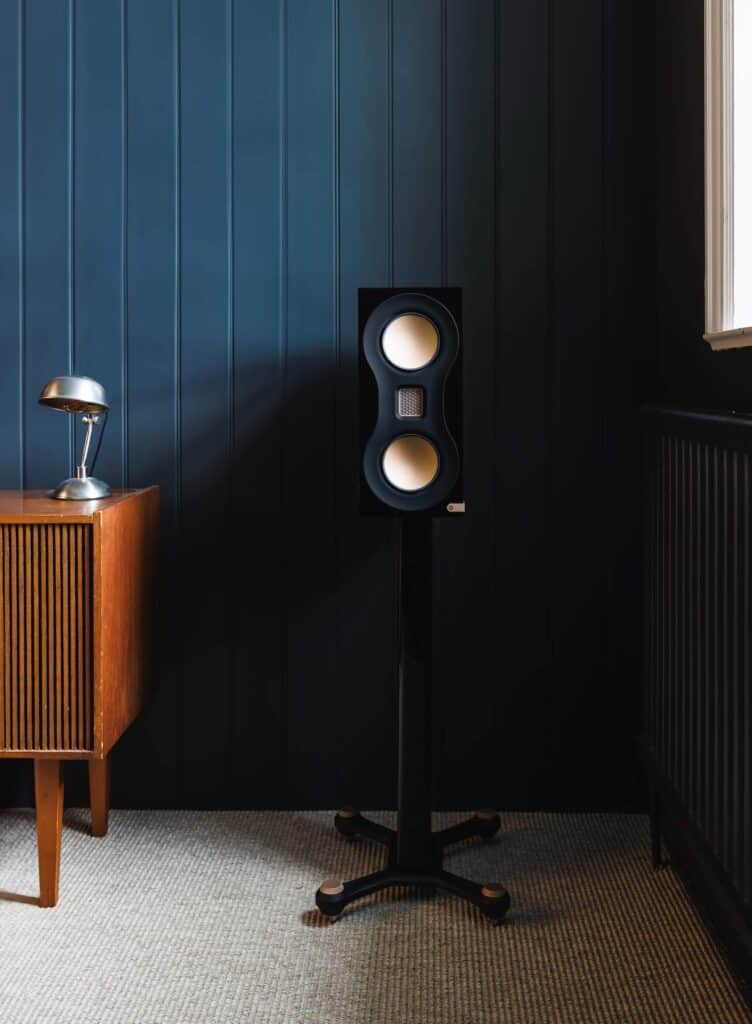
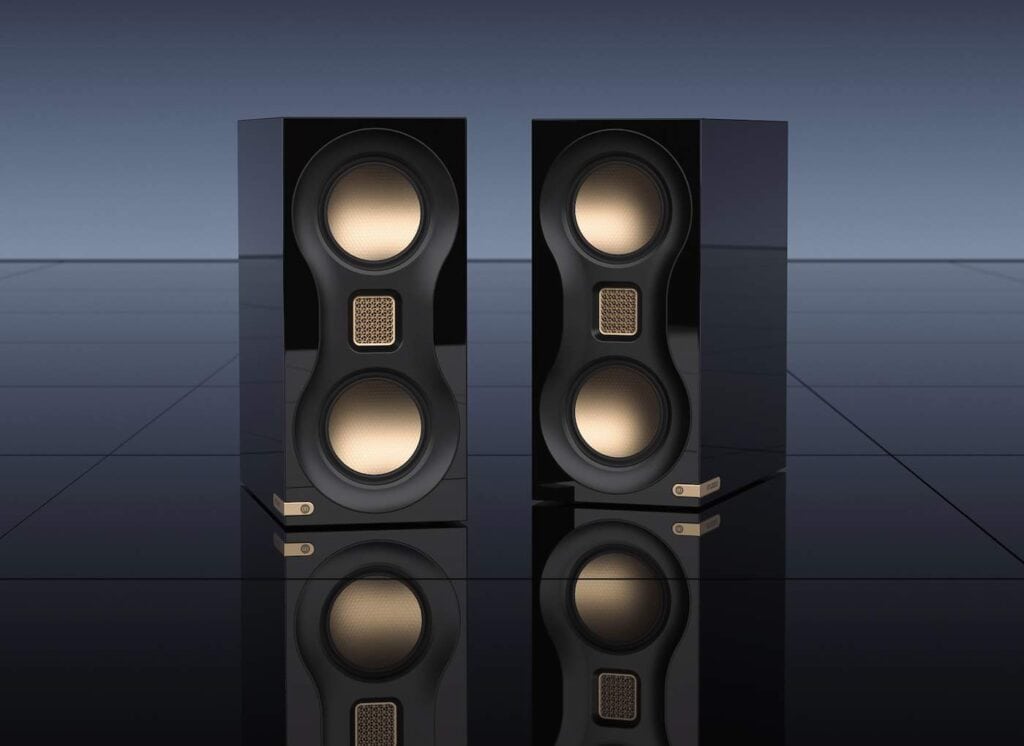
In terms of build and looks? I like these speakers. They look stylish, well made and rather elegant. A little name badge on the front extends to the side of the cabinet giving a boutique look to the finish while the rhodium-plated speaker terminals add a stylish flourish.
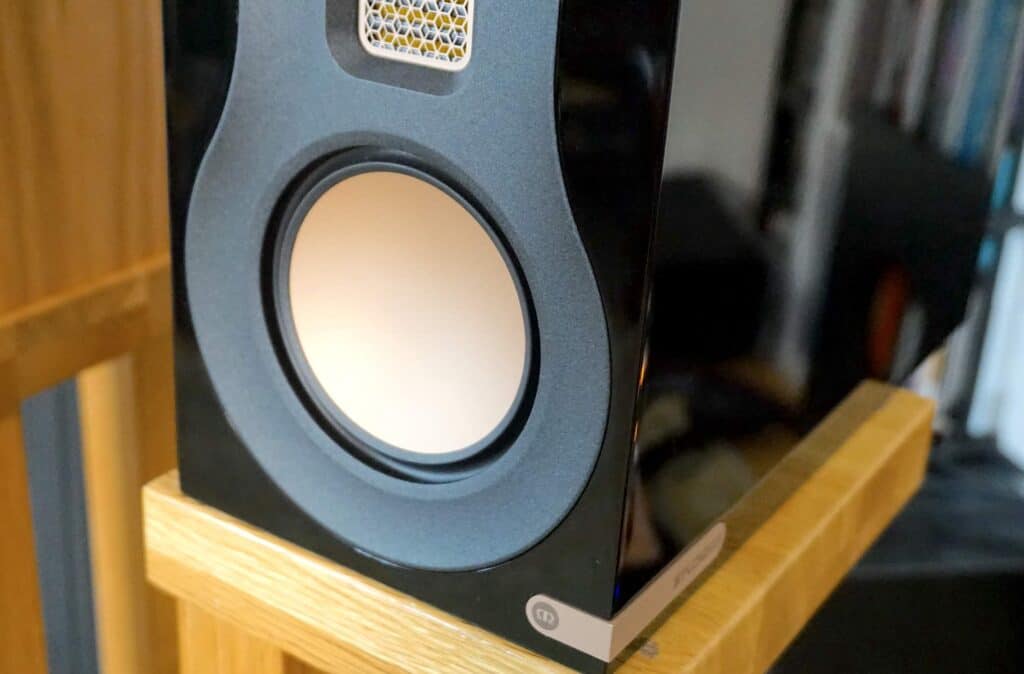
Available in black with gold drivers, spanning 340 x 157 x 361mm and weighing 7.6kg each there are stands available to match these speakers priced at £500, €600 or $625. I didn’t have those to review. Saying that, I preferred to use my own stands to remove a variable during sound testing.
So how do these speakers sound? Let’s have a listen.
SOUND QUALITY
I started with Lena Horne via CD and the album The Best Of…The United Artist & Blue Note Recordings and the track Prelude to a Kiss.
VS MARTIN LOGAN MOTION 15i
As a reference, I brought in my Martin Logan Motion 15i speakers priced, at the time of their review, around £800. If these speakers had not been discontinued, they would now be priced at a comparable price to the Studio 89s, I reckon. They also include an AMT tweeter, so I wondered how they would compare.
To begin, I was impressed by the Studio 89’s balanced output. There was a great deal of control from the output plus discipline across the frequency spectrum so nothing was out of place in sonic terms. Even with that control, there was plenty of midrange insight and nuance. The brushed drum strokes, for example provided much more information than the Martin Logans. The movement of the brushes themselves were better tracked.
Treble via the fragile cymbal work was also better focused. The tightness of the cymbal output here gave percussion as a whole a more mobile and sprightly presentation.
That mobility spanned across to the acoustic guitar which provided precision during string plucks. Bass guitar was also tighter and more characterful while the harmonica sat within an extended cloud of reverb.
I also felt that Lena Horne’s vocal provided more authority. The Martin Logans could be a little loose right at the edge of the upper mids. The Studio 89s retained that authority even during these extremes.
VS SPENDOR A1
When I fired up vinyl, the Studio 89s really sprang to life. They loved the high-resolution sound output and surprised me with the quality of detail on offer. For the first time, I was hearing the backing vocals separated from the lead, the first time I was hearing banks of violins bathed in reverb, the first time I was hearing fine detail from the tambourine. The host of extra small detail enhancements transformed this track from one of simple joy to one of fascination.
Add to that the overall sound of authority from these speakers, a sense of warmth that was not sepia coloured. I don’t mean warmth in 70s studio terms but a warmth that spoke of confidence and authority. Warmth that derives from a pair of safe hands. Warmth that can only come from speakers that truly allow you to relax.You know from the off that these speakers will never let you down. There’s a belief and conviction from these speakers that makes you excited to put on a new album. You look forward to new sonic discoveries. And believe me, you will be making plenty of those from your tried and trusted album collection with these Studio 89s.
CONCLUSION
As soon as I saw these speakers I fell in love with them in pure aesthetic terms. I was actually afraid to hear them, to be honest because I wondered if they might disappoint me when it came down to sound testing.
As it turned out, the sound impressed me even more than the looks. The balanced overall sound, the detail and the authority. After a while, you forget about the component parts of the sound. You forget about the speakers as HiFi components. You focus only on the music. Which is how it should be. There can be no higher praise then that.
That is, in sound terms? I didn’t really care. I was having too much fun listening to my music to be bothered with bits of HiFi kit. That’s how good these speakers sound.
Prefer a video review? Click below:
MONITOR AUDIO STUDIO 89 SPEAKERS
Prices: £2,000, €2,350 or $2,500
Website: www.monitoraudio.com
GOOD: balanced overall sound, integrated bass, midrange clarity, focused treble
BAD: nothing
RATING: 9

Reviewed by Paul Rigby — Hi-Fi journalist and editor for over 38 years

Don’t forget to check out my Patreon Page at www.patreon.com/audiophileman, for exclusive postings and more!]
OTHER REFERENCE KIT
Origin Live Sovereign turntable
Origin Live Enterprise 12″ arm
Icon PS3 phono amplifier
Aesthetix Calypso pre-amp
Icon Audio MB845 Mk.II Monoblock Amplifiers
Quad ESL57 Electrostatic Speakers
Blue Horizon Professional Rack System
Harmonic Resolution Systems Noise Reduction Components
All vinyl was cleaned via a Degritter Mk.II
Stack Audio AUVA 50 Isolation Feet
Soundeck DF Damping Feet Mk.II Mini