
The Article
HYPER RCA R1 INTERCONNECTS FROM ATLAS
6th May 2026
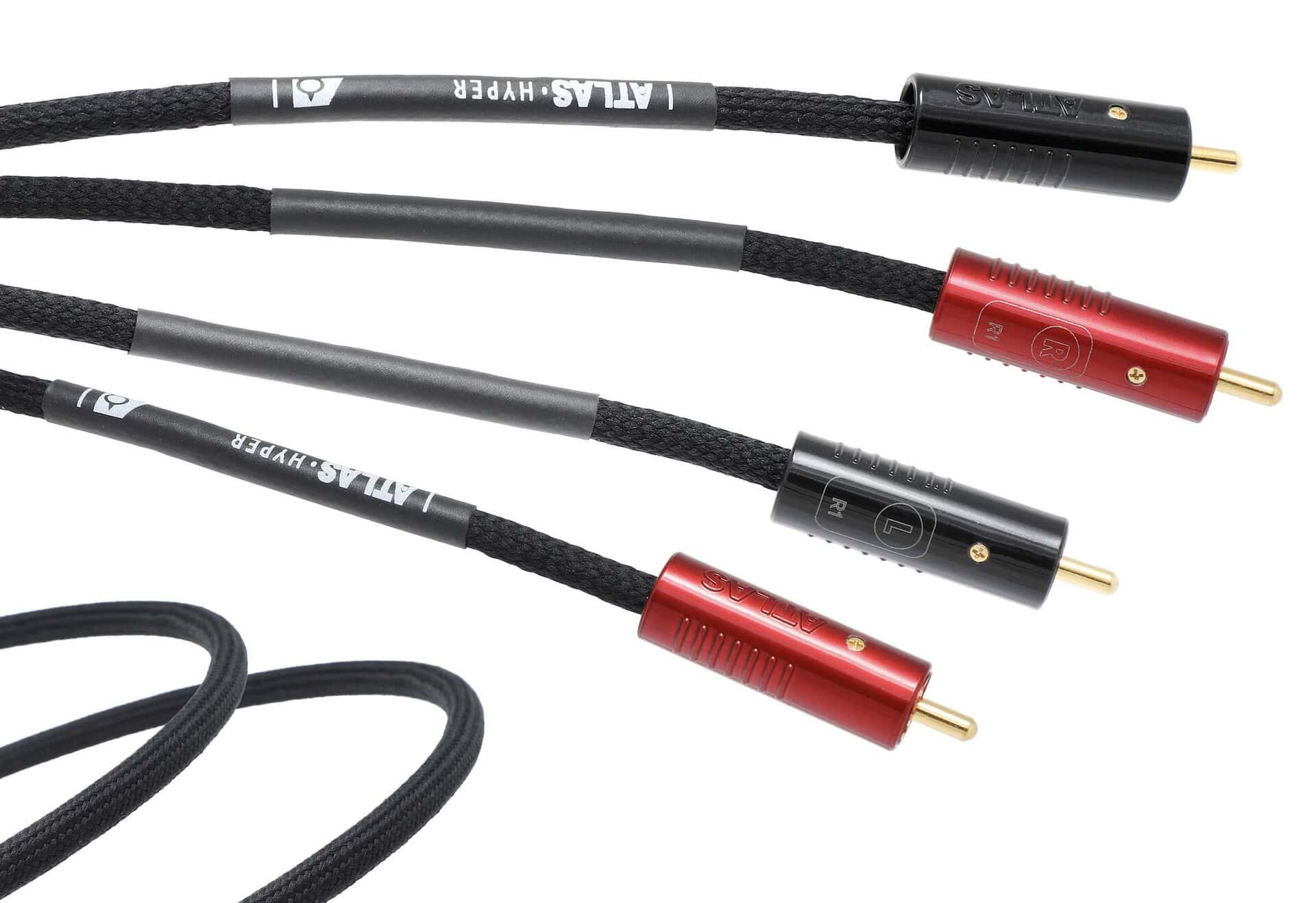
Direct from the Scottish outfit Atlas, these rather svelte interconnect cables proved to be a minor revelation to Paul Rigby
A long-established, high-respected HiFi outfit of many years standing, well the year 2000 to be exact, this Scottish outfit has been pushing cables from its base in Kilmarnock, Ayrshire to just about every variation you might wish to consider and across all price points.
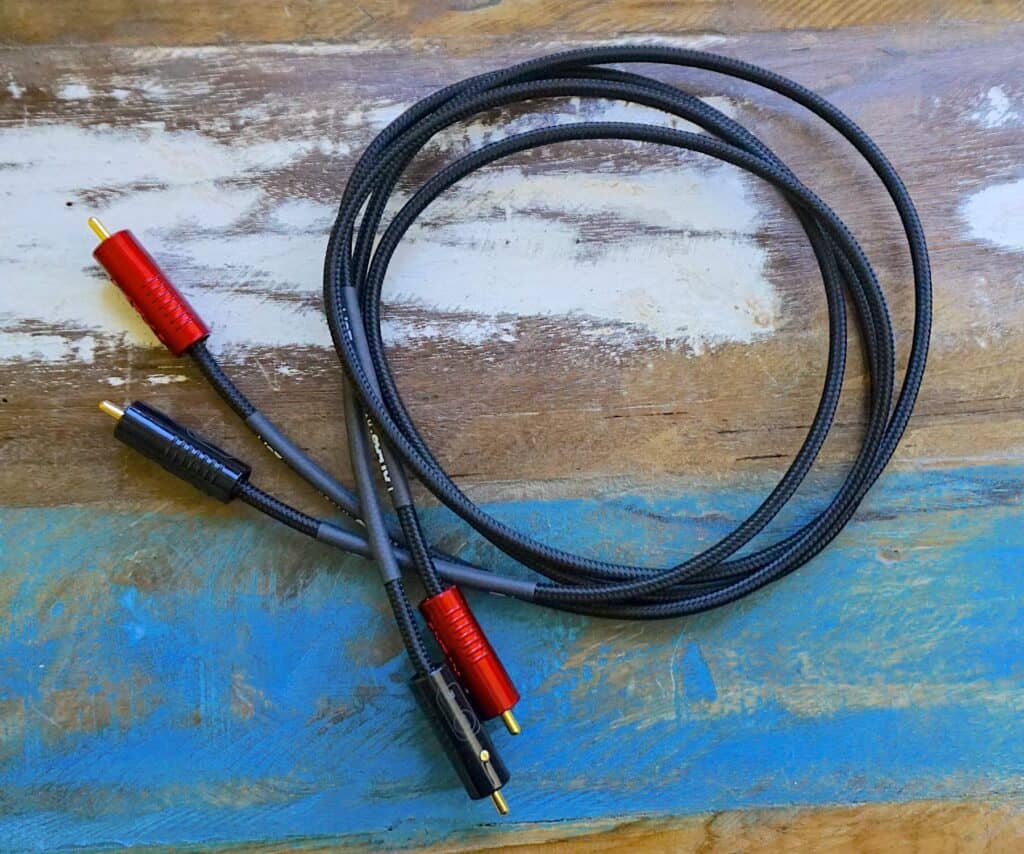
This time around, I’m looking at single-ended interconnects utilising OCC (Ohno Continous Casting) high purity copper conductors with a PEF (Foamed Polyethylene) dielectric. The idea is to keep RFI (Radio Frequency Interference) out and the music in.
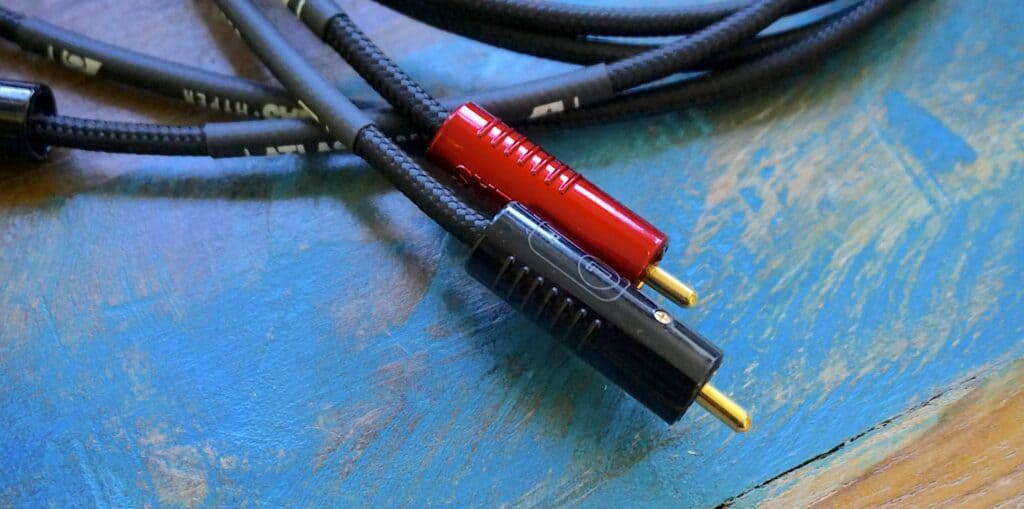
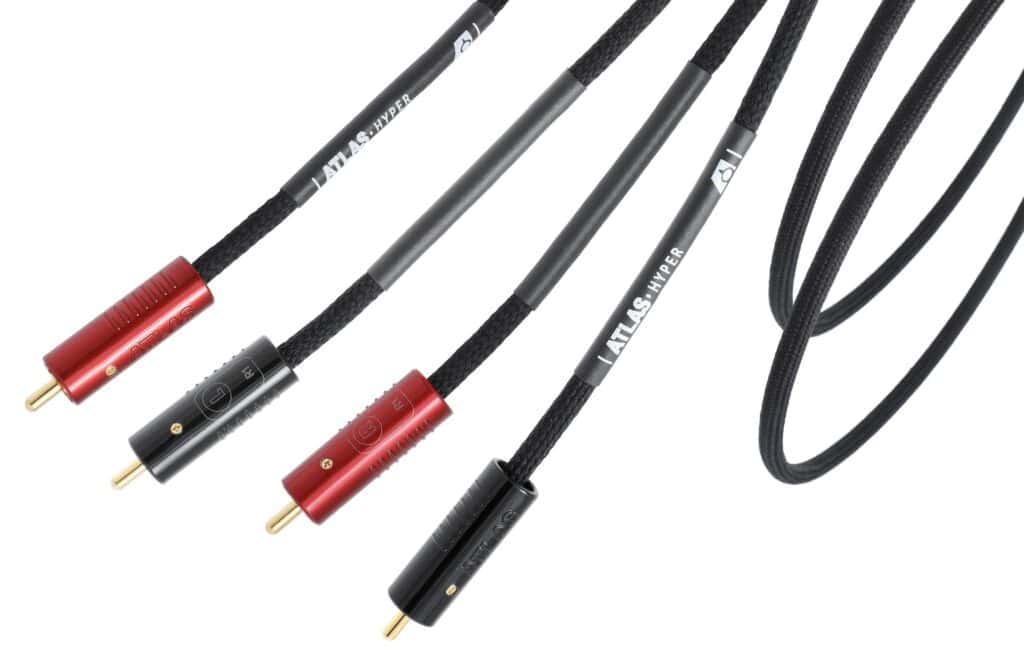
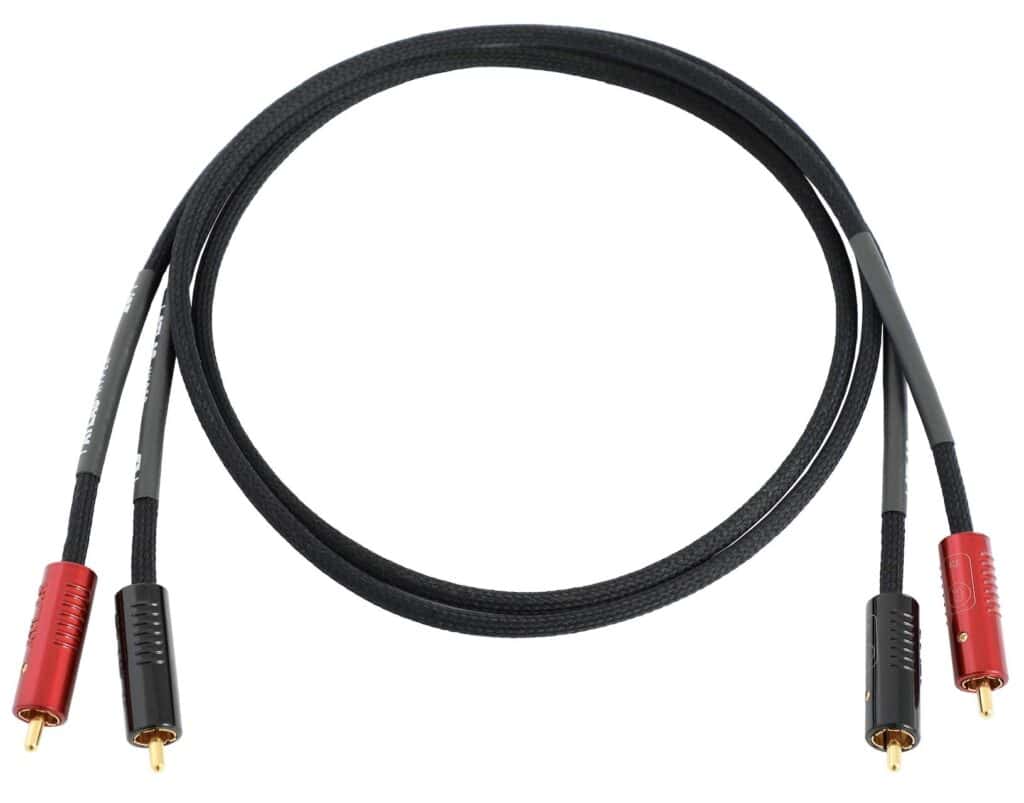
The Hyper RCA R1 features a balanced design. That is, two internal OCC conductors are held in a double-layer metallised/woven OFC screen, connected in a symmetrical pseudo-balanced configuration.
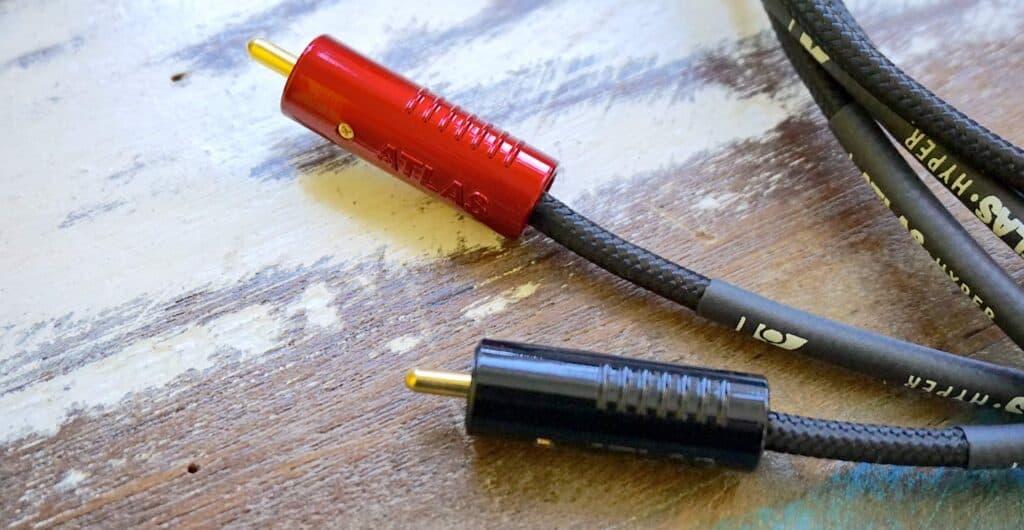
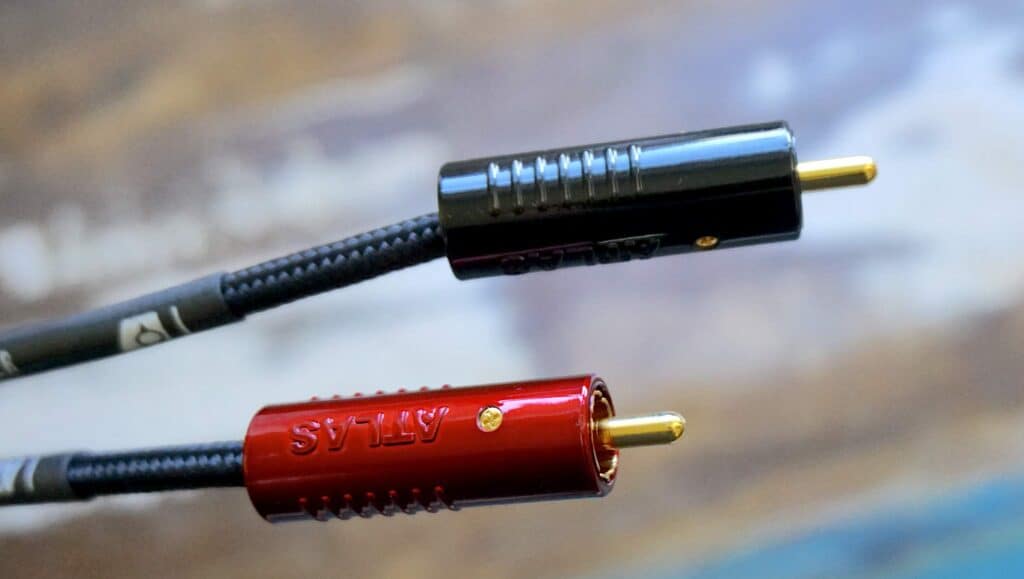
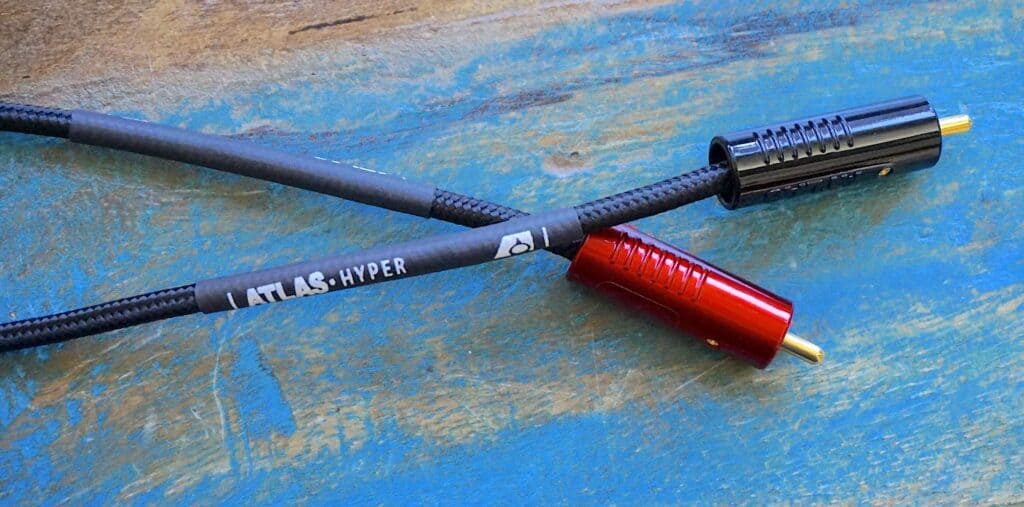
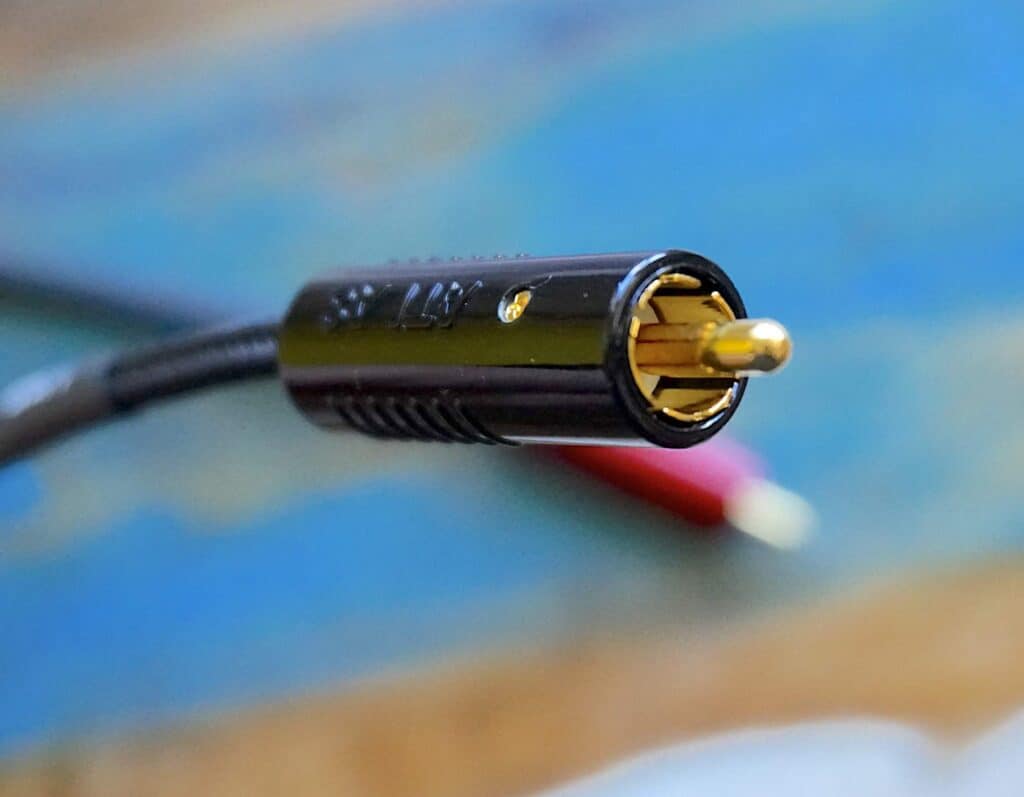
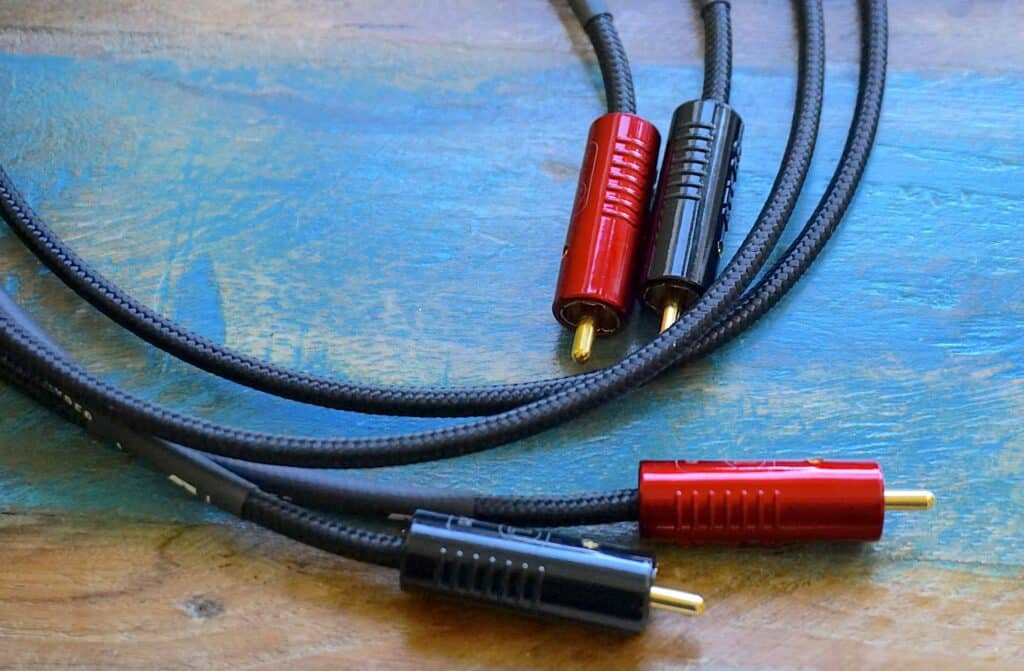
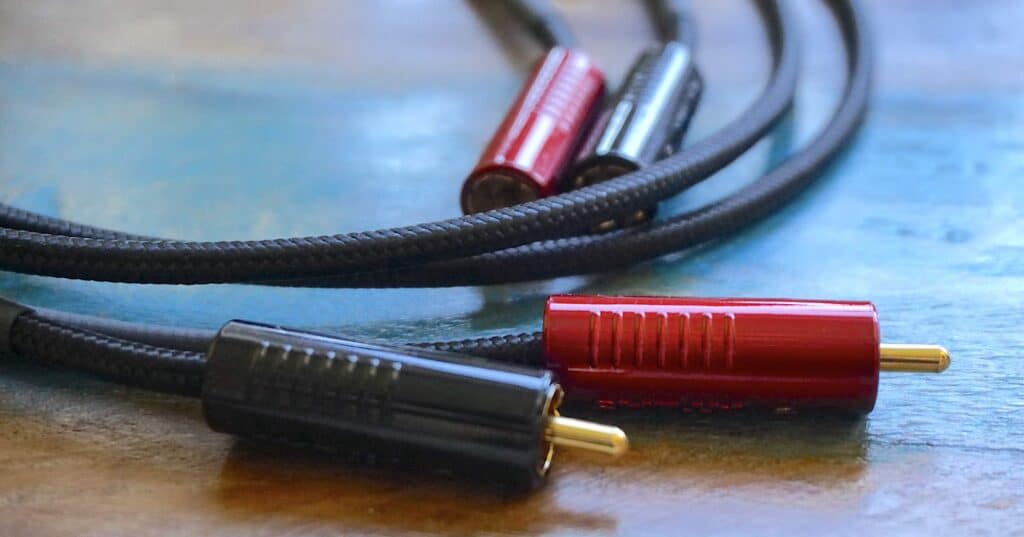
Adding a cold-welded connector (that is, no solder is used to improve conductivity) with a black fabric outer skin and Integra termination plugs, what struck me was the rather thin nature of the cabling itself. This meant that it was easy to install across any HiFi system I tried being able to turn corners, dodge under and over other cables and snuggle into cramped spaces with ease.
SOUND QUALITY
To begin, I connected my Benchmark DAC2 HGC, hooked up a CD source via my Audiolab 6000CDT and played the acoustic guitar of Adrian Legg and the album, Wine, Women and Waltz. I also used my Origin Live Sovereign turntable and played Mott The Hoople’s self-titled album from 1969 via Island.
VS TCI MOCCASIN
First up? I undertook the ‘What’s the Point?’ test. Grabbing a pair of TCI Moccasin Interconnects priced at £150 the pair, I wondered why I would need to spend more on the Atlas Hyper RCA R1 cables.
I placed the cables at the rear of the Benchmark DAC and my Icon Audio PS3 phono amplifier and compared the two.
First up? There’s a tremendous amount of air and space across the midband that just wasn’t there from the TCIs. More than that, that Hyper R1 space had depth. To such an extent, the plucked string from the bass guitar offered a sustain that seemed to hang in the air forever from the Atlas cables. Much further than the TCIs.
Similarly, percussion offered a more naturalistic sound with a fully rounded impact sound from each strike. Backing voices sounded like a batch of individual voices flying in close formation instead of a muddy noise and guitars had an extra metallic sheen to their twang.
VS TELLURIUM Q ULTRA BLACK II
How about a tougher proposition? I tried the more expensive Tellurium Q Ultra Black II cables (£597 for a 1m pair). The latter should be far superior but I wanted to know how the Hyper RCA R1 cables would cope.
And yes, the Ultra Black II cables were superior in terms of midrange detail. The Hyper RCA R1s were getting there though, they are on the same track but the Ultra Black IIs just offered more. But that was no surprise considering the price difference. Bass? That was a closer-run thing. You could say that the Ultra Black IIs offer a better integrated bass response that sat well in the mix although the Hyper RCA R1 cables provided more impact and grunt.
Even so, despite their lower price, the Hyper RCA R1 cables performed wonderfully.
VS ORIGIN LIVE SILVER HYBRID E
Comparing the Hyper RCA R1 to the Origin Live Silver Hybrid E cables (£320 for 1m pair) I was impressed at how closely the Atlas cables compared.
The Origin Live designs offered a massy bass punch, as did the Atlas cables. The upper mids and treble from the Origin Lives may have been fuller in detail terms but the the Hyper RCA R1 had a slightly better balance in terms of overall presentation.
CONCLUSION
For the price, I was surprised at just how good the Atlas Hyper RCA R1 interconnects were. I must emphasise that I compared them against my elite references.
As such, the Atlas designs not only kept up but competed well and did so at an often lower price meaning the Atlas Hyper RCA R1 cables not only provided great performance but value for money, to boot. Combine that lot with the svelte design which means installation will be a breeze and I reckon we’ve got ourselves a pair of winners on our hands here.
ATLAS HYPER RCA R1 INTERCONNECTS
Price: £395 for 1m pair
Website: www.atlascables.com
GOOD: meaty bass, upper frequency detail, balanced presentation, installation
BAD: nothing
RATING: 9

Don’t forget to check out my Patreon Page at www.patreon.com/audiophileman, for exclusive postings and more!]
OTHER REFERENCE KIT
Origin Live Sovereign turntable
Origin Live Enterprise 12″ arm
Icon PS3 phono amplifier
Aesthetix Calypso pre-amp
Icon Audio MB845 Mk.II Monoblock Amplifiers
Quad ESL57 Electrostatic Speakers
Blue Horizon Professional Rack System
Harmonic Resolution Systems Noise Reduction Components
All vinyl was cleaned via a Degritter Mk.II
Stack Audio AUVA 50 Isolation Feet
Soundeck DF Damping Feet Mk.II Mini

“The Atlas cables are certainly strong performers for the price, but because of the greater ad spend from Tellurium Q, they just don’t sound quite as good. But still quite good, because of the reasons! The conductors are very advanced, and the insulation is also really good, and it has foamed stuff inside so that also means it’s MOAR BETTER! However, the Ultra Black 2’s use mega technology with extra phasiness, so the soundstage is more expressive, and because they’re a flat design, that makes the bass MOAR STRONGER. Both are winners! Everyone’s a winner (provided you advertise with me)!”
Great review Paul.
I understand why people ask that question. Advertising and editorial coverage have historically been linked at some publications, so skepticism is healthy.
In my case, advertising and editorial decisions are completely separate. Companies don’t see reviews before publication, they don’t approve content and advertising spend has no influence over review scores or conclusions.
If a manufacturer sends a poor product, I’ll say so. If they send a great product, I’ll say that too. Over time, my review archive speaks for itself—there are positive and negative reviews from companies regardless of whether they advertise with me.
For those companies who don’t see Ads in the correct way (and there are a few) well, there are HiFi companies out there who now refuse to send me products. And good riddance, I say. Purely because I have given them a poor review or have cast relatively ‘iffy’ comments in their direction. Then they have thrown their toys out of the pram and acted like five year olds. Don’t ask.
I have even given very average reviews for a ‘high spend’ Ad. A recent headphone manufacturer was one example. I even remember back when this website began, when I was completely desperate for Ad revenue to help pay bills, being grateful to Italian outfit Carot for its Ad spend and then giving a pair of their earphones 5/10 and more earphones and a head amp another 5/10 and a 6/10. And I name them because, bless ’em, they didn’t withdraw their Ad because they knew appearing on my site was all about exposure to my audience and not the review ratings. That’s the reason you advertise on my site. For eyes, not ratings. One of the most mature companies on the market, is Carot. They behaved impeccably.
The bottom line reality is that credibility is the only asset a reviewer has. Sacrificing reader trust for advertising revenue would be a short-term gain that ultimately destroys the value of both the publication and its reviews. So doing so would be very silly indeed. I’ve been a journalist for 38 years. I wouldn’t have lasted this long if I was corrupt. I know some who were (again, don’t ask). They lasted a very short time indeed because you’re always found out. Often firstly by other people in the industry or other journalists.
But hey, don’t take my word for it—look at the consistency of my reviews, the criticisms I make even of major brands, even in award-winning reviews! I have actually been shouted at by more than one company for daring to voice a criticism about this or that feature. Both on the phone and via Zoom. I get it from all angles 🙂
When it comes down to it, as I have said in a video for my YouTube channel. You must find your own critic. One that suits you. And if I’m not that person, then it’s your responsibility to seek out that person. And then do additional research on top of that.