The Article
M90 SPEAKERS FROM EDIFIER
3rd June 2026
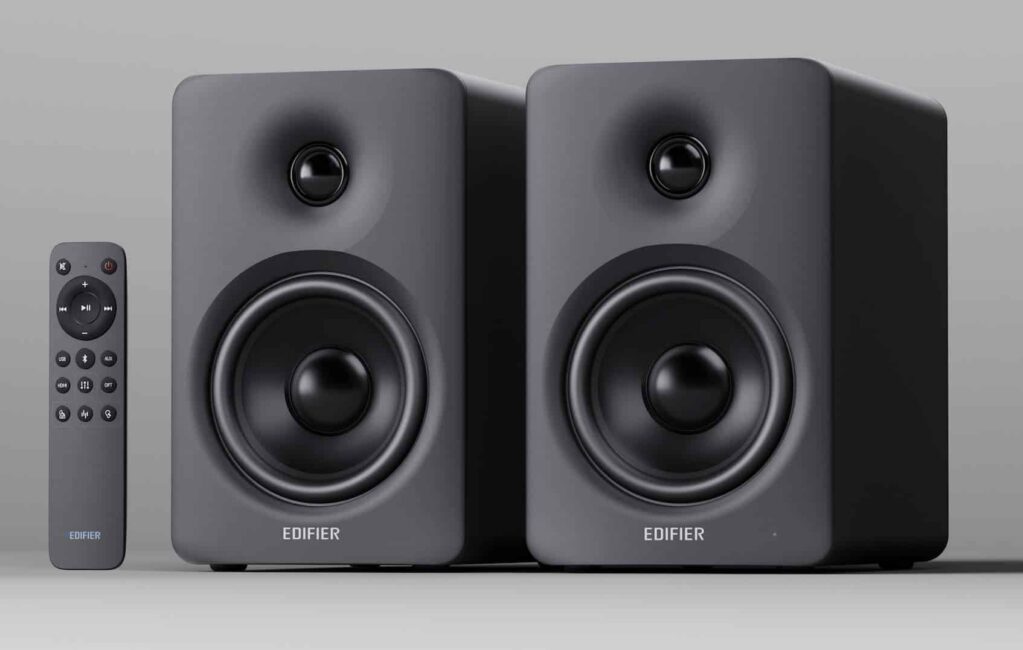
Compact powered speakers, Paul Rigby wonders if these £300 speakers are worth the money?
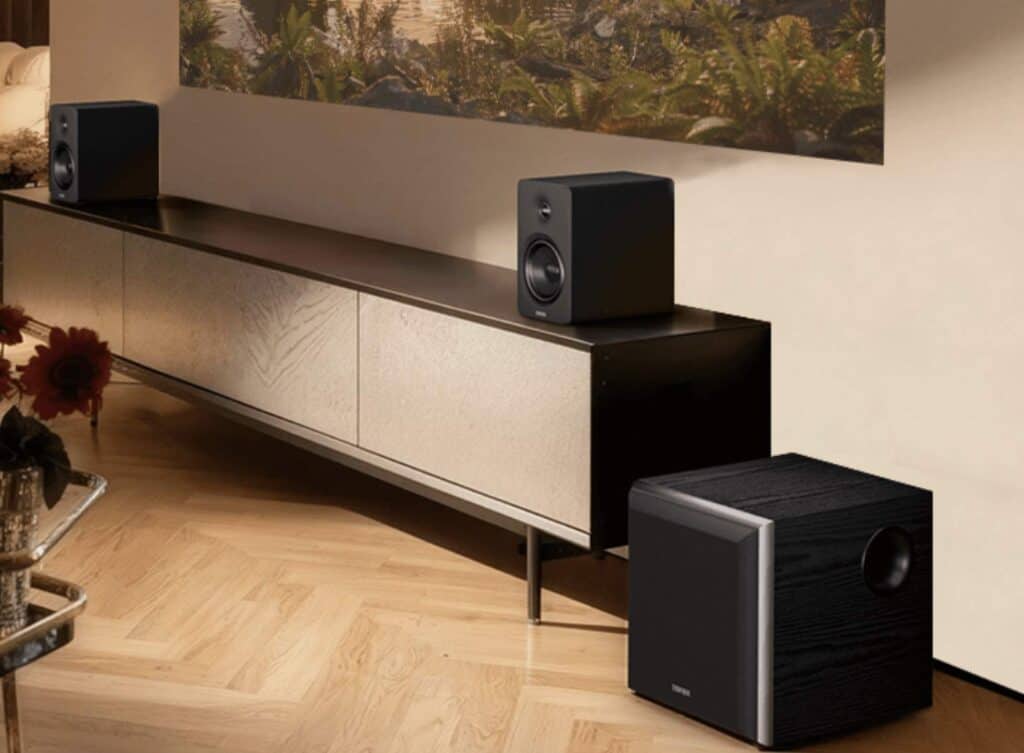
The Edifier M90 powered speakers are compact designs spanning 133 × 212 x 225mm which means that they are larger than some compact speakers out there and more compact than other…compacts. But we’ll get to that in the Sound Quality tests. They also weigh in at a touch over 6kg which is slightly surprising for the size but also reassuring that there may be quality inside. Again, we’ll see.
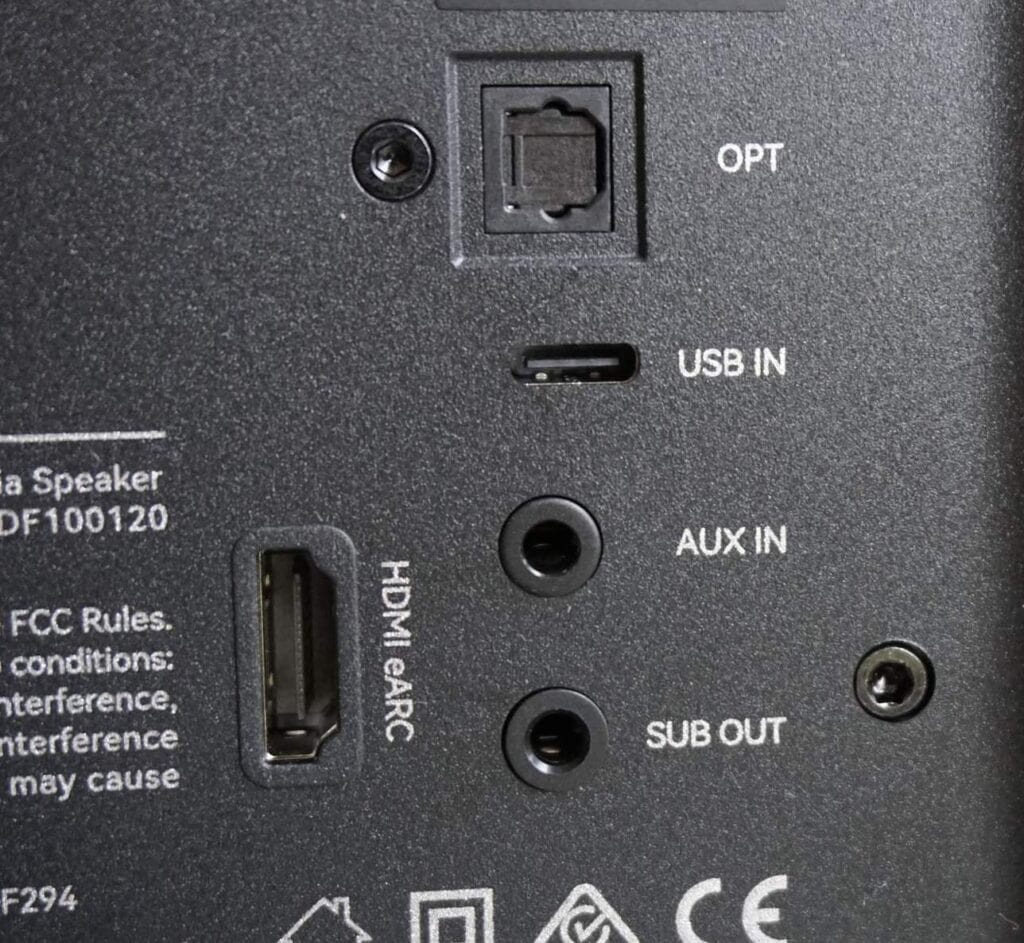
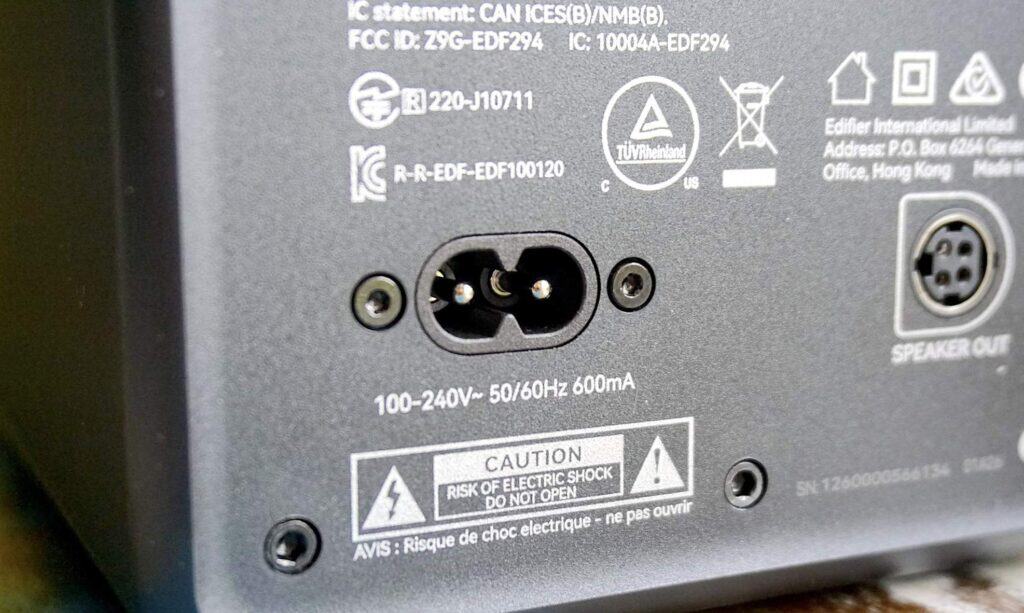
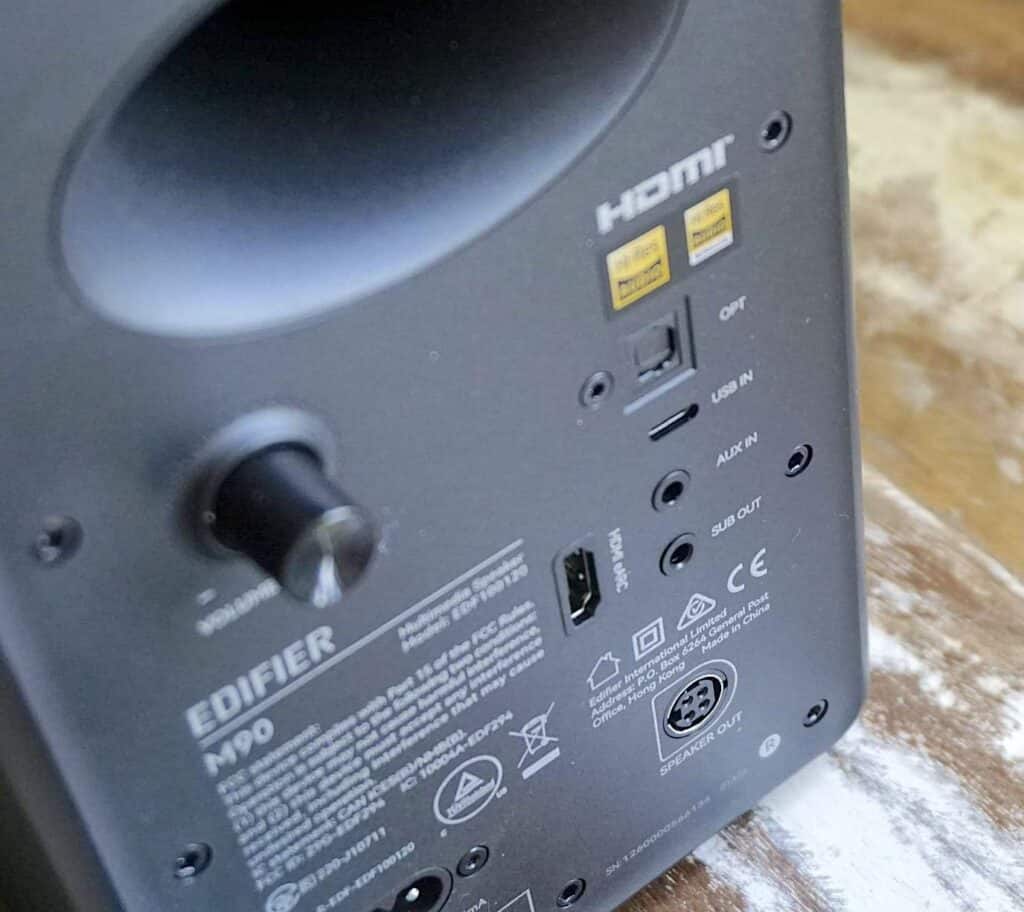
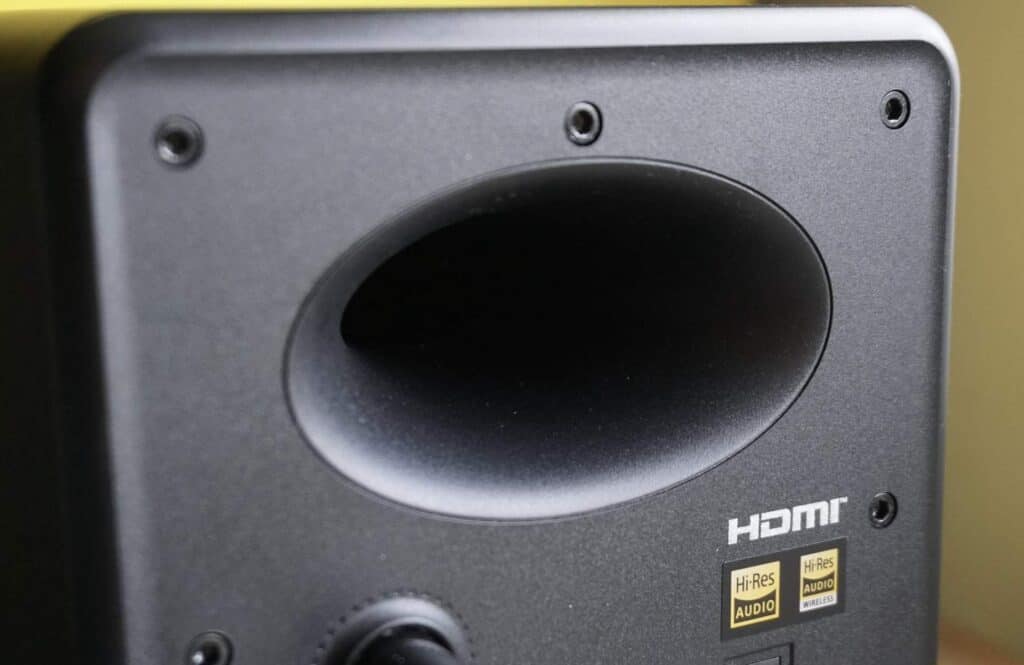
Pushing out 100W RMS of total output, the M90s include a HDMI eARC socket which means you can hook them up to your TV. Other connections include optical, USB-C, auxiliary and Bluetooth version 6.0. For the latter, apart from the basic SBC codec, the M90s provide connection to the LDAC codec. You also get a sub output socket.
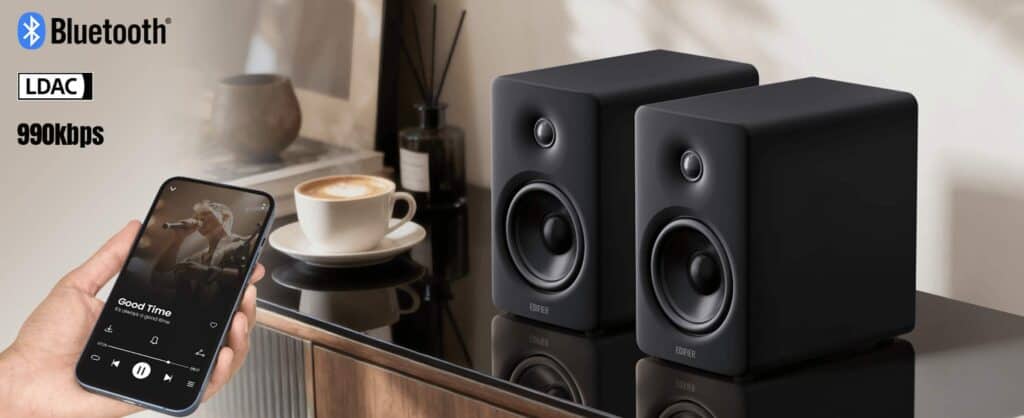
Speaking of which, digital support ranges up to 24bit/96kHz. There’s no obvious information on the featured DAC chip itself and I suspect it’s not a boutique model but part of an integrated TI chipset.
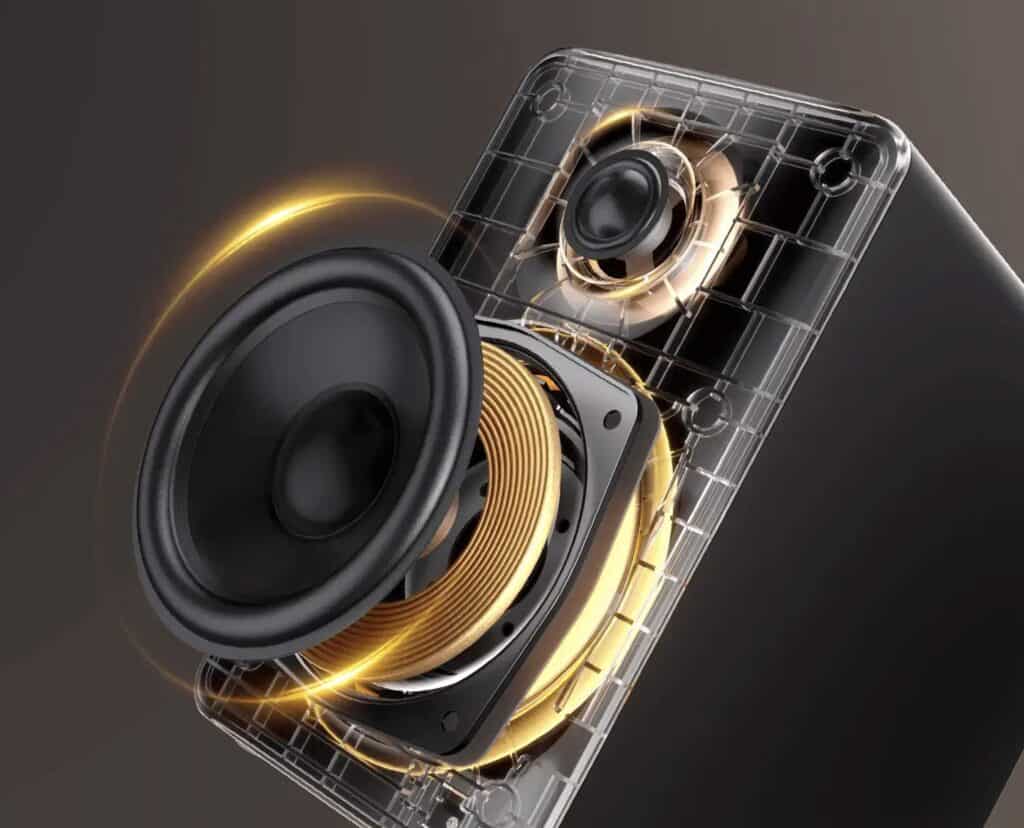
On the front you will see a 102mm mid/bass unit based on an aluminium construction and a 25mm silk-dome tweeter, up top.
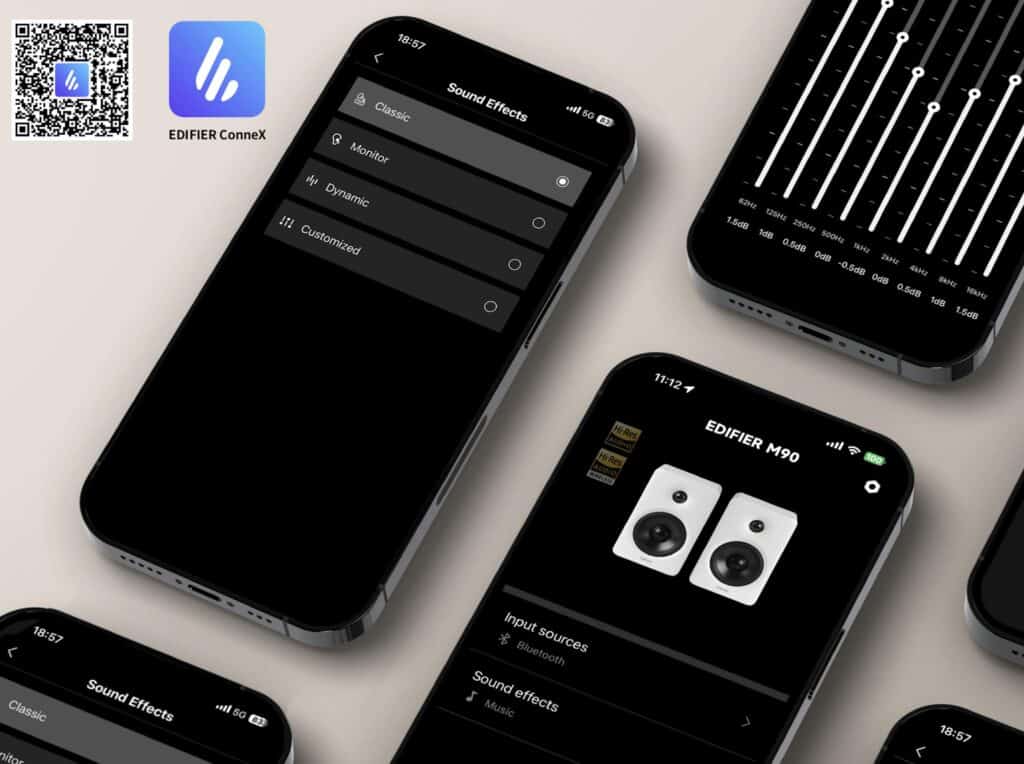
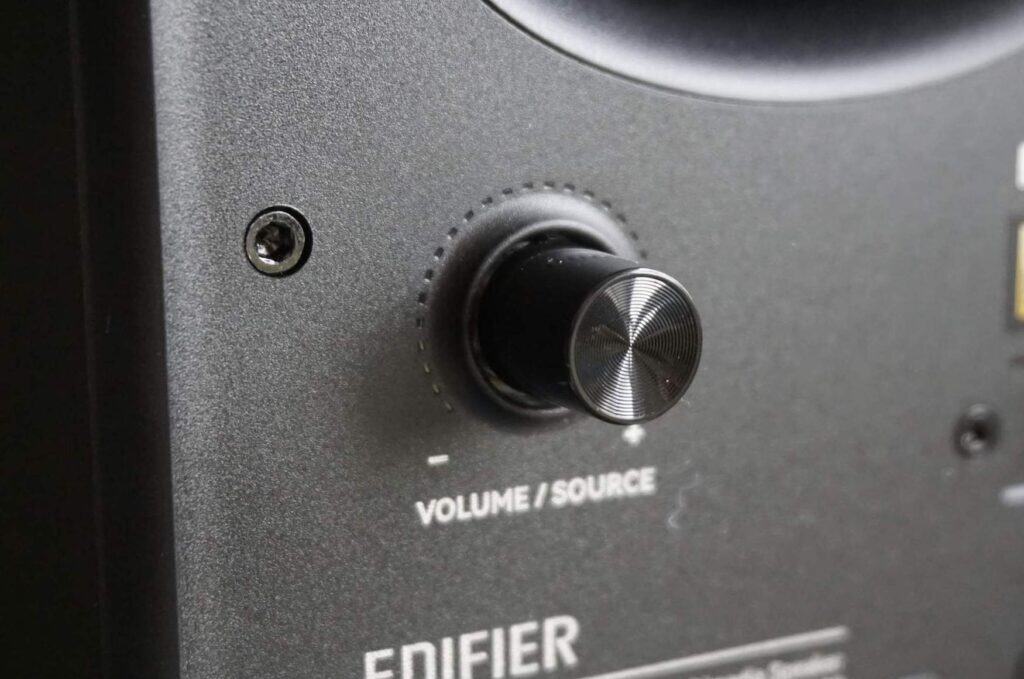
Control can be yours via the small, plastic remote control or via the ConneX app. There’s also a rotary volume and source combo knob on the rear of the master speaker.
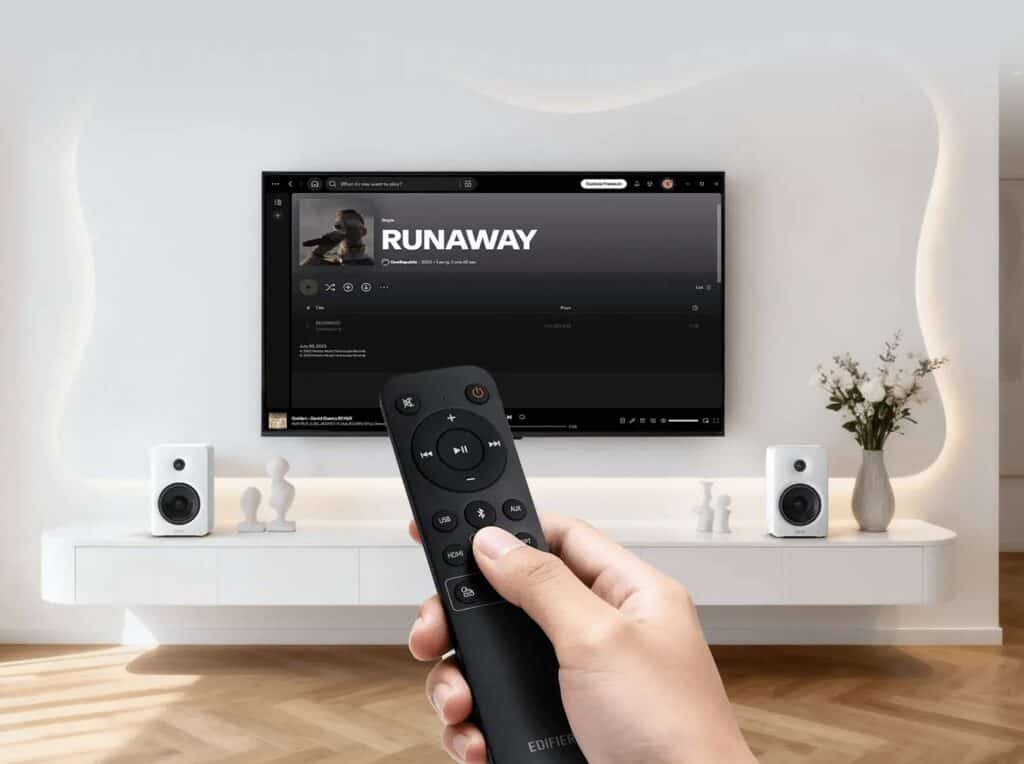
The master speaker features all of the controls and is powered by a figure-of-eight power cable, the slave speaker forms the stereo pair and that is connected via a DIN cable.
So how do they sound? Let’s take a listen.
SOUND QUALITY
I began with another model in the ‘M’ range of Edifier speakers, the smaller M60s – priced at £160 when new. Is it worth the upgrade or, if you’re a first-time buyer, should you buy the M90s over the M60s?
VS EDIFIER M60
In feature terms, the M60 loses the HDMI port so the M90 wins in AV terms, The M90 also gains an on-cabinet volume and source selector. So there are feature benefits.
I hooked the M90 to my M3 MacBook Pro via USB-C. In sound terms, playing a selection of high-energy music from The Who, the M90s ran much louder than the M60s. The latter, in a large room, suffered from frequency break up whereas the M90s kept going, maintaining a coherent soundstage, with good vocal detail while bass from the larger M90 cabinet ran deeper providing a more secure foundation.
Next? I hooked up my Astell&Kern Kann Alpha to the M90s via optical. I wanted to track speech so played a selection of BBC Radio 4 programmes and compared the M90s with another Edifier creation, the S880DB Mk.II, priced at £335 when new.
VS EDIFIER S880DB Mk.II
The 880s provided a superior suite of connectivity options with added tone controls plus those notable cabinet wooden cheeks.
Sonically, I found that the M90 provided a better structure to the voices. Integrated bass added richness and weight forging a 3D effect to the overall soundstage which also meant that the studio itself played a larger part in the vocal projection.
I wondered if that balance would continue over Bluetooth, especially as both the M90 and S880DB Mk.IIs used the LDAC codec. I then played Nick Cave & the Bad Seeds’ Ghosteen LP and the track Waiting for You at 24bit/96kHz.
I thought the M90 speakers had a better balanced and integrated suite of higher frequencies with a touch of extra clarity. The 880’s midrange was a touch forward when compared to the M90. In bass terms? The M90’s lower frequencies sat nicely in the mix on the M90. Bass never swamped or dominated but did provide power and gravitas when required.
VS KANTO YU4
Onto near-field performance now. Kanto’s YU4 speakers have been well regarded in this area. The YU4s work well on both desktops and attached to TVs. Although only via optical as there is no HDMI available.
Playing the same Nick Cave track, I thought that the YU4s offered more nuance and finesse around the midrange with an impressively open soundstage. Saying that, the M90s provided excellent detail across the vocal range with wonderful insight. The problem with the YU4s is that they are under powered so near-field positioning is their best option. The M90s work well in all areas, whether that be AV, desktop, small bedroom, large listening room and more. The M90s provided better value and flexibility.
CONCLUSION
The Edifier M90s might not have the connectivity choices that some Edifier designs currently on the market have but the feature set of the M90 provides enough choice to cover most of the the necessary options you’ll find in and around the home. And when they are connected, the M90s perform well providing a worthy upgrade option to lower-cost models while competing successfully with similarly priced designs.
The Edifier M90 provides a great combination of features, footprint, price and sound quality and will prove to be a great addition to your sonic toolkit because they are ideal problem solvers.
EDIFIER M90 POWERED SPEAKERS
Price: £300
Website: https://www.edifier.com/uk/p/computer-speakers/m90
GOOD: small footprint, overall sound quality, Bluetooth performance, feature set
BAD: nothing
RATING: 8

Don’t forget to check out my Patreon Page at www.patreon.com/audiophileman, for exclusive postings and more!]
OTHER REFERENCE KIY
Blue Horizon Professional Rack System
Harmonic Resolution Systems Noise Reduction Components
All vinyl was cleaned via a Degritter Mk.II
Stack Audio AUVA 50 Isolation Feet
Soundeck DF Damping Feet Mk.II Mini
Stack Audio AUVA 50 Isolation Feet
Soundeck DF Damping Feet Mk.II Mini
Russ Andrews Super Router Signature Edition
BMU-2500SE Balanced Power Supply