The Article
A10 APEX BY ADVANCE PARIS (TEXT & VIDEO REVIEW)
23rd September 2026
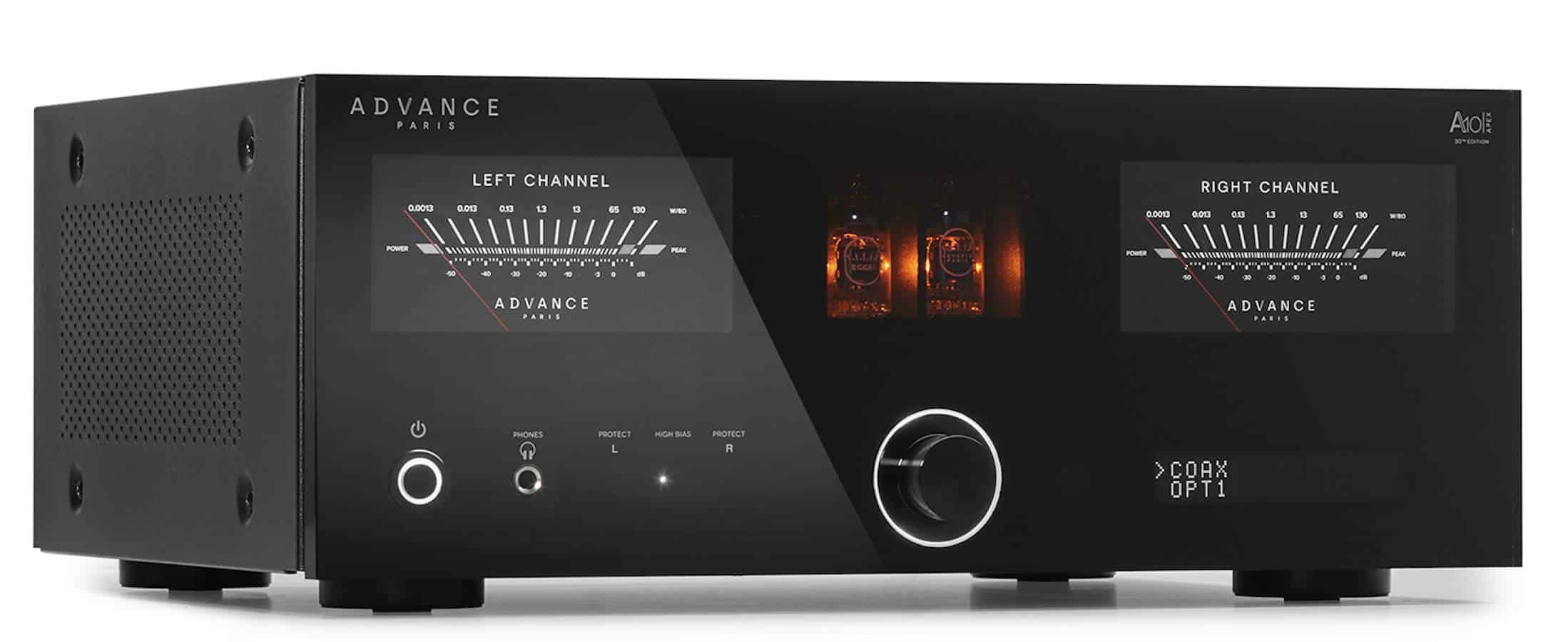
Big and beefy, packed with inputs and outputs but still has room for a couple of valves, Paul Rigby gets to grips with the A10, a French fancy
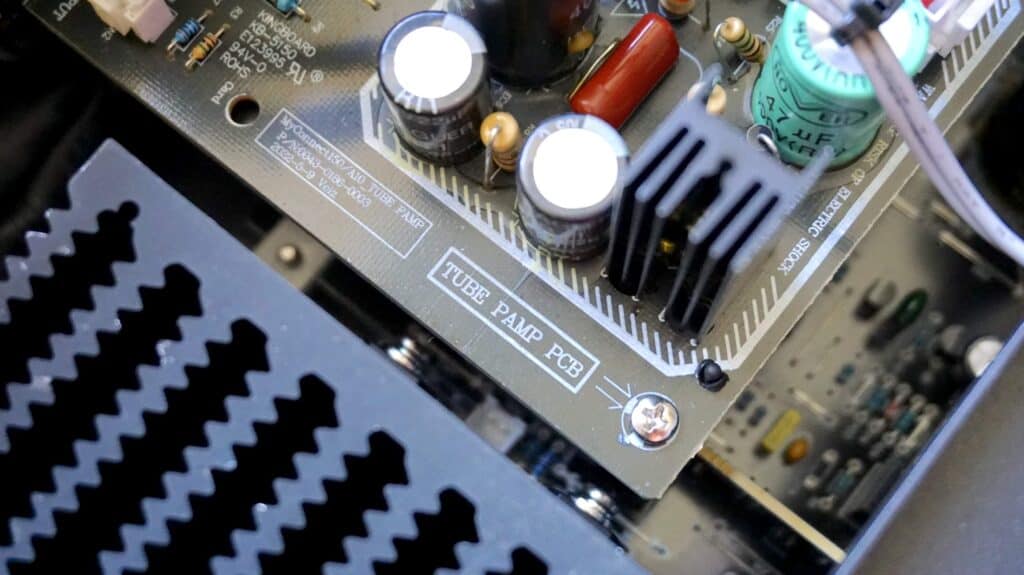
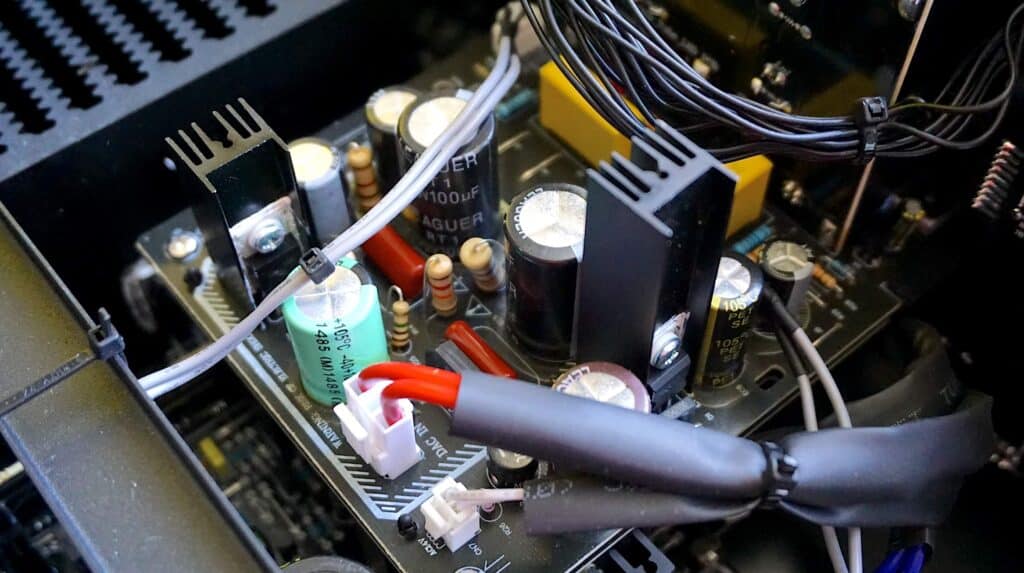
That’s right, the Class A/B amplifier, all the way from France, pushing out 130W into 8 Ohms, features a pair of ECC81 triode valves. Be aware that these valves will require time to warm up before use. I advise, switching on first and then doing other preparations afterwards to save time.
The valves sit within the preamp circuit. You can’t bypass them but, to be honest, I really wouldn’t want to.

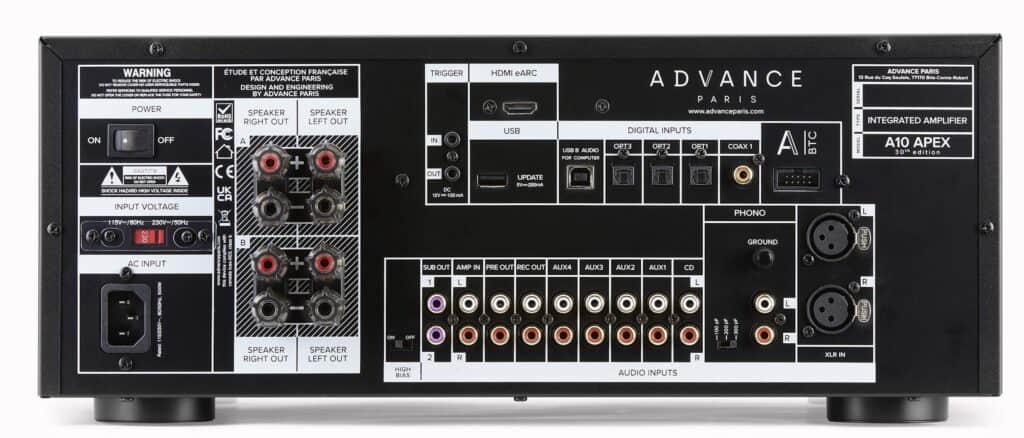
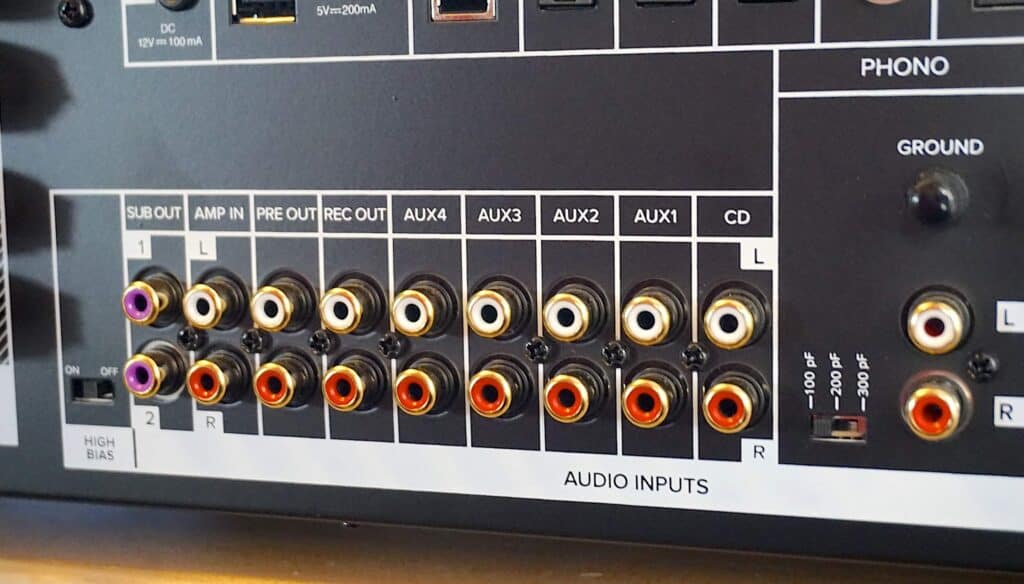
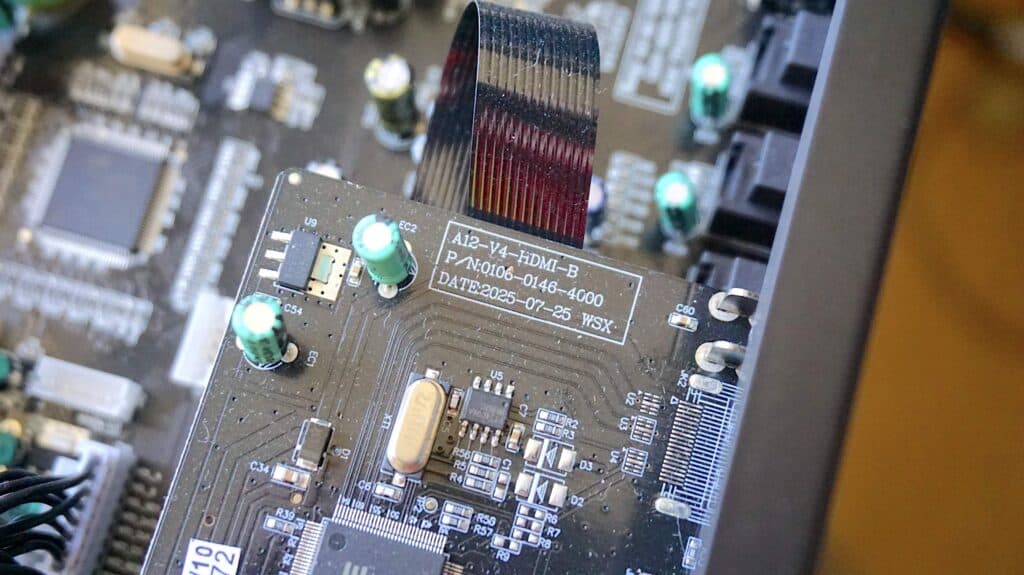
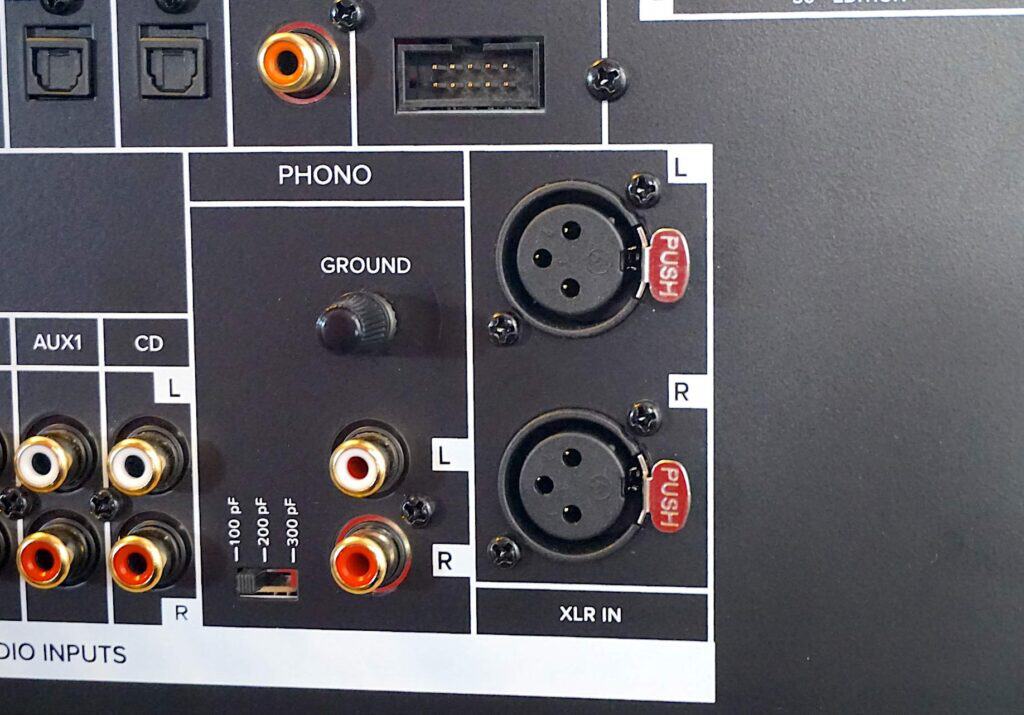
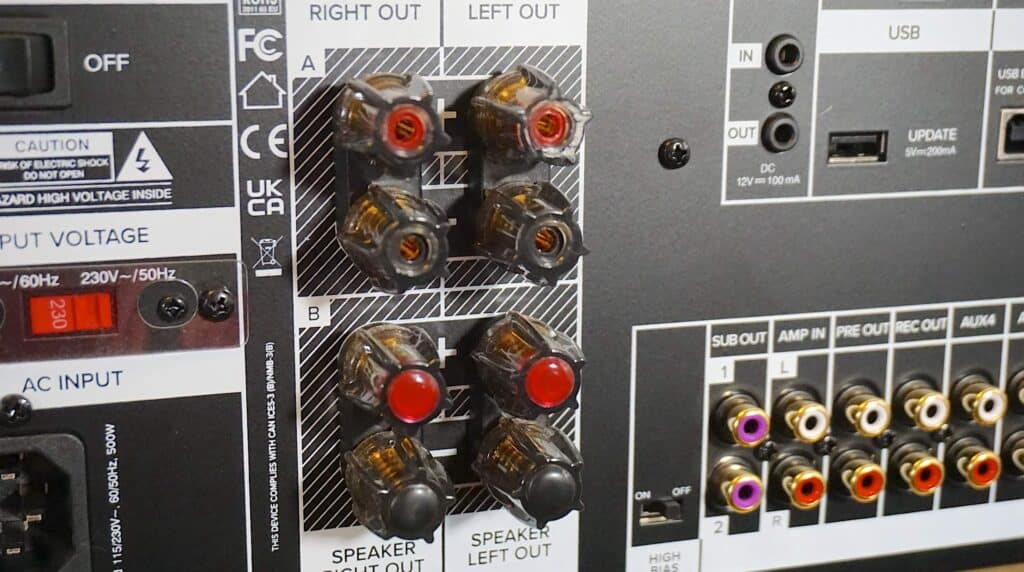
Inputs include an XLR input pair, five RCA line input pairs, subwoofer and pre-amp outputs, an internal MM phono amplifier with adjustable capacitance covering three settings. Which is a relatively rarity for an internal module. It was nice to see a tape loop included too plus HDMI eARC.
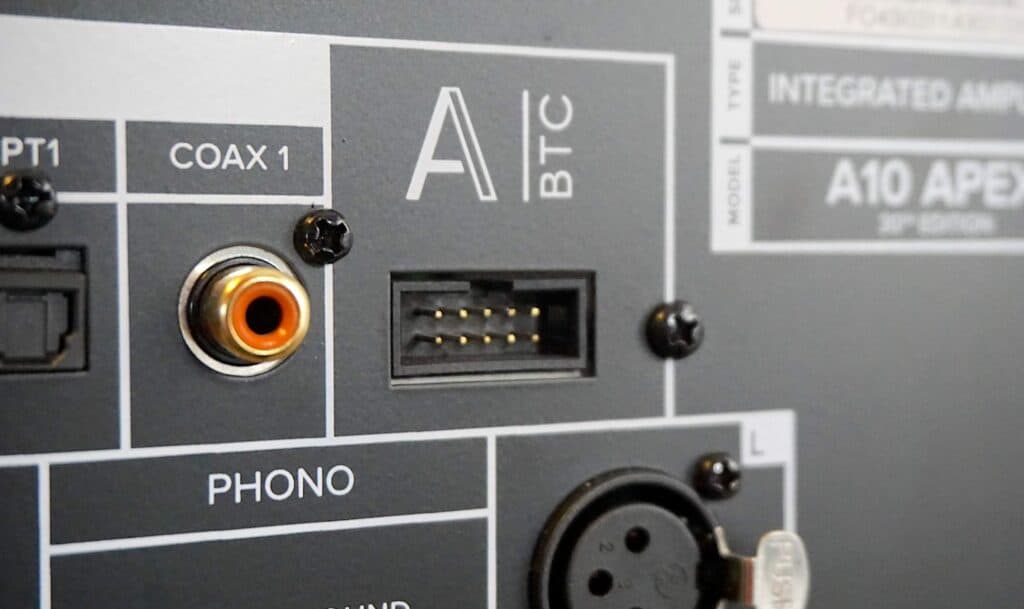
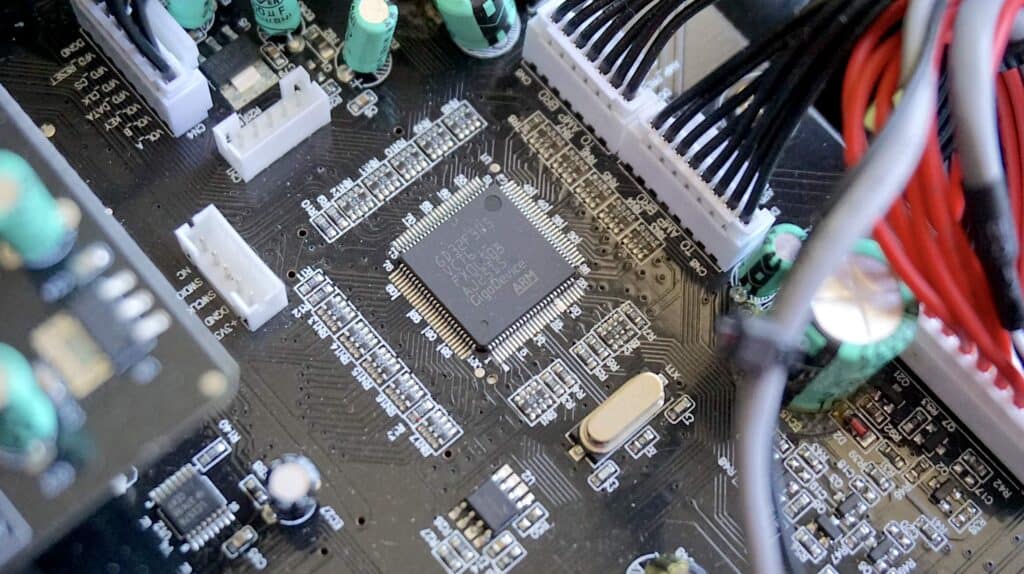
Also in the digital domain you will find an USB-B input, three opticals and one coax run by the ESS 9018 DAC handling rates up to 384kHz for PCM and DSD256.
A10? CLASSIC RETRO
Streaming and/or Bluetooth is not present. It is available though via a plug-in dongle. I didn’t have the dongle to hand so could not review these options. In general terms though, I like the off-board nature of these facilities which will potentially lower noise. Some might see the separation of these digital facilities as an irritating inconvenience, however.
On the front is a volume knob/menu selector combo with a push-button facility plus a large pair of digital VU meters. I love the front fascia design. Despite the modern aesthetic, the A10 has a classic retro look.
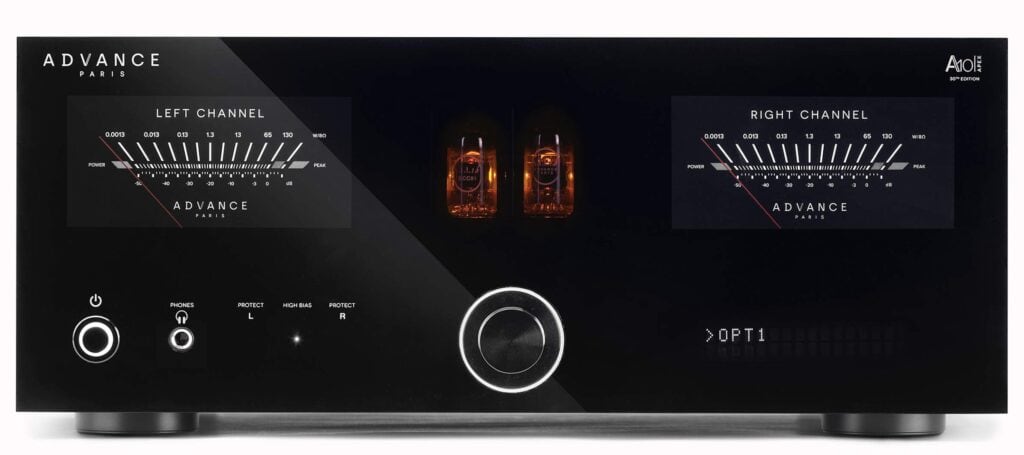
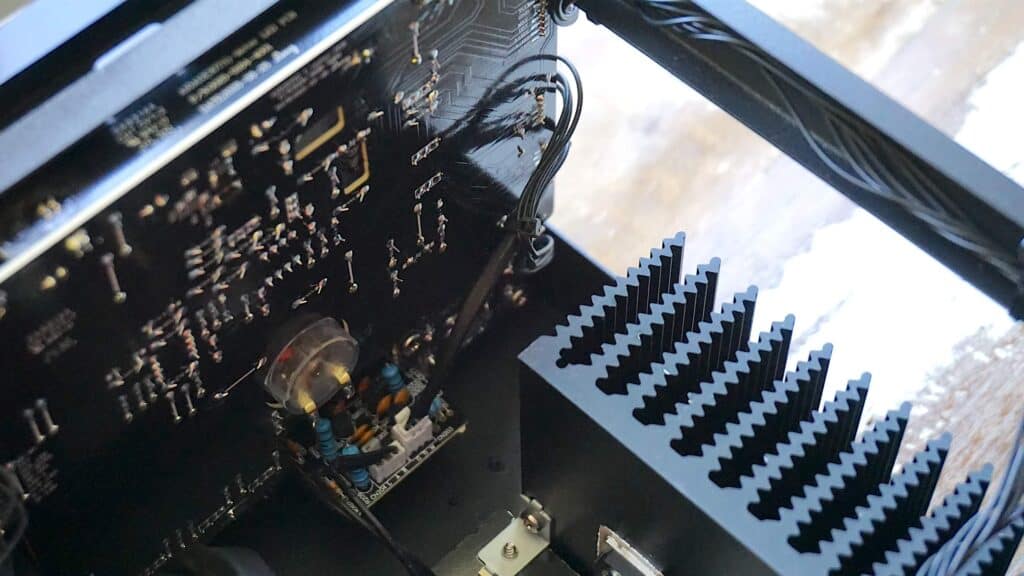
Even so, that retro-look chassis spans 175 x 430 x 351mm and weighs 12.9kg. Be sure you can store the chassis within your shelving. I couldn’t and had to find other solutions.
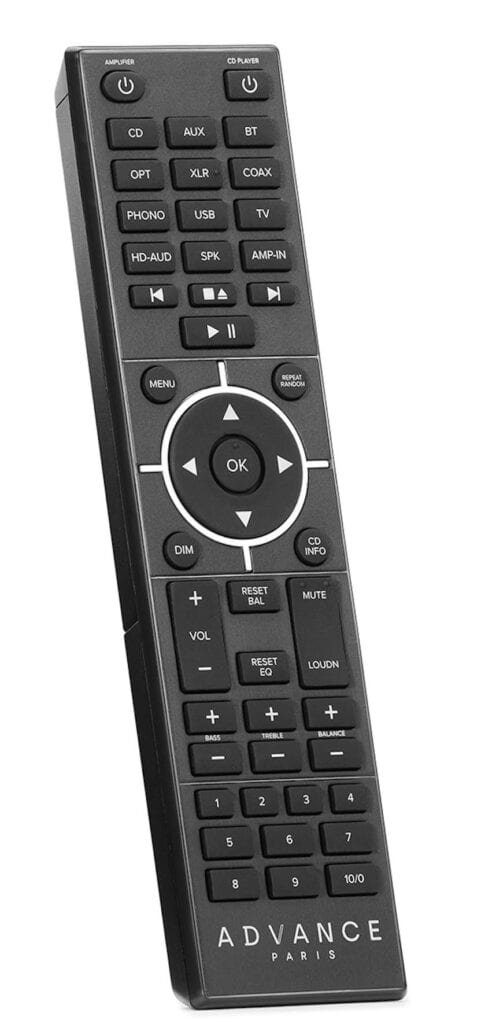
You also get a remote control which, for a feature amplifier like this, is a godsend.
So how does this amplifier sound?
SOUND QUALITY
As I had the Scansonic M20.2 speakers already in situ from their earlier review, I decided to carry on with these designs as references.
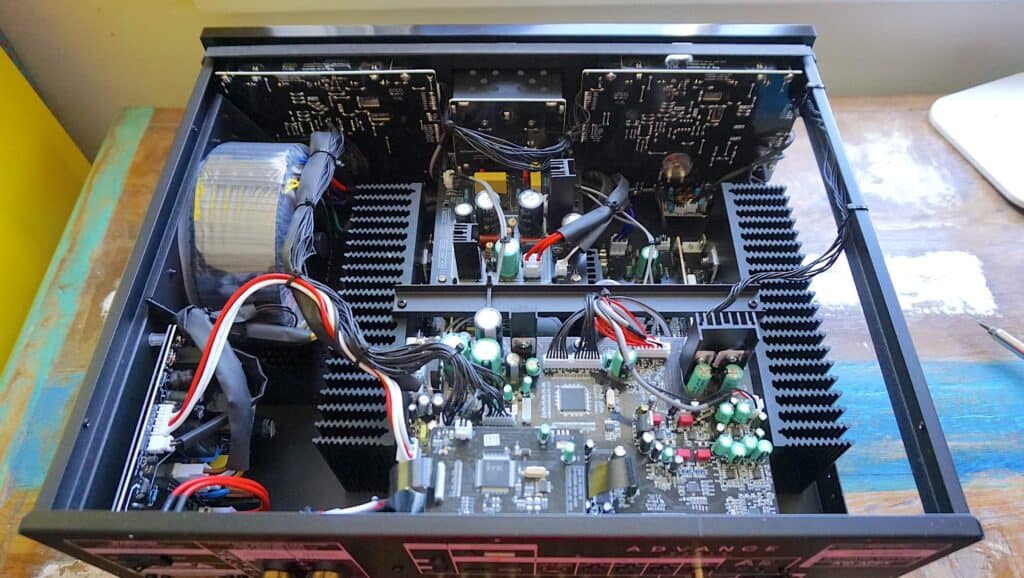
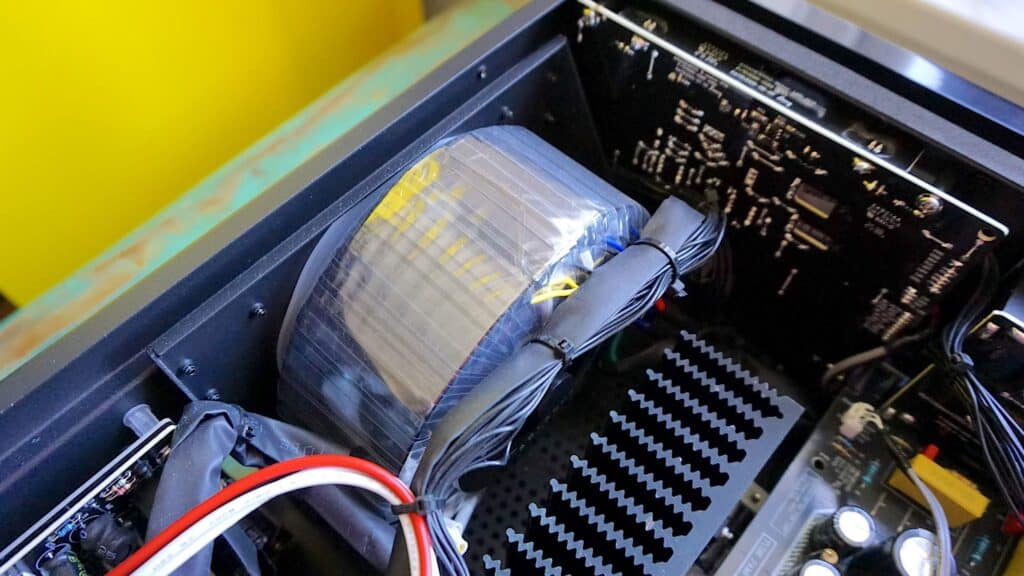
In software terms? I first turned to vinyl and Stationary Traveller via Camel and the track Refugee. I brought in my similarly specced and – when new – priced Leema Quasar amplifier, notable for its heavy toroidal transformer within. This was an immediate challenge for the A10.
VS LEEMA QUASAR
During play? I thought the Quasar had the more impressive bass response in terms of pure power and mass. Saying that, the A10 better integrated bass into the mix, allowing bass to have impact without dominating. Surprisingly, the A10 enhanced the bass guitar, tracking it easily.
I felt the soundstage was wider on the A10 giving a grander feel to the track. A greater sense of occasion. I also thought that the A10 took advantage of the higher resolution vinyl format as a whole providing a clean midrange and treble, allowing plenty of space for instruments to display all of their detail.
VS AUDIOLAB 6000A Mk.II
I then turned to CD and the acoustic guitar picking from Leo Kottke and the track I Yell at Traffic from the 1988 LP Regards from Chuck Pink. This one also featured a violin plus subdued drum noises.
For this test, I wanted to know if the Apex was a suitable upgrade for a more modest design. Something sub-1K. In this case I chose the excellent Audiolab 6000A Mk.II.
And does the A10 serve as a suitable upgrade? Absolutely. The 6000A Mk.II sounded excellent compared to its contemporaries but compared to the A10, the goal posts were moved.
Firstly, that violin sounded far more reedy from the A10 and delicate but its the conclusion of the initial sequence that really told.
In comparison, the 6000A Mk.II blew out the upper midrange as it lost some control. Detail was blurred and soft. The A10 kept the control all the way so the conclusion of the sequence retained its precision and clarity. Because of that, there was no slowing of the pace of the music. The 6000A Mk.II lost its way somewhat while the A10 was fleet of foot.
Bass also had more presence via the A10. Sure, the percussion was rather subdued and shy on this track but the A10 provided better balance across the mix.
PHONO AMPLIFIER
I hooked up my Rega P1 turntable to the built-in phono amplifier and I continued with the Camel LP. I was pleasantly surprised how capable the built in unit was on the A10, maintaining the overall balance. Sure, an external model would add detail and insight so I do recommend an upgrade but, while you’re waiting for funds, the built-in unit is excellent.
COAX
Accessing the DAC now, I plugged my Audiolab 6000CDT CD transport directly into the A10’s coax socket. In play? My comments are very similar to the phono amplifier output. That is, sure you could do better with an external DAC as it didn’t quite have the same level of precision and clarity as an external model. Even so, the internal DAC was quite a capable unit, maintaining a generally balanced output that provided essential detail too boot.
HEADPHONE AMPLIFIER
Inserting a pair of headphones into the A10 automatically muted the speakers. Which was good to hear. Or not.
I found that the headphone amplifier was quite generous in allowing the headphones themselves to impose their own signature sound onto the music. The A10’s head amp never dominated. It again, stayed pretty neutral but retained the Apex’s open, airy soundstage.
I used a pair of Sennheiser HD650s which offered relatively meaty bass and found that the Sennheisers did all the talking. I never heard the amplifier at all, as it where.
OPTICAL
I then drafted in my Astell&Kern Kann Alpha DAP and connected it to the A10 via the optical port and listened to a number of speech-centric podcasts.
I loved the imagery of the A10 from speech sources. You could hear the face close to the microphone, the slight emphasis because of the close-mic’d output but the space of the room they were sitting within. There was a sense of 3D depth here.
CONCLUSION
A very well behaved amplifier, that’s the Advanced Paris A10 Apex. I loved the clean and open nature of the upper frequencies. I also loved how the bass was treated with care. Bass was never allowed to dominate but neither was it shy. It blended seamlessly into the overall mix, giving music a neutral yet richly detailed presentation.
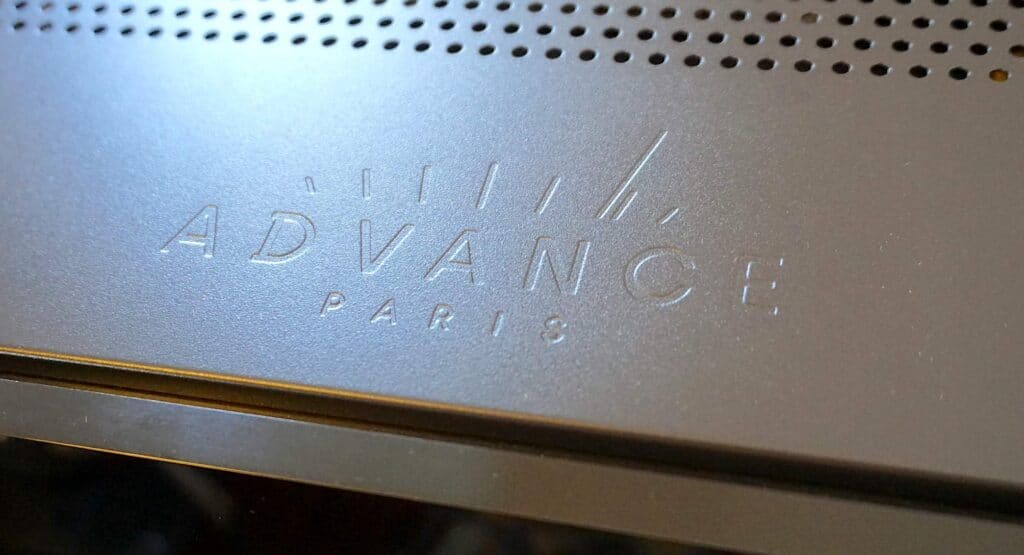
And this is the theme I’m getting from my continued reviews of Advanced Paris hardware. There are no vices. I feel that I can trust this amplifier. Considering that an amplifier forms that essential spine of any HiFi, that trust is valuable. The A10 Apex is rock solid, caters for all genres of music with style and panache. It looks pretty cool too.
What more do you need?
Prefer a video review? Click below:
ADVANCE PARIS A10 APEX INTEGRATED AMPLIFIER
Price: £2,450
Website:
GOOD: retro looks, VU meters, balanced bass, midrange clarity,
BAD: nothing
RATING: 9

Reviewed by Paul Rigby — Hi-Fi journalist and editor for over 38 years

Don’t forget to check out my Patreon Page at www.patreon.com/audiophileman, for exclusive postings and more!]
OTHER REFERENCE KIT
Origin Live Sovereign turntable
Origin Live Enterprise 12″ arm
Icon PS3 phono amplifier
Aesthetix Calypso pre-amp
Icon Audio MB845 Mk.II Monoblock Amplifiers
Quad ESL57 Electrostatic Speakers
Blue Horizon Professional Rack System
Harmonic Resolution Systems Noise Reduction Components
All vinyl was cleaned via a Degritter Mk.II
Stack Audio AUVA 50 Isolation Feet
Soundeck DF Damping Feet Mk.II Mini