
The Article
PHONOARAY EARTHING SYSTEM FROM CHORD
13th November 2025
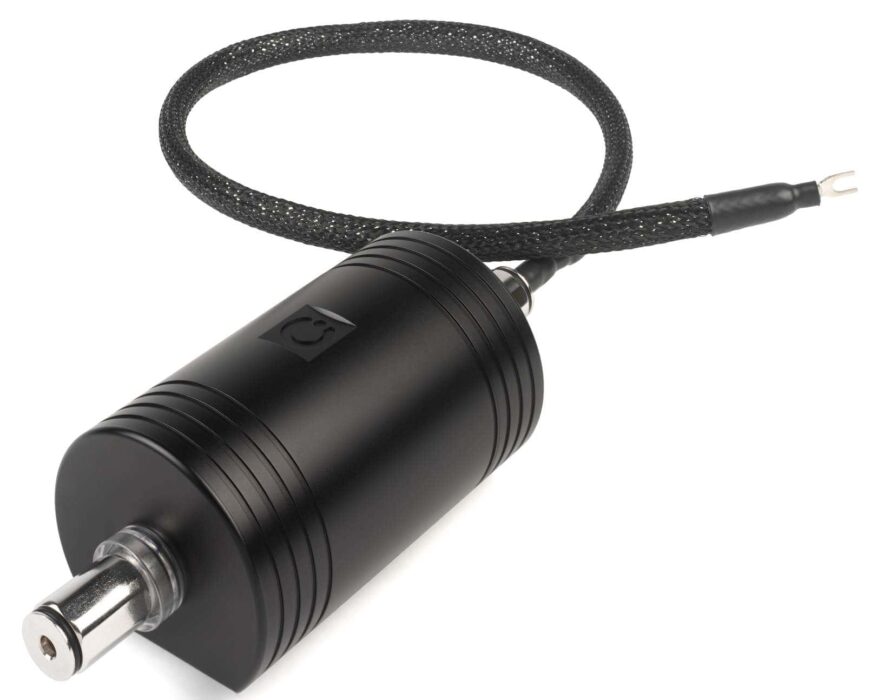
A grounding accessory aimed at your turntable. Paul Rigby wonders if it might have wider uses…
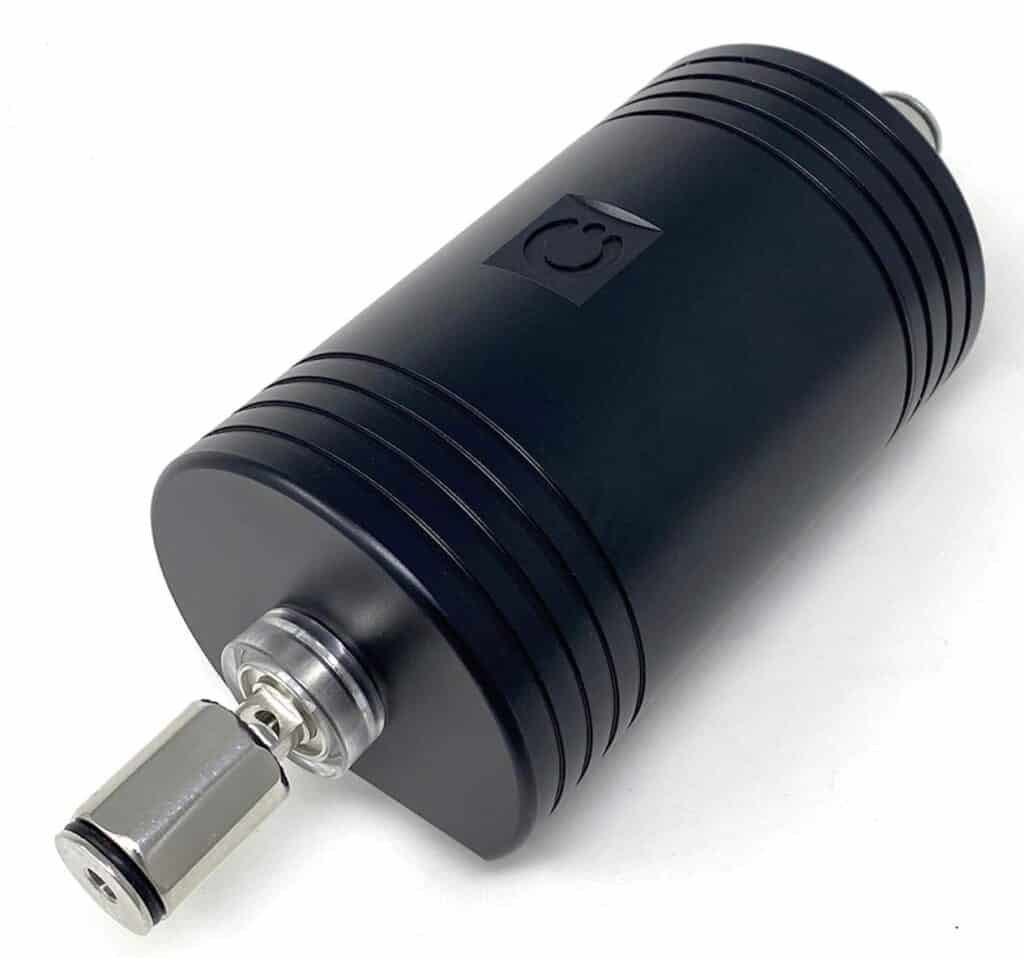
For this grounding unit, the PhonoARAY from The Chord Company, like every other grounding accessory I’ve ever come across, it doesn’t ask you to plug anything into the mains, there’s no flashing lights or controls and there’s no power switch. The PhonoARAY is a passive, dumb box. It just sits there. Looking rather stoic.
The idea here is that the PhonoARAY sits in the middle of your turntable and the phono amplifier. Chord’s supplied accessory cables run from your turntable to the PhonoARAY and then the PhonoARAY to your phono amplifier. If your turntable’s ground cable is tethered then the turntable’s own cable runs to the PhonoARAY and then a Chord cable runs from the PhonoARAY to the phono amplifier.
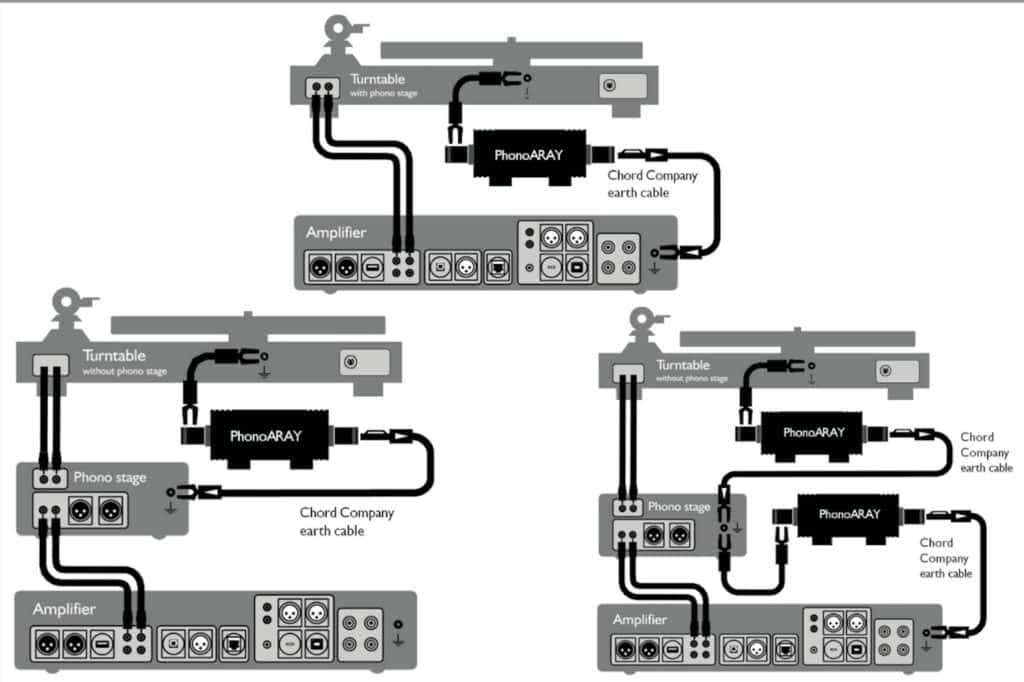
So what’s the point of this box? Well, in very simplified terms, the grounding wire from your turntable’s tonearm will do a good job of removing hum but that very same cable – because it’s often fairly long – also acts, with the metal in your tonearm, as an aerial for switch-mode power supplies, Wi-Fi and the rest (all cables do this actually, speaker cables are actually the worst because they tend to be 3m or more long…but let’s back to the point).
That ‘noise’ is then picked up in the Ground area of your HiFi where it then emerges and masks fine detail.
The PhonoARAY is supposed to remove that ‘noise’. Now look, at over £1,000 a pop, you might think that you can live with that same noise, thank you very much. And that’s fine. I’m sure many HiFi fans will and invest that £1k in a pair of new speakers or some such. But if you have the budget and you care about this sort of thing, then Chord recommend talking to a Chord dealer, asking to borrow a PhonoARAY, plugging it into your system and finding out for yourself. If it doesn’t blow you away then you’ve lost nothing. Otherwise? You’ve made a new friend.
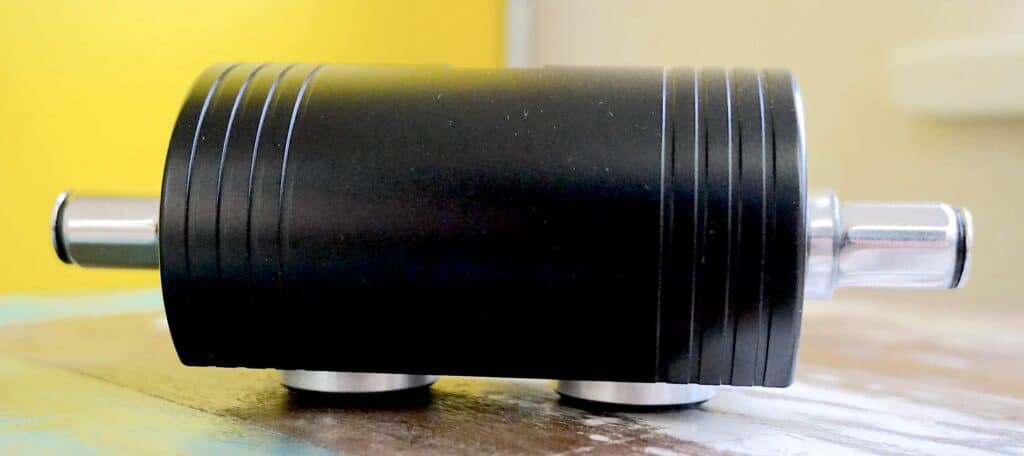
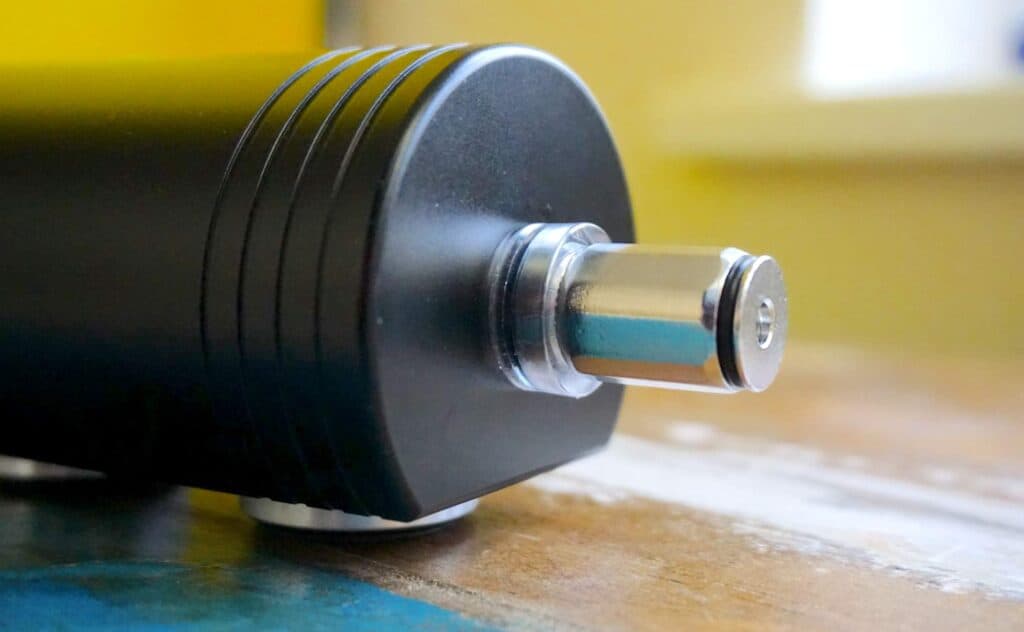
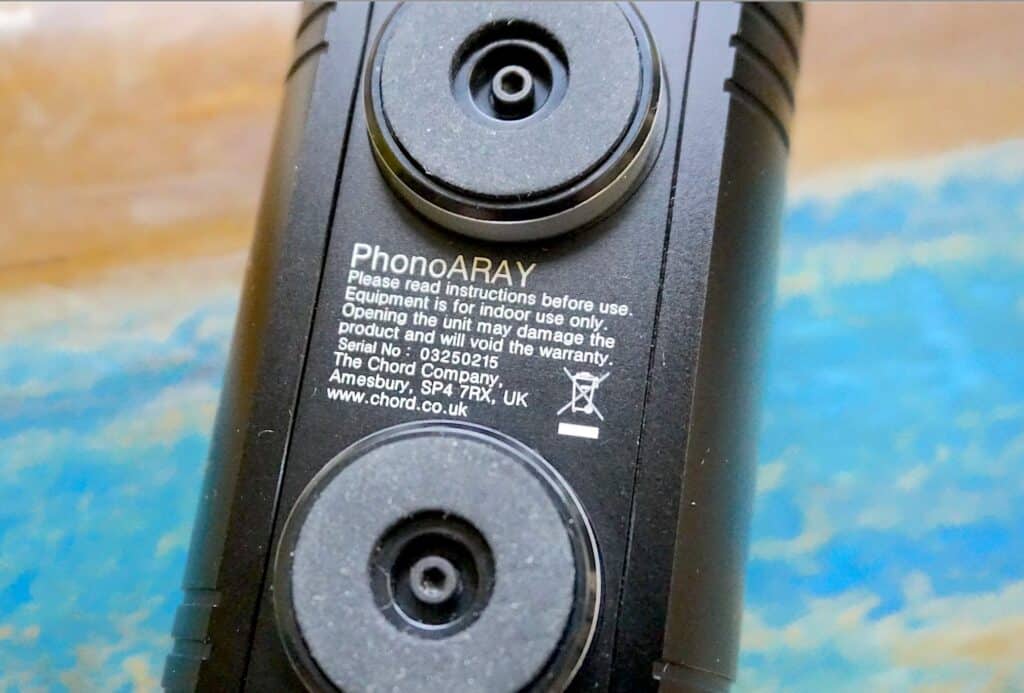
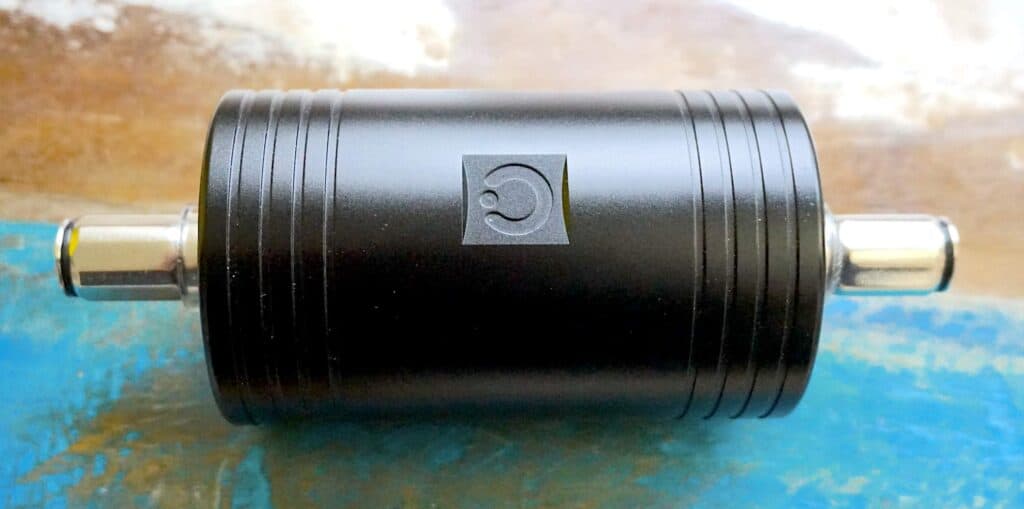
The PhonoARAY, spanning 100mm x 50mm is housed in a thick-walled machined aluminium billet. Inside is high-frequency energy absorption compound, fixed inside with resin, to reduce vibration and thus microphony. The casing rests on two lightweight, decoupled isolation feet. The feet fixing bolts should be loosened before installation to allow full decoupling and I did that before the review. At either end, you will find a combo banana/spade, speaker-type terminal to accept the cables I mentioned.
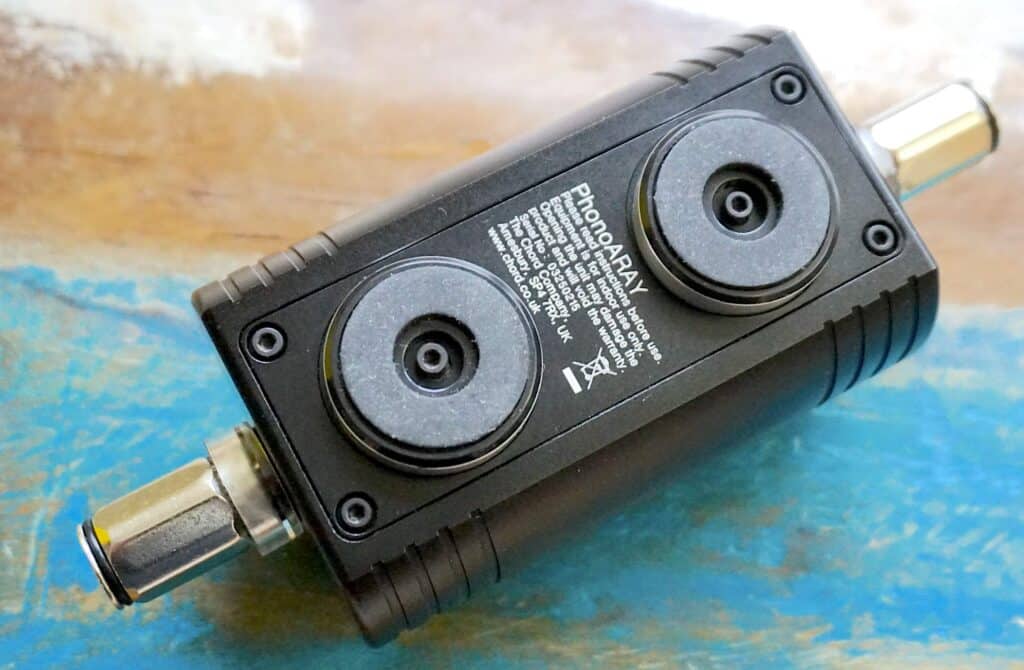
Supplied with a high-quality earth cable. You can upgrade at the point of ordering to Clearway, Shawline and Signature where prices are dependent on length and termination type.
So, how does it perform?
SOUND QUALITY
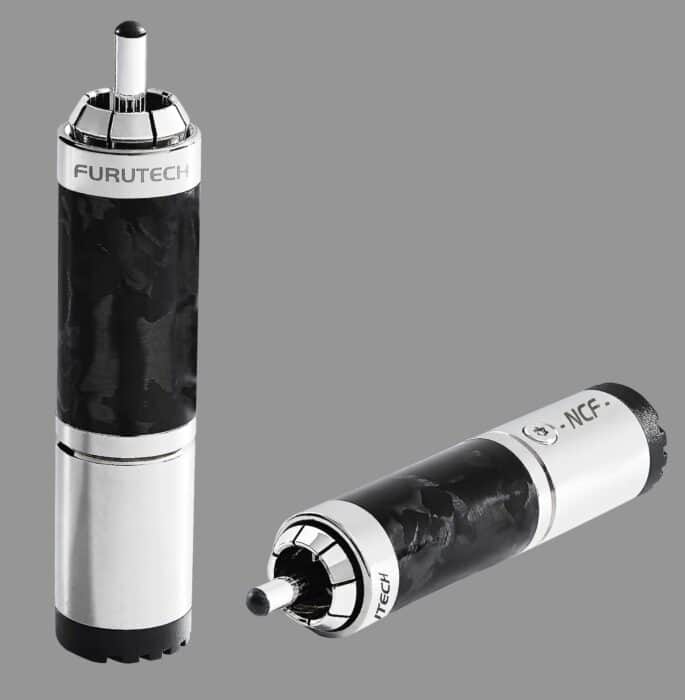
Before the test, I removed what grounding accessories I already had around my phono amplifier. A CAD GC1 (with two connections to my phono amplifier) and a Clear Line RCA plug via Furutech formally plugged into one of the MM sockets.
I then played the 12” mix of Gary Numan’s She’s Got Claws on my Origin Live Sovereign turntable. Sure, it sat on the Blok shelving, sat on Stack Audio and Soundeck isolation feet, used a Stack Audio Serene mat and Origin Live Gravity 2 puck and was festooned with quality cabling but, without any grounding accessories, at full pelt, the sax – both single and double tracked – did offer an upper midrange edge during crescendos. So I wondered if the PhonoARAY might address that issue? There was a front and centre bass guitar in this mix with an excellent bass solo right at the end of the track plus subtle cymbal effects and that vocal, for course. All elements to look at during the test. Percussion was also strong and synths too.
I hooked my turntable to the PhonoARAY and the PhonoARAY to my Icon Audio valve-based 2-box PS3 phono amplifier and listened.
An blimey, I had to race to make notes because changes happened all over the place. The largest and most noticeable change was the focus. Tremendous focus right across the soundstage, particularly around the stereo image which pushed back into 3D space. The presentation was not as loose now, not as messy. Mids were thus cleaner and offered improved clarity. That sax was honed and precise and less likely to scream during crescendos while bass was much tighter and impactful. Synth claps now had noticeable reverb hanging off them, which was new, cymbal hits offered more information.
In comparison, the lower-cost Furutech Clear Line (£205 each for RCA model) certainly reduced noise and removed the edge from the sax but didn’t quite have the same dynamic impact or focus.
The CAD GC! (Around £2,000) did remove more noise and did a better job, sure but it’s also twice the price. The PhonoARAY did a great deal of the de-noising job leaving you with £1k still in your pocket.
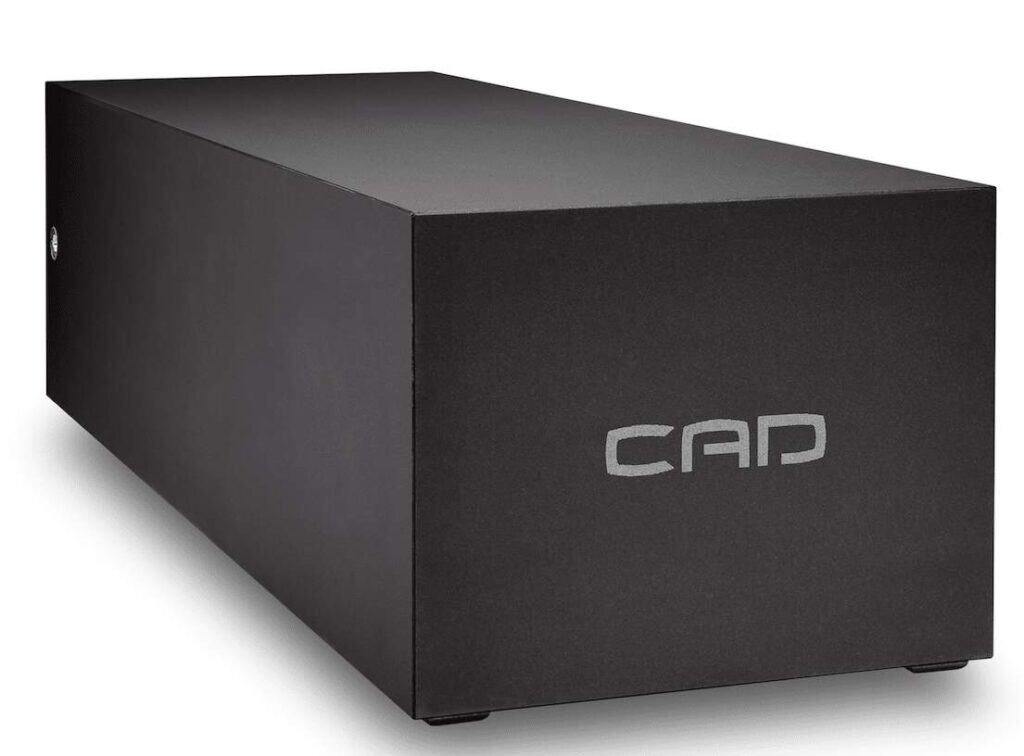
Changing the software to Johnny Cash’s At San Quentin, I wanted to see if the PhonoARAY could operate elsewhere in my HiFi system so re-attached all of the grounding kit to my phono amplifier again and then connected the PhonoARAY to the earth socket of my Aesthetic Calypso pre-amplifier instead.
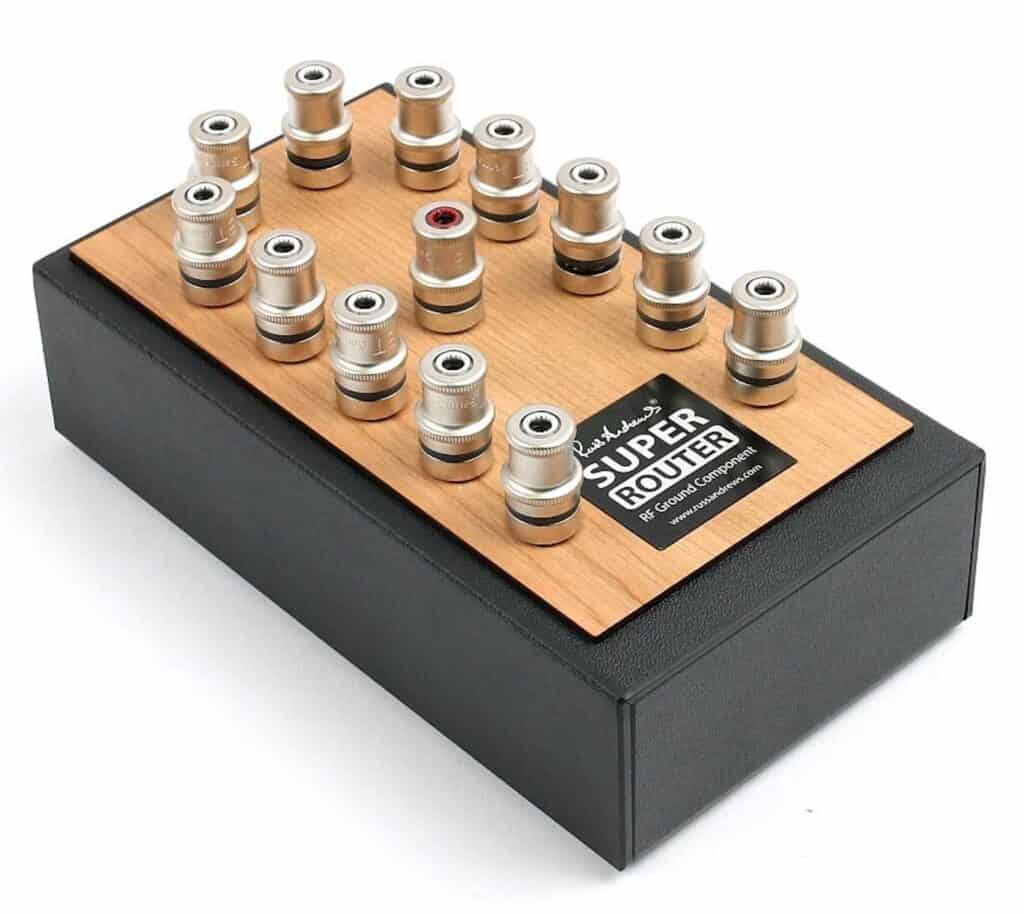
I compared it to the Russ Andrews Super Router which was the previous occupant at this station and thought that the PhonoARAY had the edge in terms of both clarity and lower noise.
Pondering on HiFi life, as I am wont, I did wonder if I might be able to use both the Super Router and the PhonoARAY together. Plugging the Super Router into the PhonoARAY and the PhonoARAY into the pre-amp, in serial terms, as it were.
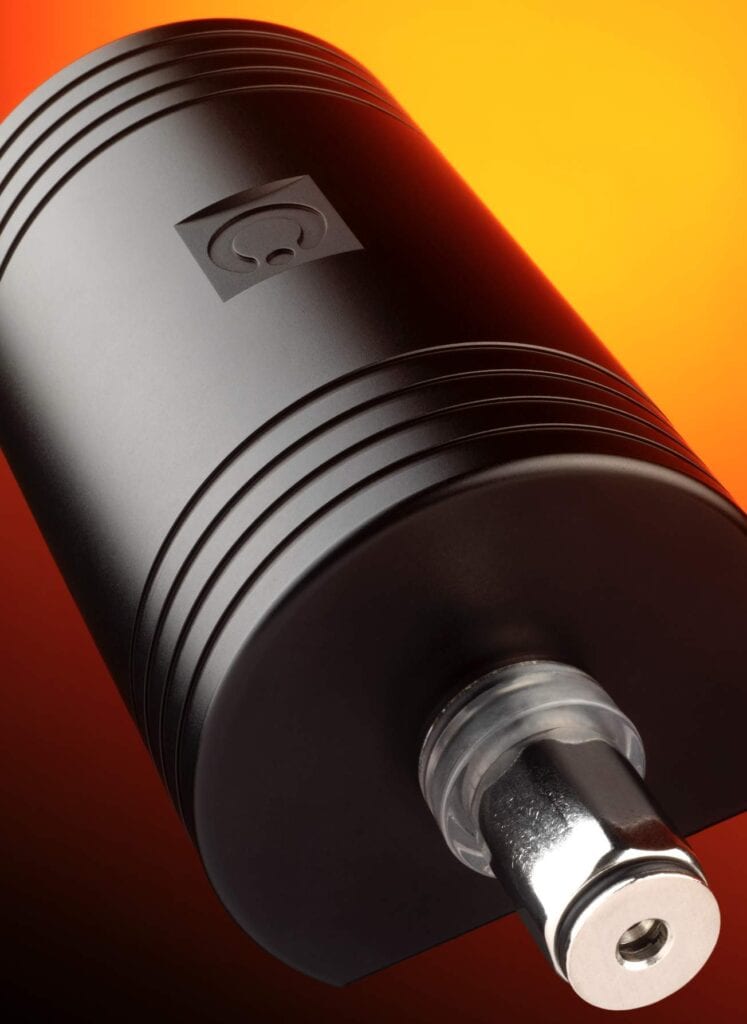
The Chord PhonoARAY is unusual for a grounding accessory in having a socket on the front and rear end. Every other grounding accessory I have tested only has a socket on one end. Hence, this was too good an opportunity to miss.
And by jingo, it does work! Acting as a two-stage filter, both grounding accessories acting in serial reduced noise still further. In this case, enabling me to hear more low-frequency synth-based effects during the bass solo and more information from the sax. The effect also worked with the CAD GC1 while connected to the phono amplifier.
CONCLUSIONS
One of hifi’s most neglected ancillaries, Grounding accessories are a brilliant method of reducing noise around your HiFi and thus, increasing sound quality. The Chord PhonoARAY does an excellent job of both.
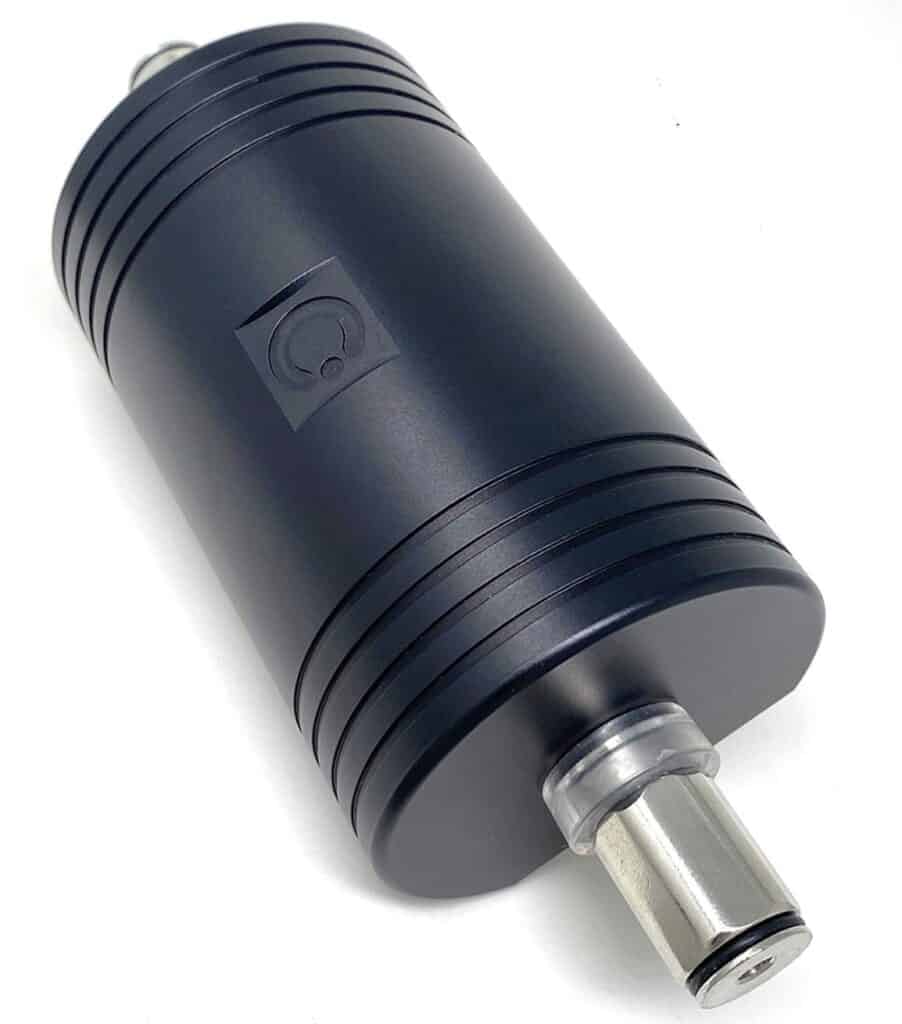
Sure, if works within your phono amplifier but it also works wherever you might see a grounding socket: your pre-amp, power amplifier, etc. I have yet to try it but I’d lay odds that if you loosened a screw on the chassis of your CD player, for example, and hooked a connected spade termination onto that, the PhonoARAY would help that CD player to improve its sound quality too.
This is a excellent accessory made even better for having sockets on both ends to enable serial filter-like connections! Unique in grounding terms, at least in my experience.
I could really do with five of them, to be honest. Off to the piggy bank I go to count my pennies.
CHORD PHONOARAY TURNTABLE EARTHING SYSTEM
Price: £1,030
Website: chord.co.uk
GOOD: low noise, dual sockets, easy to install, general sound quality
BAD: nothing
RATING: 8

Don’t forget to check out my Patreon Page at www.patreon.com/audiophileman, for exclusive postings and more!]
REFERENCE
Origin Live Sovereign turntable
Origin Live Enterprise 12″ arm
Icon PS3 phono amplifier
Aesthetix Calypso pre-amp
Icon Audio MB845 Mk.II Monoblock Amplifiers
Quad ESL57 Electrostatic Speakers
Blue Horizon Professional Rack System
Harmonic Resolution Systems Noise Reduction Components
Air Audio AC-2K Balanced Transformer
A good comparison would have been a separate earthing rod(s) in the garden! For a fraction of the price of the Chord unit, several earthing rods could be employed as well as using a quality earthing cable.
Mike
I’m not sure about the validity of that one. Not everyone has a garden, an available/desirable outlet to connect to one if they have a garden, live in above ground-level flats and bedsits, live in rented accommodation where digging up a landlord’s garden is verboten, etc., etc. I did review the Puritan option on this website, though, for anyone out there who wants to see my thoughts on such a set up: https://theaudiophileman.com/ground-master-puritan-review/