The Article
BURSON’S CONDUCTOR VOYAGER
1st June 2026
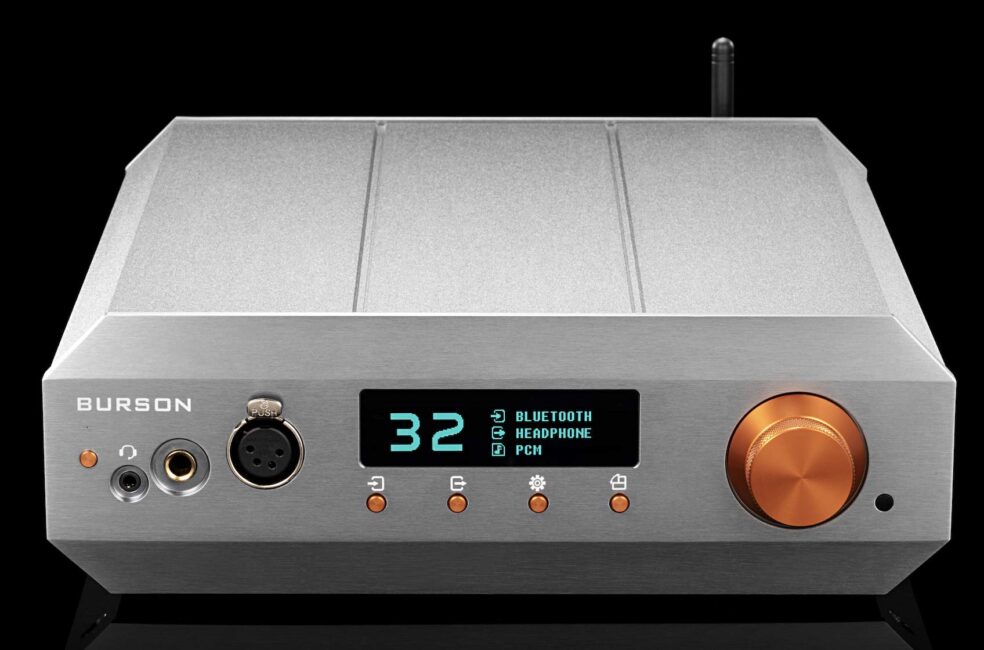
All the way from Australia, this stocky headphone amplifier is packed with a host of features. Paul Rigby presses as many buttons as possible
Price for the Conductor Voyager one is £3,900 which, of course, is pretty high for a headphone amplifier or any piece of HiFi equipment but there’s a lot going on here and I will address a lot of that within the Sound Quality test section.
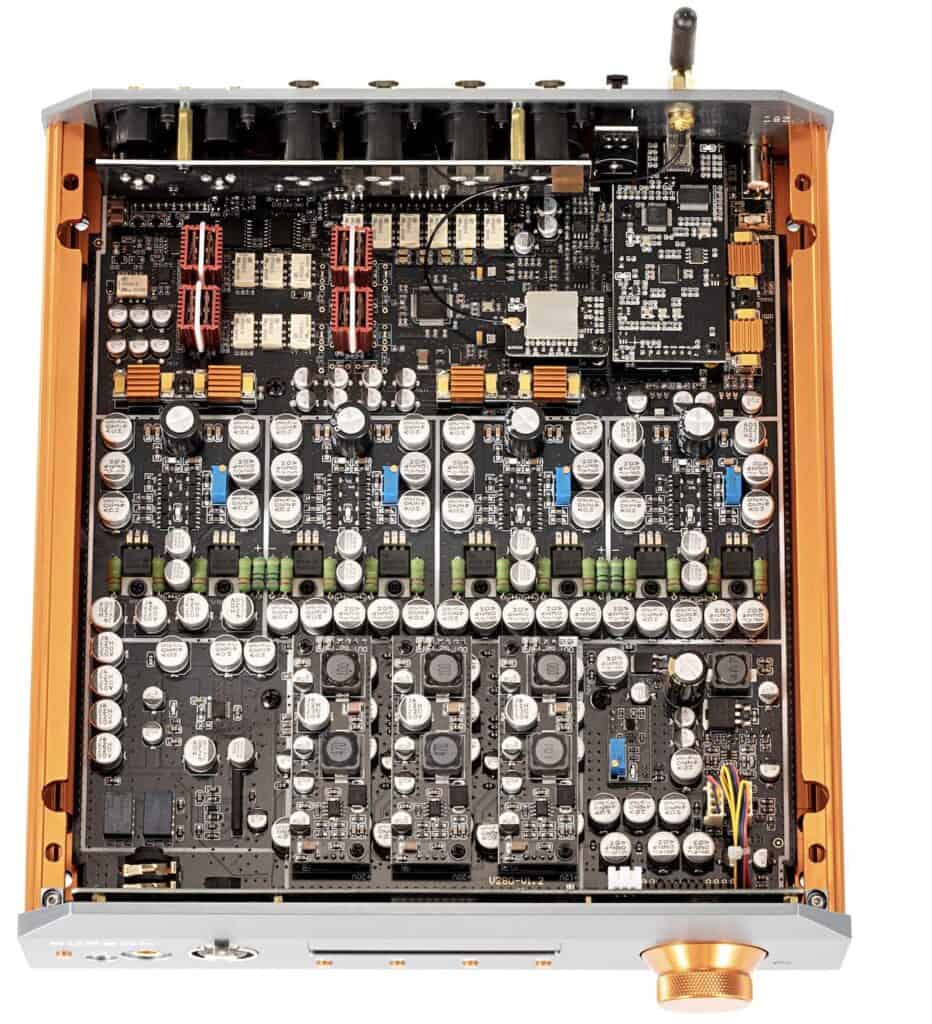
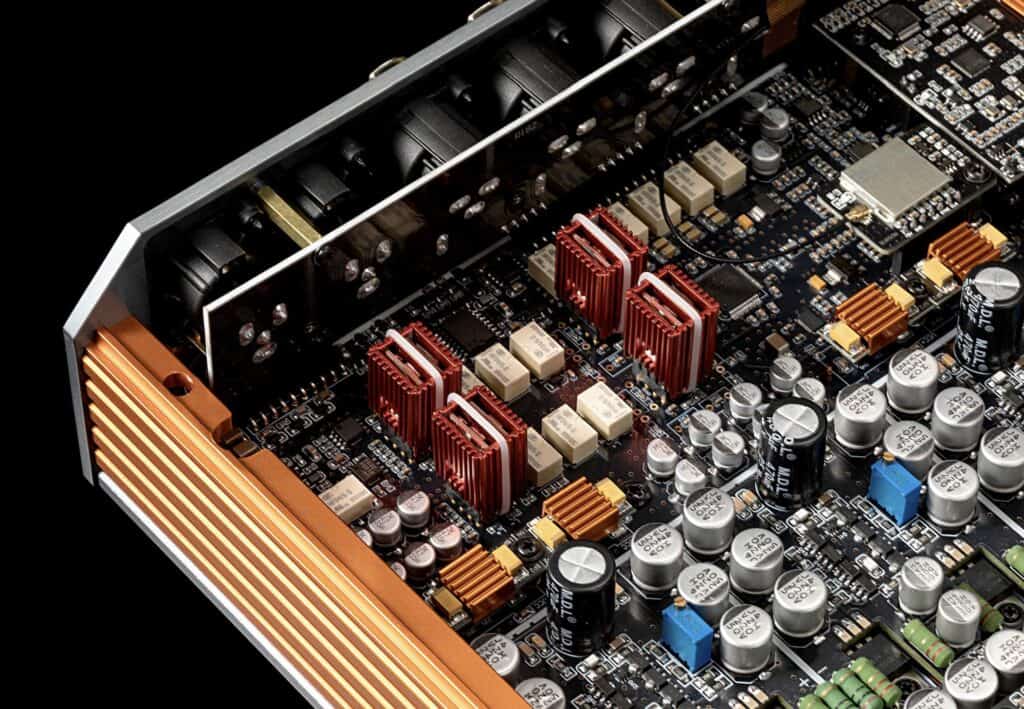
Hence, I’ll keep this section as brief as possible. Inside the Class A Conductor Voyager is an ESS 9039 Pro DAC chip that supports up to 768Khz PCM and DSD512. You get a Fusion Core power supply using GaN transistors for low noise, a max current module that removes the transformer for a host of transistors and faster charging capacitors, V7 Op-amps and Silent Power modules to reduce noise and a case that itself acts as a cooler.
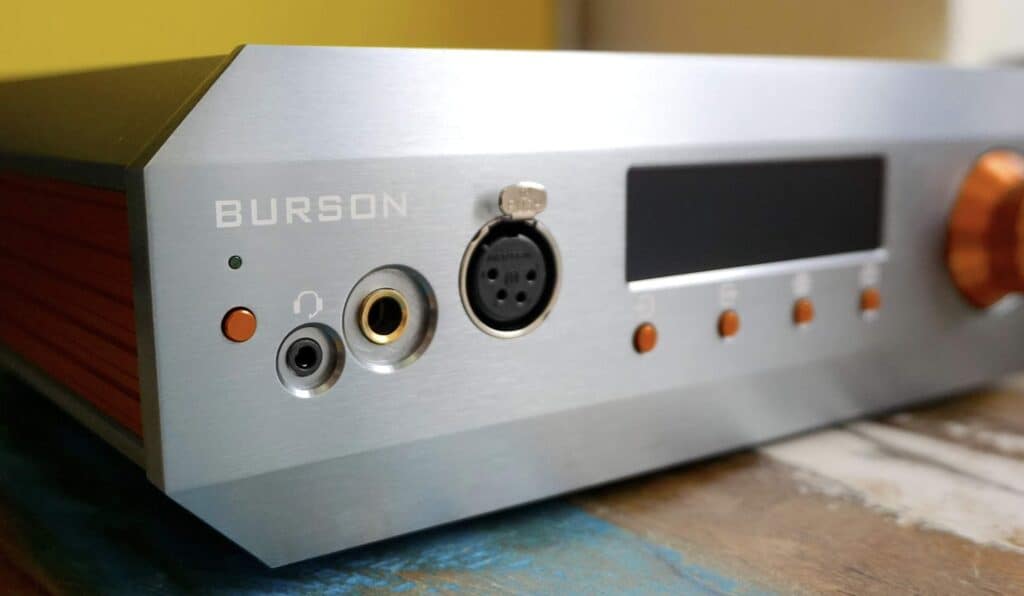
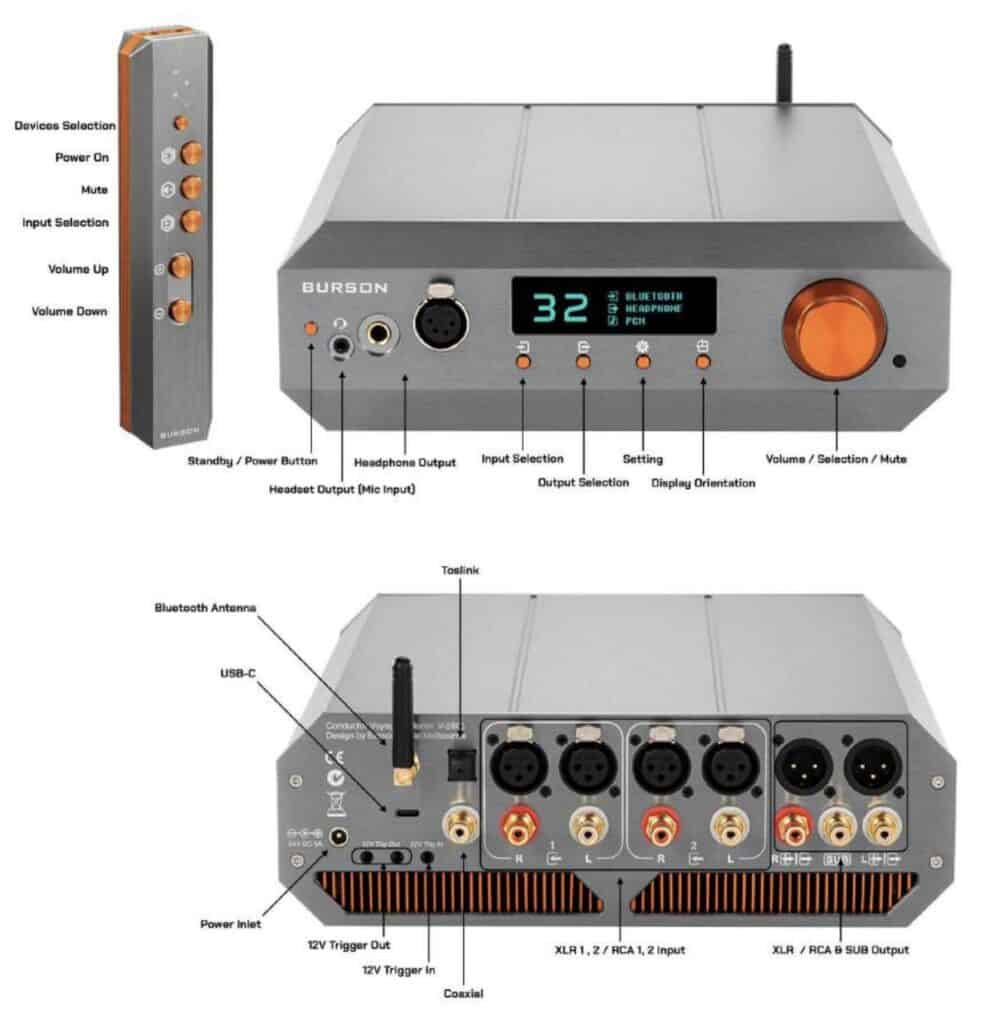
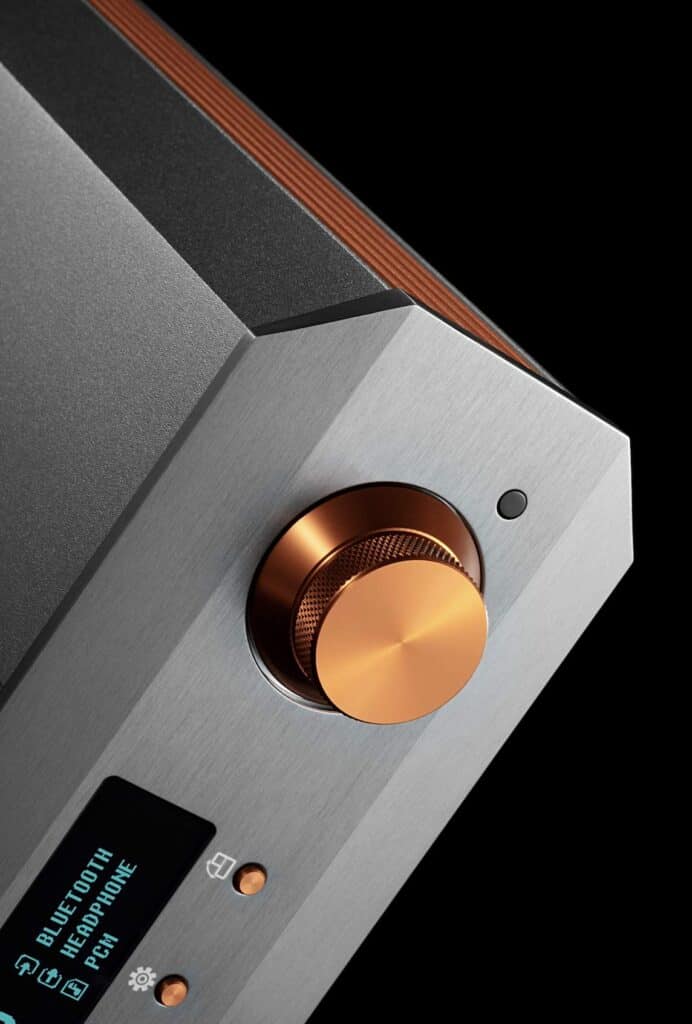
The front includes a power button, mic output for gaming, 3.5mm, 6.35mm and XLR headphone ports, input and output buttons, settings and display orientation. Hence, you can vertically mount the unit and the output swivels into vertical mode suit. Next to the output window is a volume/selection/mute multifunction rotary knob.
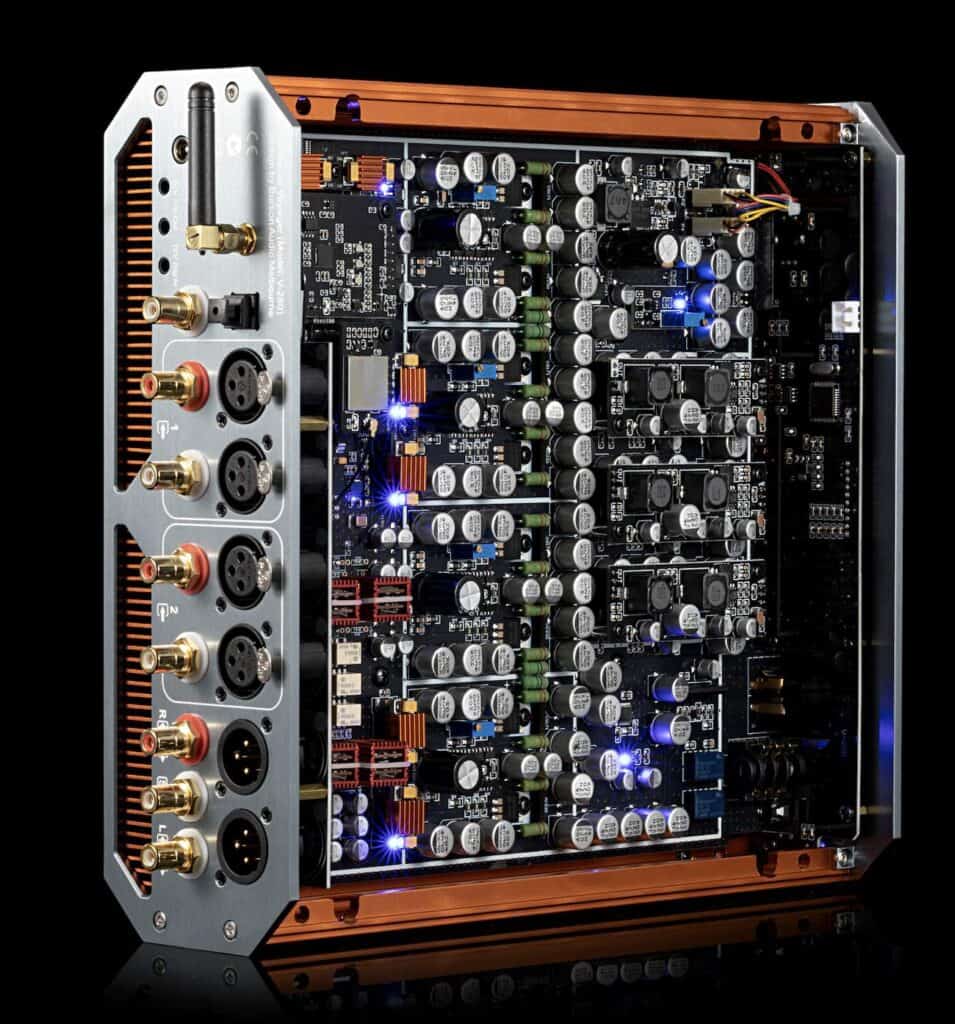
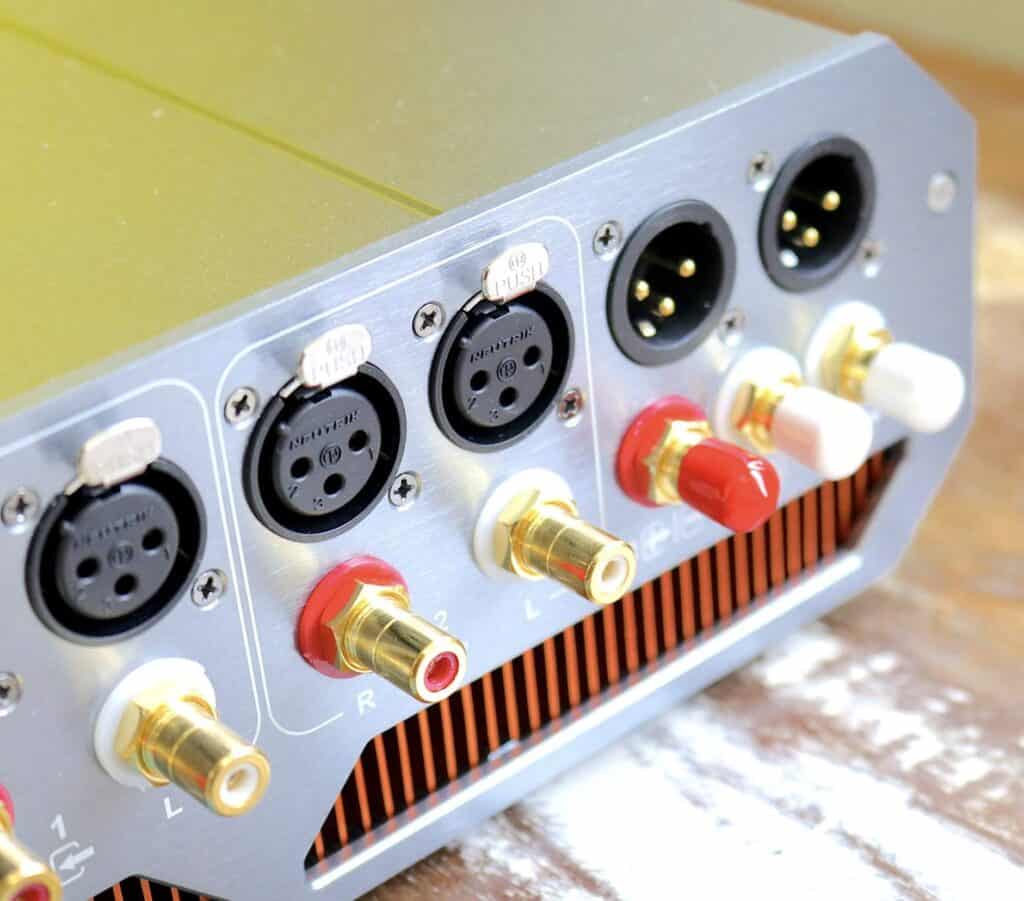
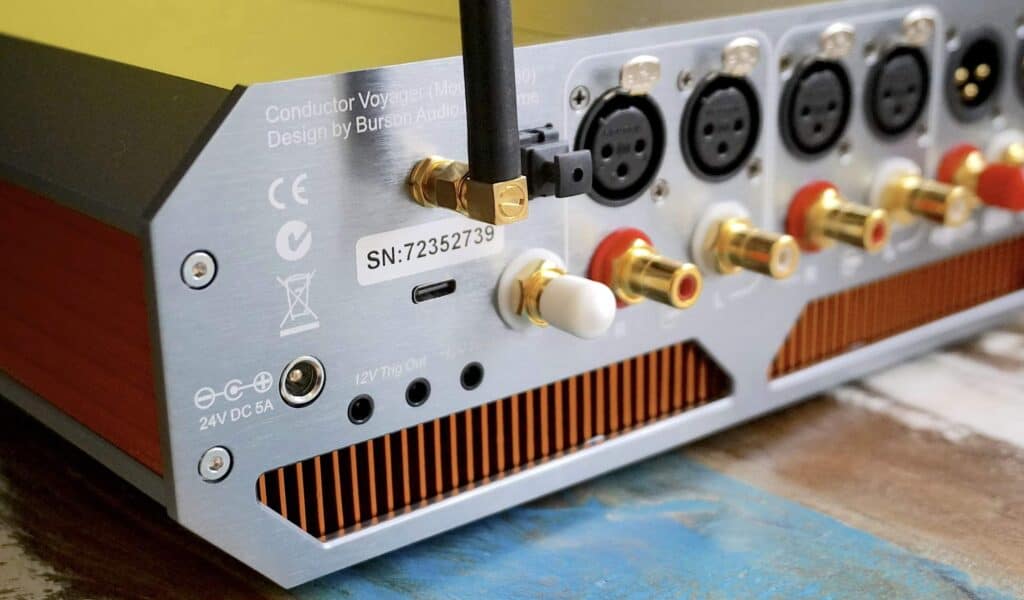
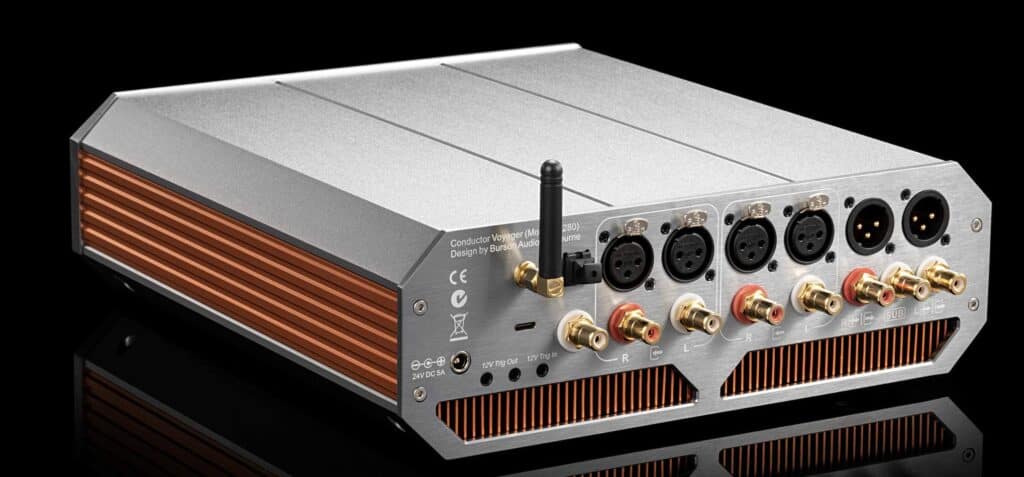
On the rear is a Bluetooth antenna, power port, triggers, coax and optical plus USB, single-ended and balanced inputs and outputs.
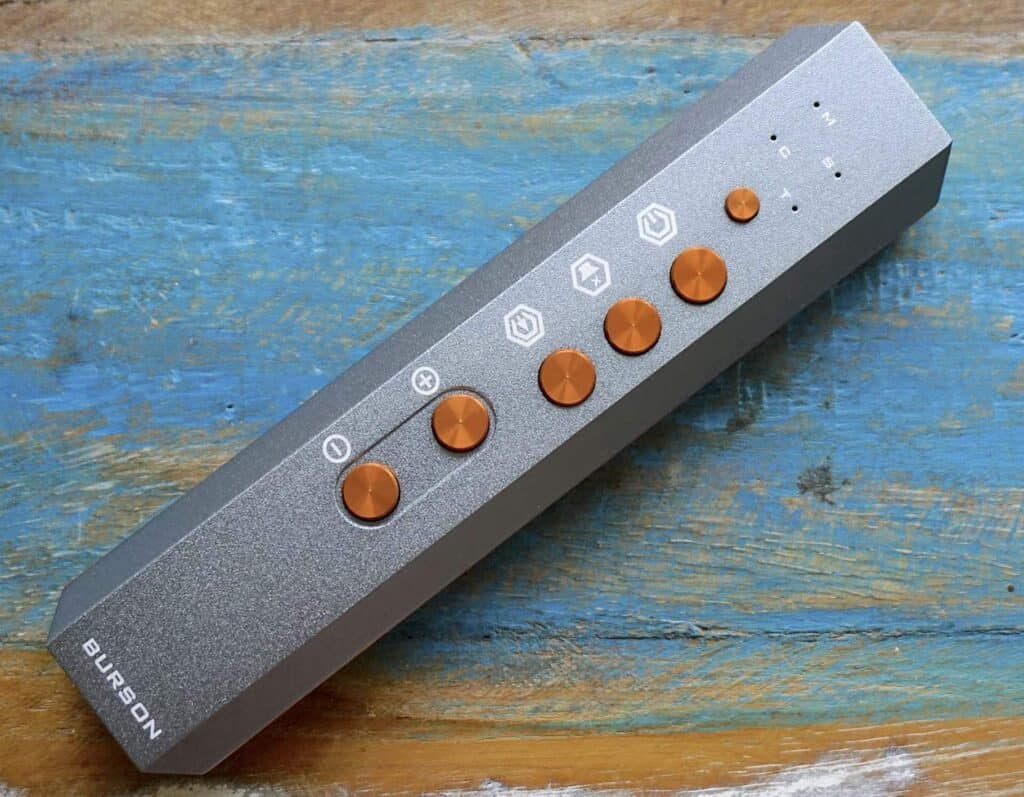
A chunky metal remote control is included. You will need to screw off the back to insert two AAA batteries, though.
Spanning 265 x 270 x 85mm, it weighs in at 7kg.
SOUND QUALITY
To begin, I connected my Benchmark DAC2 HGC, hooked up a CD source via my Audiolab 6000CDT and played the acoustic guitar of Adrian Legg and the album, Wine, Women and Waltz.
Before I looked at other, reference hardware, I wanted to make some internal software choices that affected filtering and the like.
SOFTWARE CHOICES
You may have seen other reviews out there dismissing all of the following as a waste of time. I think otherwise. If you spend time listening and your system is good enough, you will hear differences.
First up? According to the company, the DPLL Bandwidth (Digital Phase-Locked Loop) adjusts how tightly the DAC locks onto incoming digital signals. Set to High, I found the sound was brighter and harsher. Hence, Low was my preferred setting.
Next were the internal FIR filters. Linear Phase Apodizing Fast Roll-Off and Minimum Phase Fast Roll-Off sounded slightly harsh to me. Both Minimum phase slow roll-off and Minimum Phase Slow Roll-Off Low Dispersion sounded better balanced. I plumped for the former as my preferred filter.
Next was IRR Bandwidth (Image Rejection Ratio) which controls how aggressively the DAC suppresses unwanted out-of-band frequencies. The settings range from BW/8, BW/4, BW/2, BW is the mid point then BW X 2, BW X 4 and IBW X 8. The latter sounds too soft with smudgy transients, that rolled off in the upper frequencies. At the other end of the scale, BW/8 is too tight, overly focused and too controlled. I found BW x2 to offer the most naturalistic setting of the lot.
The DAC Path changes the internal signal routing inside the ESS chip. I left this one at ‘no bypass’.
THD Compensation (Total Harmonic Distortion) is designed to cancel out tiny harmonic distortions introduced during digital-to-analog conversion. Turned on the sound enhanced clarity so I turned both C2 and C3 on. Turning it off should provide a slightly warmer sound and that’s what I did.
Take time when selecting your own filtering set up. You’re looking for a balance here that suits your ears.
VS ICON AUDIO HP8 MK.II
I then compared the Burson with my reference Icon Audio HP8 Mk.II valve head amp. While the HP8 had a laid-back, warming and detailed sound, surprisingly so did the Burson. Well, to an extent but with added transient accuracy and possibly great midrange insight. Bass was also rather tighter and better integrated into the mix. While I’m at it, bass was also pretty fast, there was zero drag or smearing across the lower frequencies.
BLUETOOTH PLAY
I then moved to Bluetooth mode which, to me using a desktop head amp, remains a novelty. I hooked up my Astel&Kern Kann Alpha and played some voice output via BBC Radio 4. The mids and treble offered great voice modulation, lots of expression and there was a real sense of place in terms of the studio and the room they were broadcasting from. All helped, no doubt, by the LDAC codec. aptX and aptHD are also provided.
LAPTOP SOURCE
Next, I hooked my MacBook M3 desktop laptop to the Conductor Voyager via USB-C and played a variety of music including The Doves, Miles Davis and Tom Waits.
Now sure, as a source, a laptop is inherently compromised but the Burson kept admirable control of the full suite of frequencies. No peaky treble or woolly mids were heard here and despite a lack of dynamic reach and bass control, the Burson managed to maintain a distinct musicality that kept me tapping a foot.
CONCLUSION
Packed with features for input, output and everything in between, the Burson Conductor Voyager is almost a hobbyist machine, such is its tweakability and varied options. And I didn’t have time to cover absolutely everything here.
I just wanted to provide a flavour of this comprehensive machine. The Burson Conductor Voyager looks different, operates different and is different but sounds absolutely lovely. I have reviewed a few Burson boxes over the years and all were compromised in some way. Not this one. The Conductor Voyager is the best yet. No question. Highly recommended.
BURSON CONDUCTOR VOYAGER HEADPHONE AMPLIFIER
Price: £3,900
Website: bursonaudio.com
GOOD: feature set, overall sound quality, build, tweakability
BAD: nothing
RATING: 9

[Don’t forget to check out my new Patreon Page at www.patreon.com/audiophileman, for exclusive postings, giveaways and more!]
REFERENCE
Apple iPhone & MacBook
Astell&Kern Kann Alpha DAP
Harmonic Resolution Systems Noise Reduction Components
Air Audio AC-2K Balanced Transformer
Chord Powerhaus M6 power block