The Article
3030C SPEAKERS FROM Q ACOUSTICS
20th October 2025

Powered by a pair of Continuous Curved Cone mid bass drivers, Paul Rigby wonders if that means better sound then?
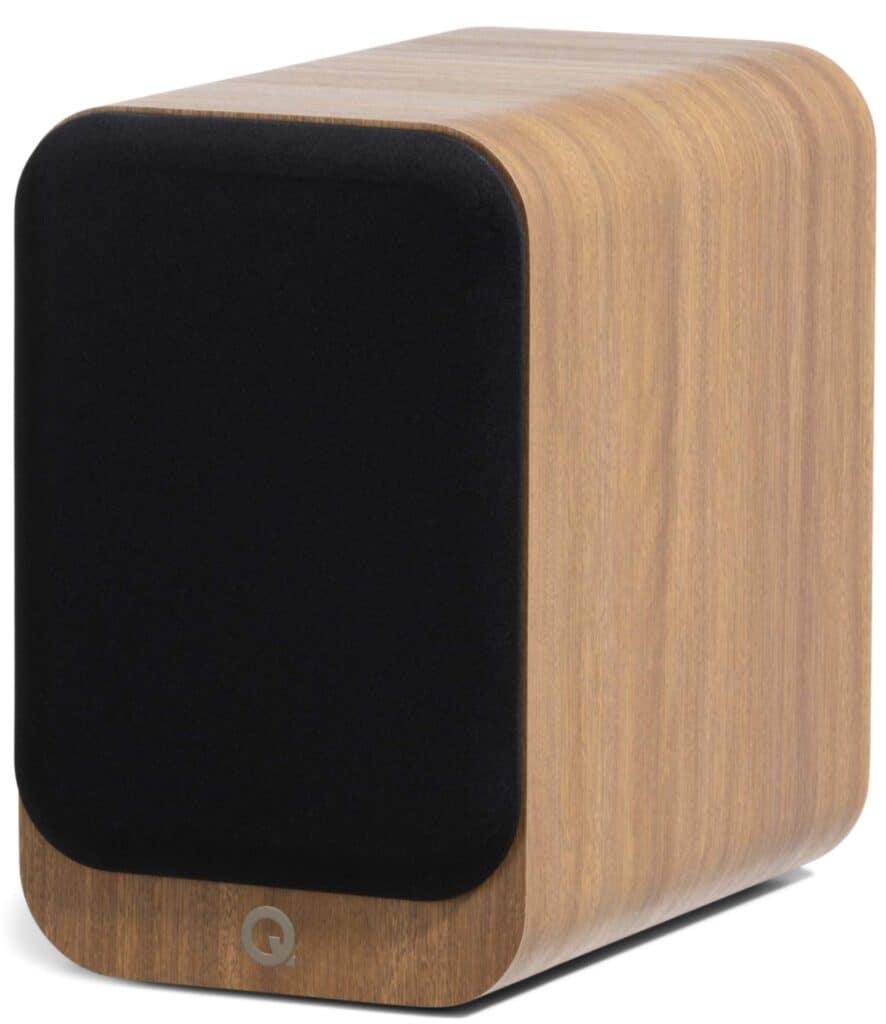
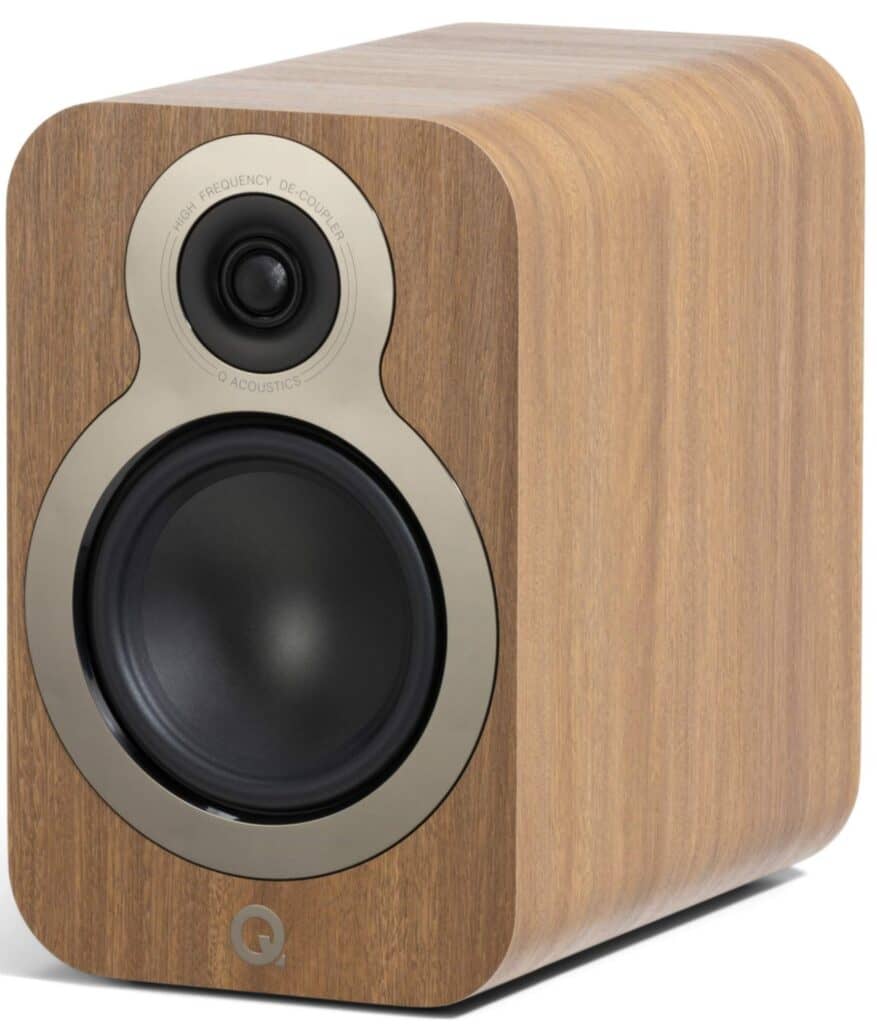
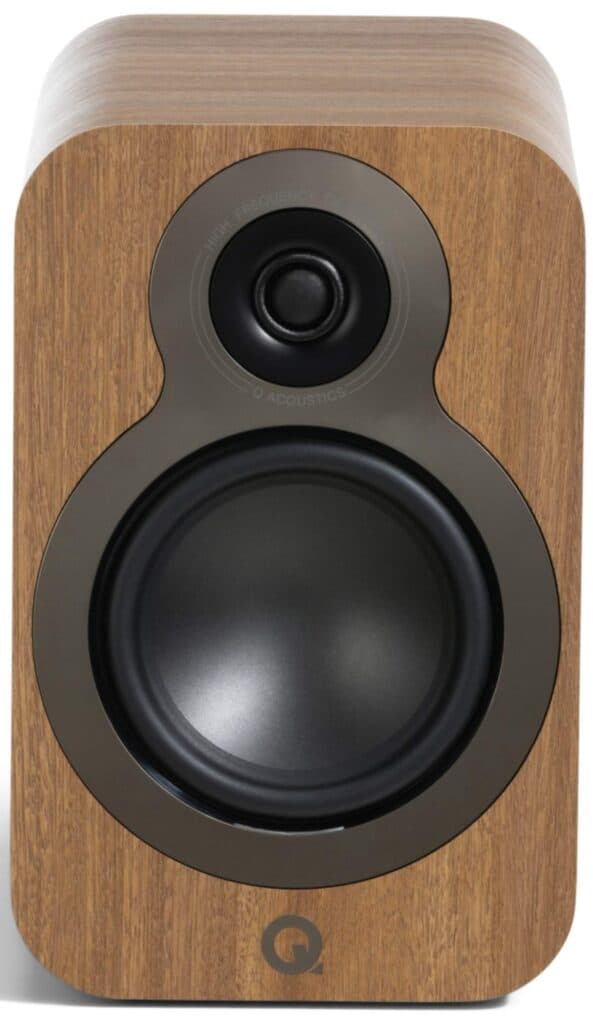
And if you dragged a pair of the company’s older 3030i speakers, coughing and spluttering from the darkness and sat each design type next to each other, that would be the first difference noted by your eye. That 142mm (5.5in) mid/bass driver aims to provide good bass qualities combined with control around the mids.
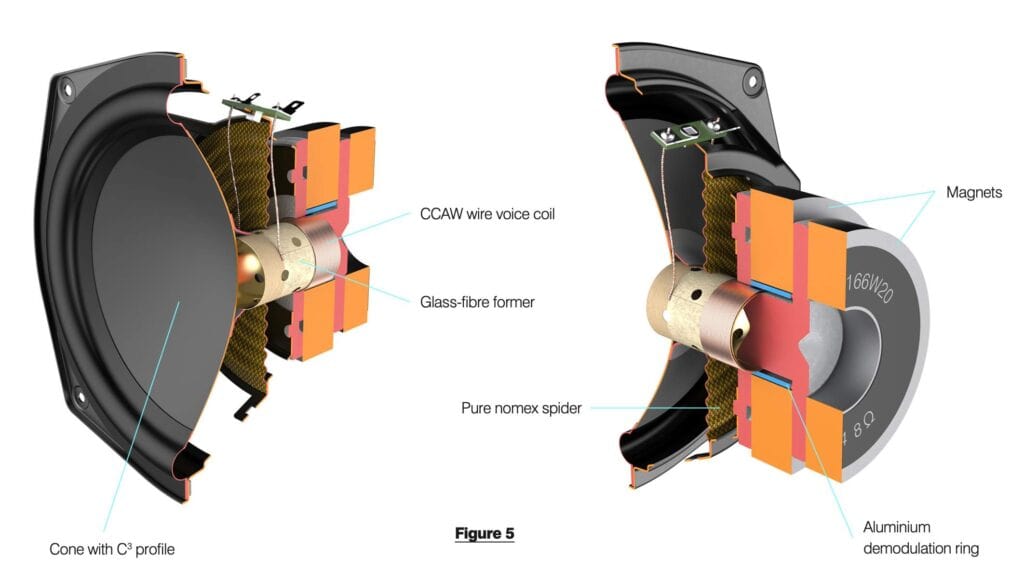
And that control should complement the Point-to-Point bracing construction of the cabinet to provide a rigid container for that mid/bass driver.
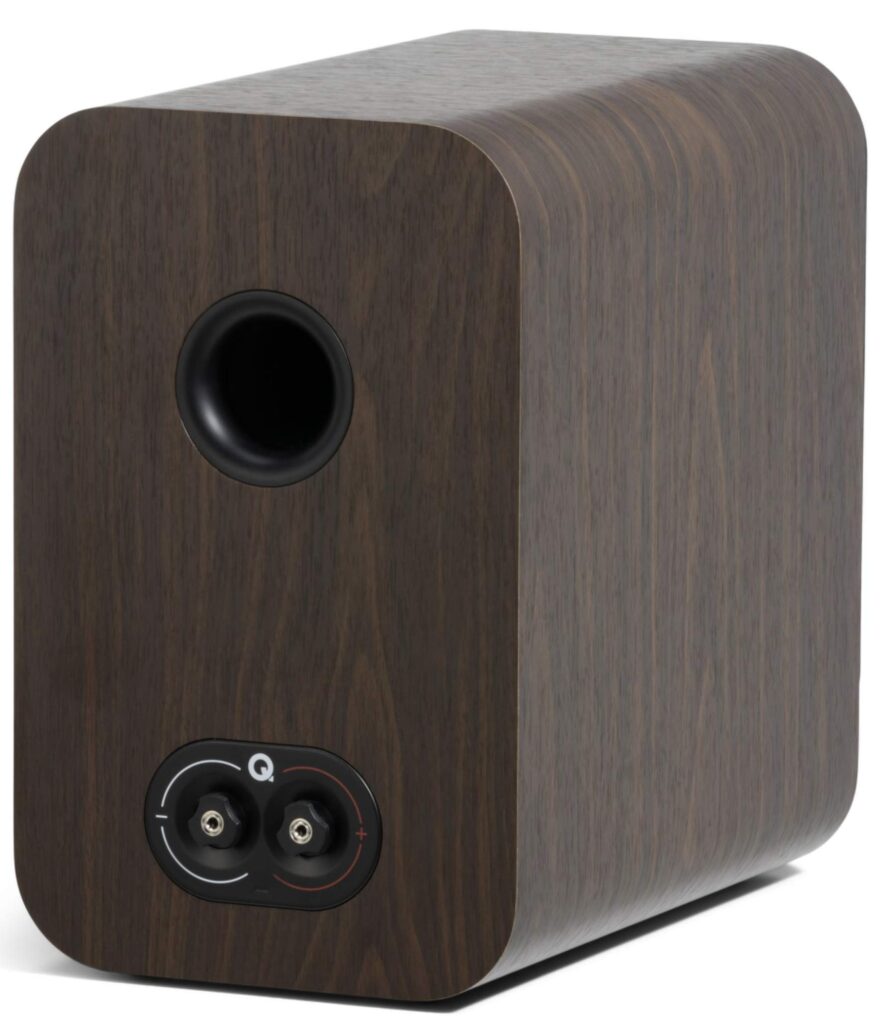
Similarly, Helmholtz Pressure Equaliser tubes should prevent the build-up of standing waves which reduces distortion.
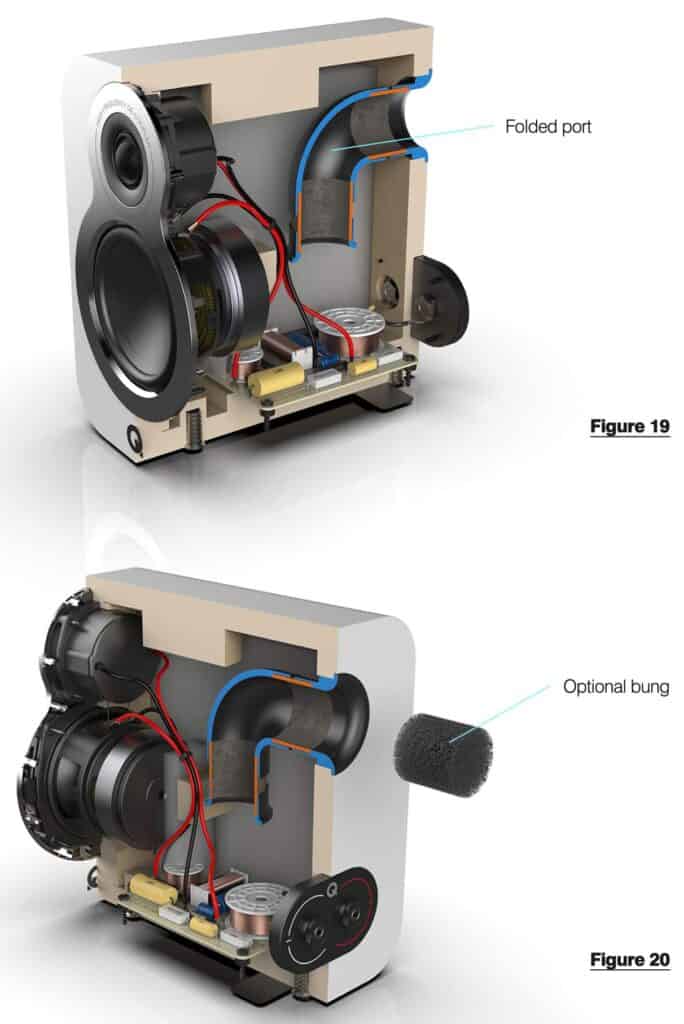
As for the 22mm (0.9in) tweeter? That is an isolated and sealed unit that floats away from the baffle so it should not be infected by vibration from the rest of the speaker unit. Again, improving sound.
These 6 Ohm speakers span 324 x 205 x 329mm and weigh 7.5kg. Sensitivity is nothing remarkable ether way at 86.5db so you should be safe with an amplifier of 25W and higher. Give yourself 35W if you can to provide some headroom and prevent any amplifier straining.
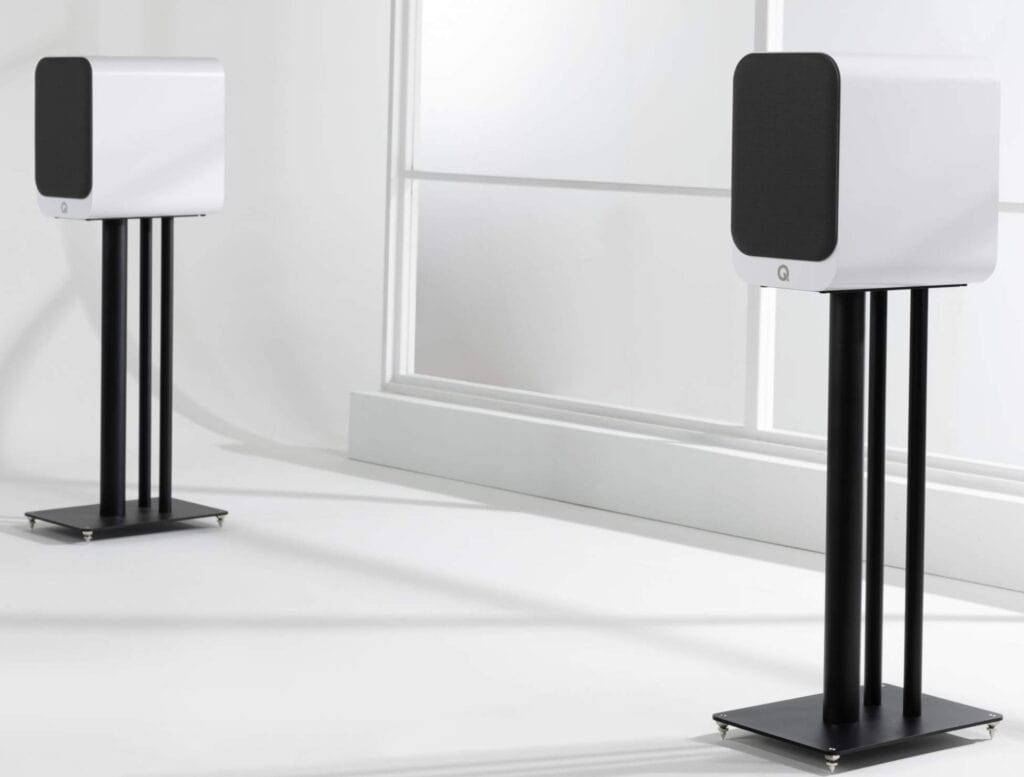
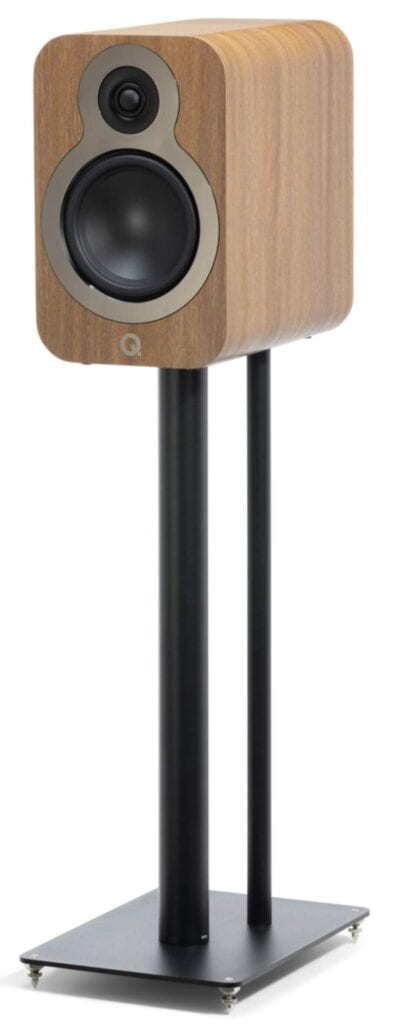
These speakers can be finished in Pin Oak, Claro Walnut, Satin White, Satin Black.
Question is, of course, how do they sound? Well lets have a little listen shall we?
SOUND QUALITY
To power the sound tests I initially turned to a grand old record label from the past, Play it Again Sam and the band, Frank Black – the ex-Pixie front man himself – and the Catholics with their high-energy rock track, All My Ghosts from their self-titled 1998 album on vinyl.
VS 3020i
To test the 3030C speakers I decided to raid the Q Acoustic archive and compare them to their smaller cousins the 3020i stand mounts through which the 3030Cs have a direct relationship with in both design and sonic terms. Bass should be improved on the 3030Cs but what about the rest?
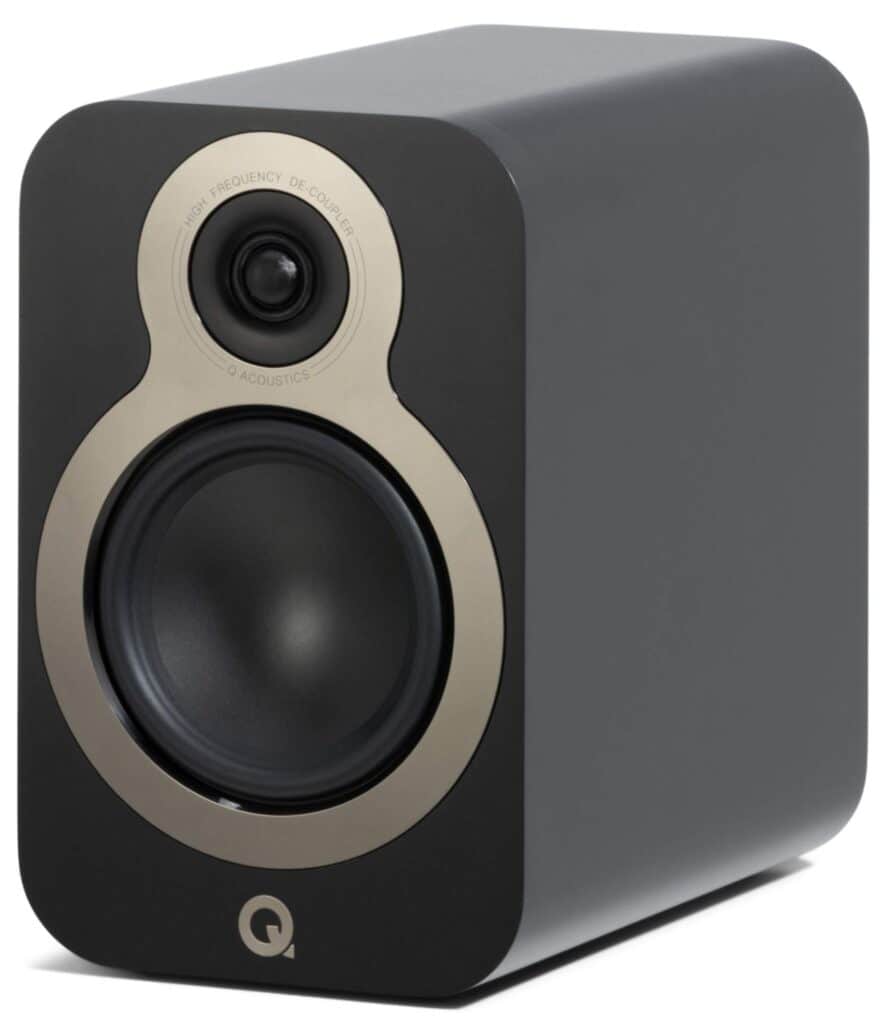
Well let’s talk about ‘the rest’ first shall we because, immediately, I noticed a large rise in clarity. Via the 3030Cs, the band sounded like they were standing in an Arctic expanse. Such was the room available but there was also a clean, fresh sound to the music. This was rock with the cling film just removed. New. Shiny. Natural. Unprocessed. And yes, the bass was larger, deeper with greater mass.
The vocal was also better focused. In such a way that it was easier to understand what Frank Black was singing. I was picking out new words from the delivery now.
This was music with no excess fat.
VS MOTION 15i
Moving to Martin Logan for a moment and listening to their relatively more expensive Motion 3i speakers with their AMT tweeters, the Martin Logans had a noticeably more focused soundstage. Compact, you might say, especially when compared to the open and broad freedom presented by the 3030C speakers. The upper mids and treble were also slightly more pinched and accentuated from the Martin Logans compared to the more controlled mids and treble from the Q Acoustics pairing. But I think that was a product of that tight focus from the 3i speakers. As much as I love the Martin Logans though, I did prefer the space and relative neutrality offered by the 3030C designs.
Moving to CD now and the Bubble Man himself, Michael Buble’s album Call Me Irresponsible on Warners.
VS 3030i
For the next test? How about comparing the 3030C speakers to their direct descendants, the 3030i speakers? Basically the same size and shape as the 3030i speakers that 3030C mid/bass driver is the principal difference here. So how did they compare?
The 3030Cs sounded better organised. Better directed. There’s a midrange and treble structure here from the orchestral backing and the piano especially that the 3030i speakers – as much as I love them and I do dearly – just do not have.
If I could compare the two in these terms. The 3030C speakers sound like a minimalistic Swedish apartment. All clean lines, books neatly stacked on the coffee table, chairs white enough to match the relaxing Persian cat lounging on the geometric rug positioned…just so. The 3030i speakers sound like a student squat from the 1970s, socks hanging from a bulb hanging from the ceiling, mouldy sandwich wedged between the sofa cushions, beer stains on the rug and a window won’t close properly.
The soundstage from the 3030i speakers sounds a bit of a mess, basically, while the 3030Cs are pure and clean and tidy, relaxing the mind just listening to the things.
Does the 3030i designs have more bass than the 3030C speakers? No but the illusion is that bass from the C models is superior. Purely because it is better structured and organised.
CONCLUSION
The change in personality from the Q Acoustics 3030i speakers to the 3030C speakers under review here was both a shock and a surprise but both were entirely welcome, I have to say. The sense of calm and serenity that the 3030C speakers apply to music is profound. Even high-energy music has a sense of freshness about it.
That is, these speakers let go of the music, giving it freedom to do its own thing. That feeling of freedom is the core of the 3030C speakers. They don’t impose themselves on your music. They, in fact, let go. “Run! Be free,” they say. And there is no greater gift to give to your bouncing beats, says I. In short? I love this speakers. I think you will too.
Q ACOUSTICS 3030C STANDMOUNT SPEAKERS
Price: £499/€629/$699 (Stands £195/€249 /$269)
Website: www.qacoustics.co.uk
GOOD: clean midrange, low noise, structured bass, treble clarity
BAD: nothing
RATING: 9

REFERENCE
Speakers – see above
Tellurium Q cabling
Blue Horizon Professional Rack System
Harmonic Resolution Systems Noise Reduction Components
Air Audio AC-2K Balanced Transformer
All vinyl cleaned via Degritter Mk.II
Chord Powerhaus M6 power block
Connect Fidelity Six Star Power Block
Furutech NCF Clear Line Mains Connector