The Article
PLAYSTREAM A5 FROM ADVANCE PARIS
4th August 2025
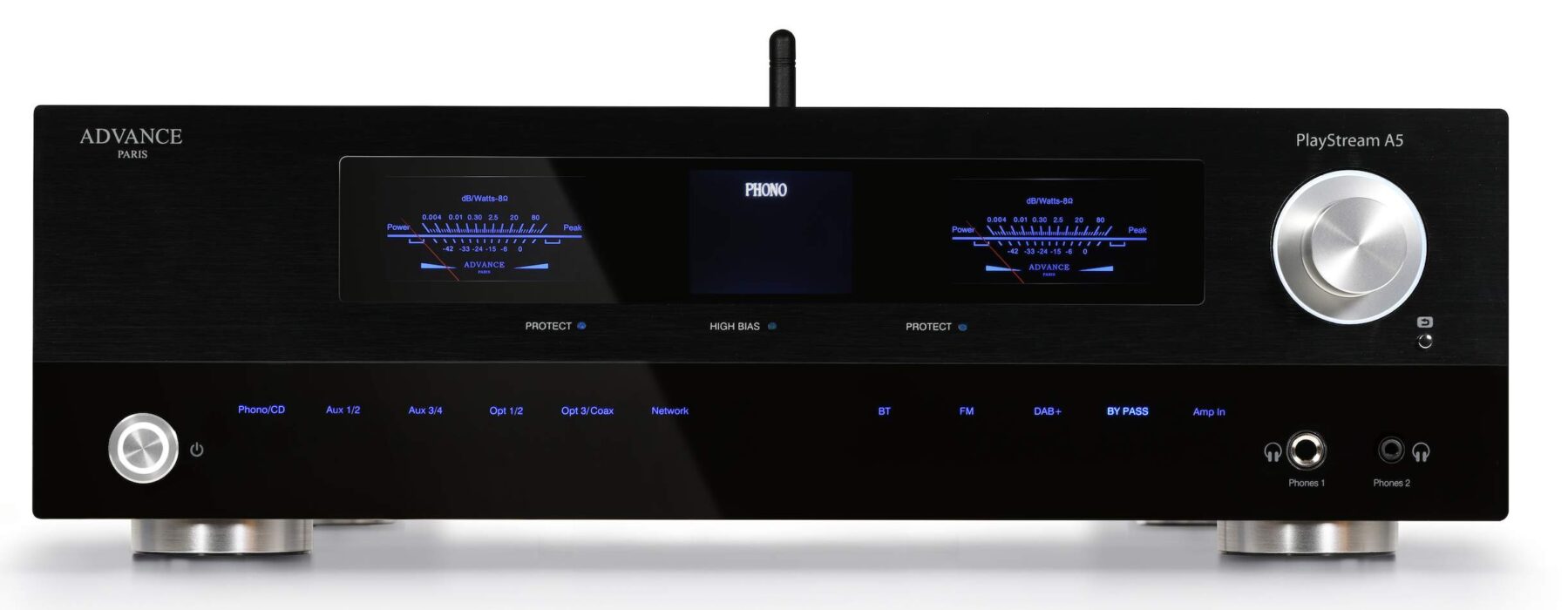
Described as a “connected amplifier”, some might also run with the current fashionable term, streaming amplifier. Paul Rigby wondered if this £1,400 integrated amplifier could serve as a suitable upgrade for lower cost machines
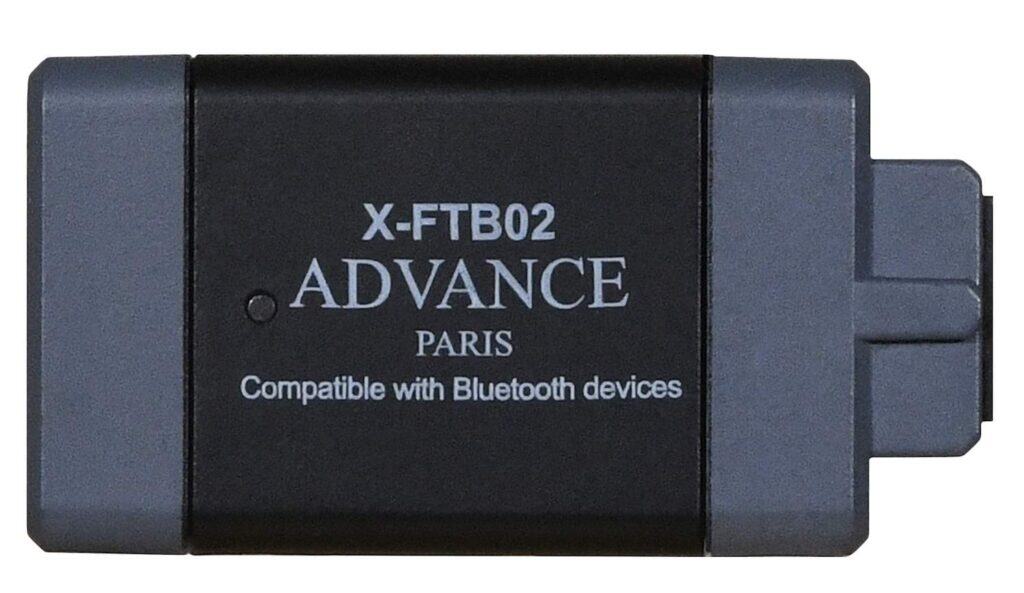
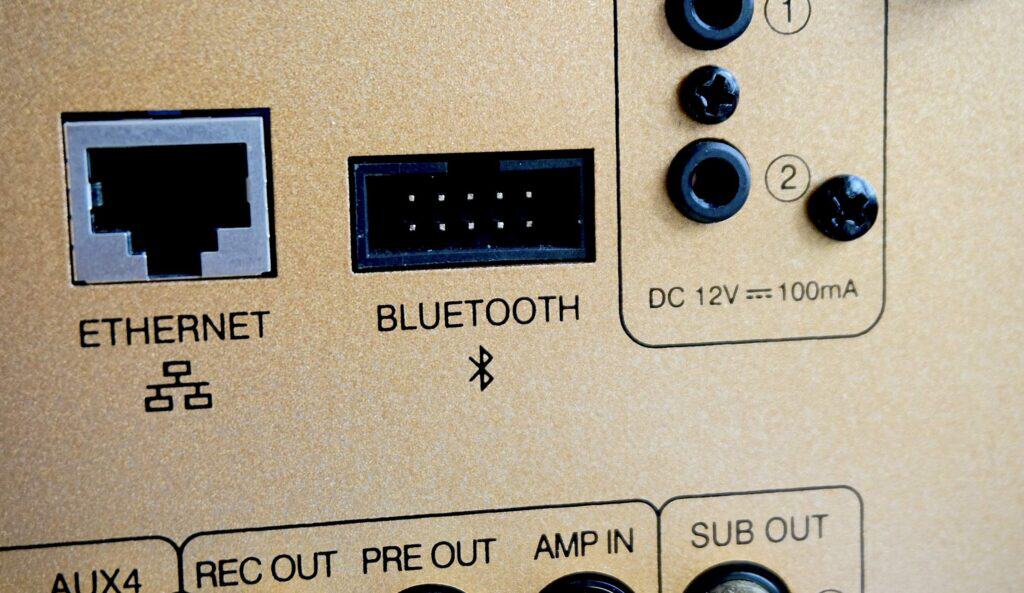
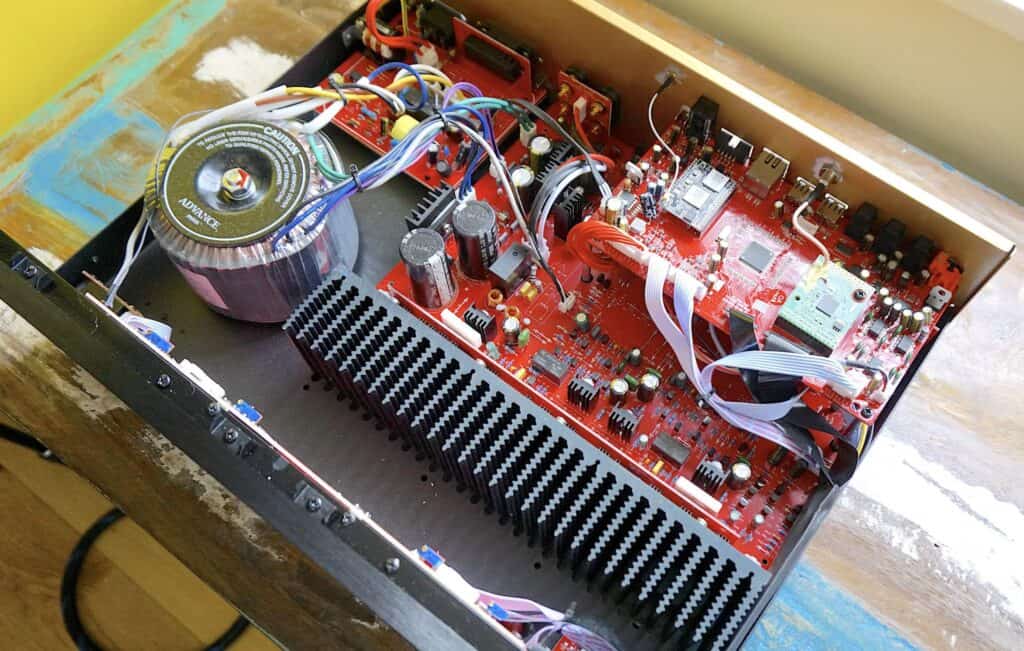
And it is a big box spacing 430 x 370 x 135mm and weighing in at a useful 8.1kg. Featuring a Burr Brown PCM 1796 DAC chip, a deeply unfashionable brand that I happen to like very much indeed, this box supports Wi-Fi and Bluetooth. The latter via the optional X-FTB02 dongle that was not supplied, I’m afraid, so I couldn’t test it but is priced at an extra £150. Why isn’t Bluetooth included as part of the design?
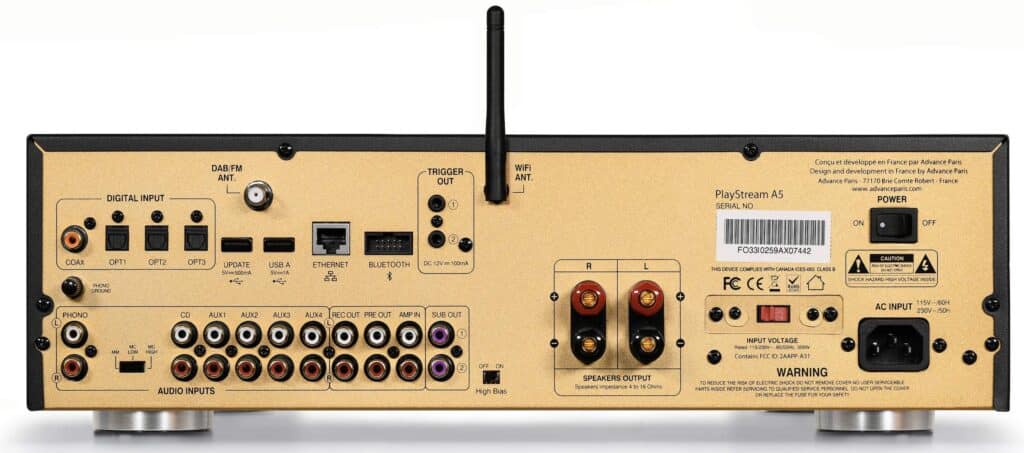
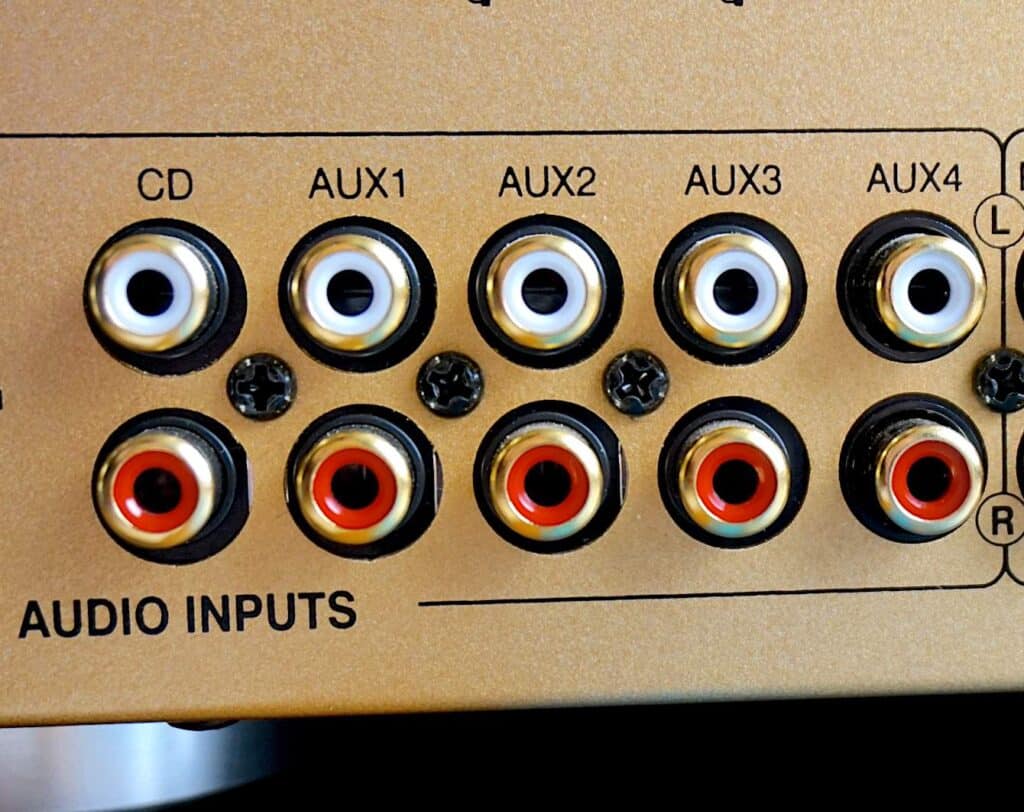
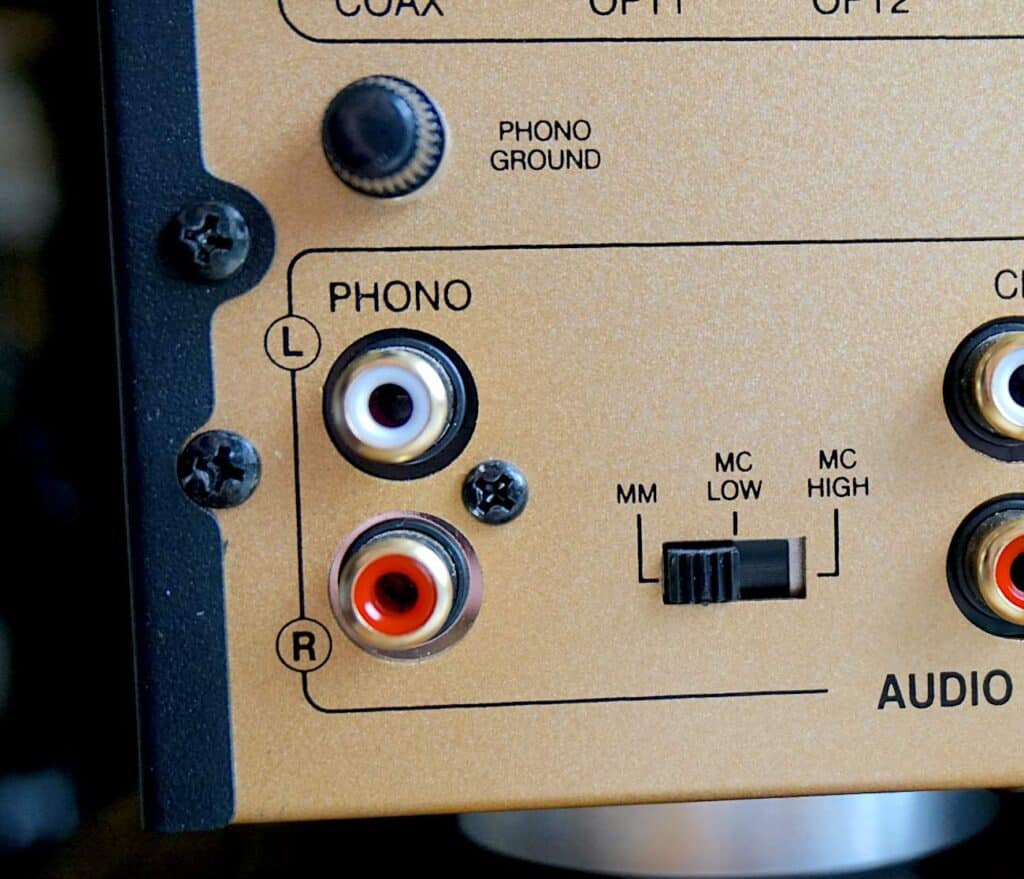
There’s plenty of sockets on the rear of the A5 including Ethernet, single-ended RCAs, support sockets for a cassette deck, subwoofer and more, a phono amplifier that handles both moving magnet and moving coil cartridges and plenty of digital options. Power is supplied via an IEC socket and triggered via a rocker power switch.
VINTAGE VU
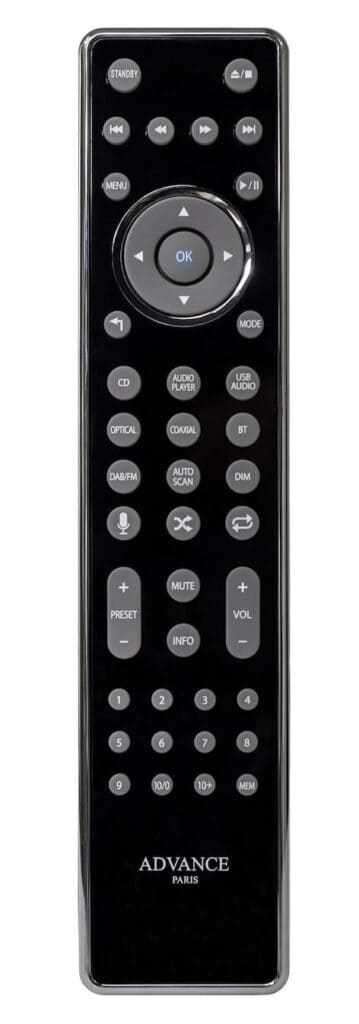
The front offers a pair of rather nice VU meters, a volume/multifunction combo rotary knob, small output window in the centre which looks a little odd, sitting between those VU meters – the new and vintage snuggled together – a touch screen interface (I much prefer a mechanical interface so I used the included remote control most of the time which was fine), built-in headphone amplifier with both 3.5mm a 6.35mm sockets and a power push button.
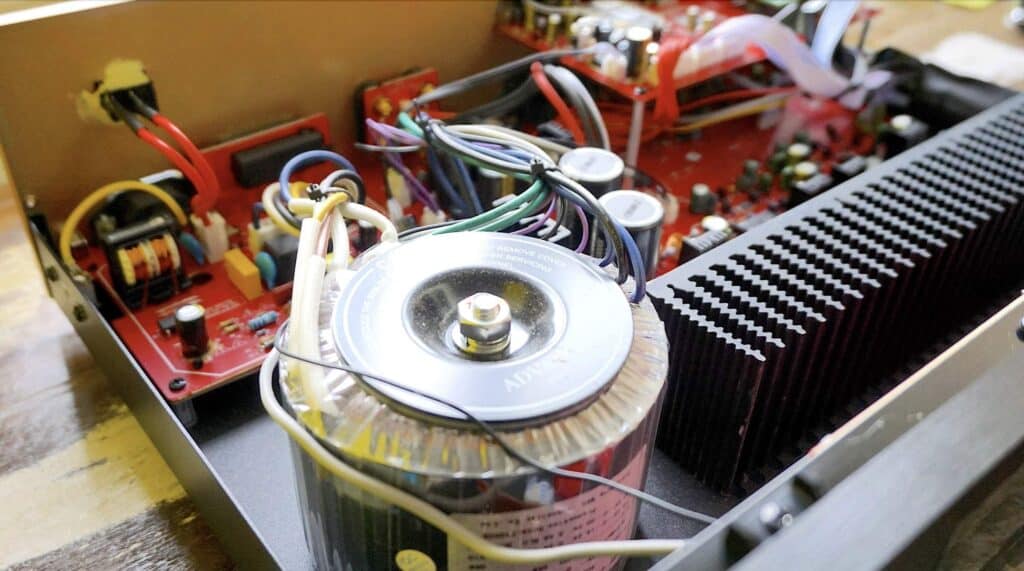
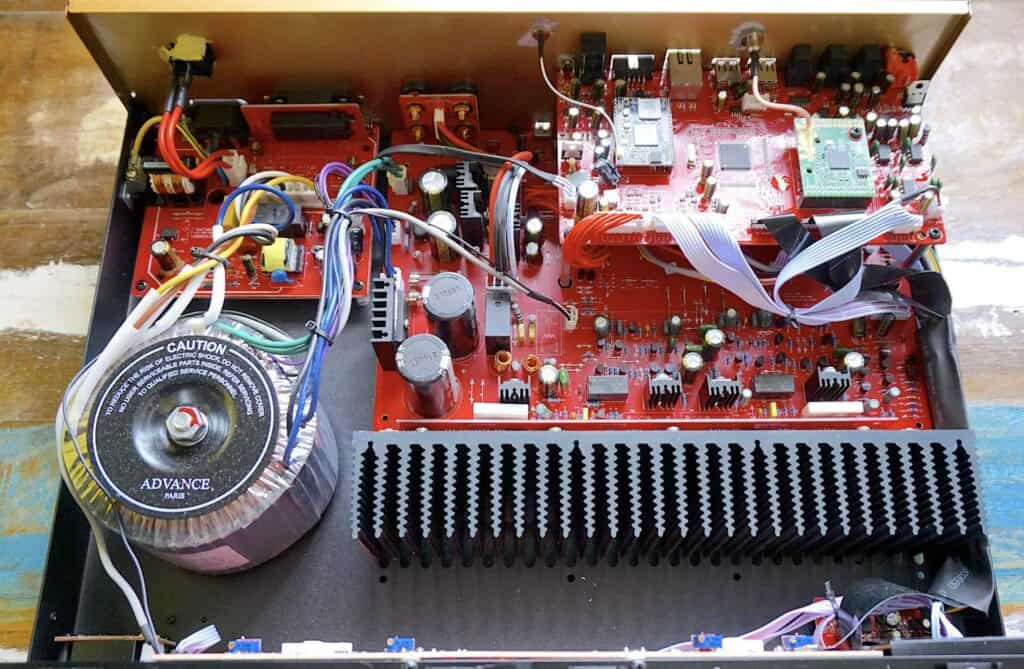
This Class AB 80W into 8 Ohm amplifier also includes DAB and FM radio support, including a bootlace aerial in the box and there is a High Bias switch on the rear. Enable that switch and the first few Watts of power as offered in Class A mode. A note on this feature: in use, make sure the amplifier has plenty of ventilation around it because the A5 runs hot under Class A.
That’s the tech, how does it sound?
SOUND QUALITY
To begin? I wanted to ignore the fripperies and nail the unit’s basic function as an amplifier. The heart of the product and why you should buy this box or not.
I drafted in my Audiolab 6000CDT transport and Benchmark DAC, a pair of Chord speaker cables and my Quad 57s and a copy of Joan Osborne’s LP, Relish, from 1995.
An LP I didn’t appreciate very much at all back then but certainly do now, on the once mighty Polygram record label, and I played the track St. Teresa containing electric and bass guitar, mandolin, drums, organ and synths.
HIGH BIAS
Before we get into the reference meat, a word on that High Bias option.
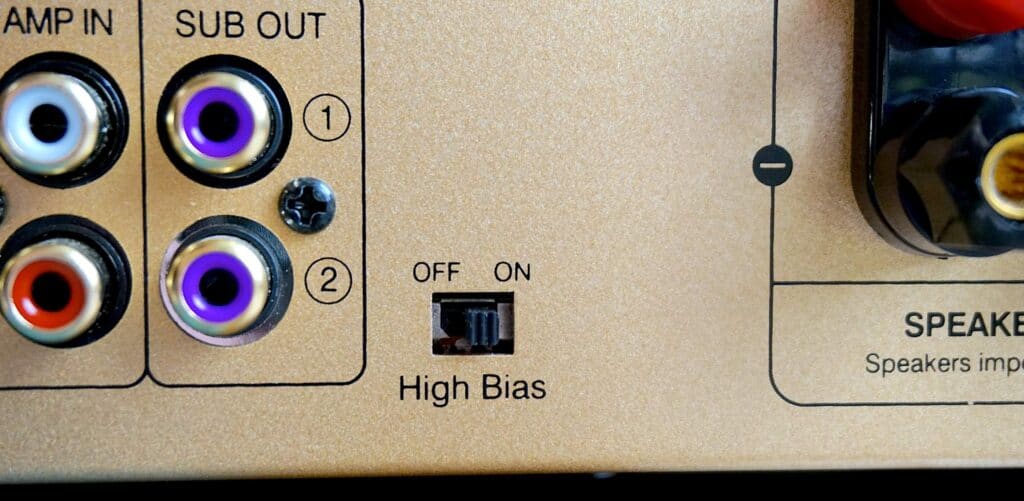
Turning this on, I don’t blame you if you hear no differences but, over a short time of A-B testing, I did hear a cleaning up of the upper mids, an increase of clarity and a layered separation of the soundstage in the vertical direction. So I left the High Bias option on for the rest of the review.
vs X-i75
After that? The first, obvious reference comparison was a brother from the same mother and Advanced Paris’ own X-i75 integrated amplifier, the name of which always makes me think of a new advanced experimental aircraft from an episode of Thunderbirds.
During play, you can hear where the money has been spent. As much as I love the X-i75 and, if you read my review you will understand that I do, the A5 sits a few rungs up the sonic ladder in terms of midrange insight. The X-i75 sounds a little pinched in midrange terms in comparison to the A5 while bass performance on the X-i75 sounds almost too fast and eager to move forwards while the A5 dwells on the weight of the lower frequencies, providing more information in the meantime. Generally, there is much more information on offer from the A5, more nuance and subtlety too.
vs 6000A
What about a classic then? The Audiolab 6000A. Is it worth spending more on the A5? Is it even worth considering an upgrade for those who already have an 6000A? It is if you’re after a wealth of extra features sure but I would also say yes in sonic terms. Brilliant for the price the 6000A certainly is but the A5 reveals new levels of upper midrange clarity, extending the reach of that frequency further and higher in detail terms while providing better focus in the bass.
vs SA40
How about another top performer? The IOTAVX SA40, a lower cost amplifier (well by a bit) that I only recently reviewed? Again, as excellent as the SA40 is for the price – and it is wonderful for a sub £1k amplifier and as much as I love the emotional insight in midrange terms from the SA40, the A5 is slightly richer in terms of detail, treble reaches further and bass from the A5 is rather more naturalistic when compared to the SA40.
Next? Let’s look at a few additional A5 features.
HEADPHONE AMP
First up, the built-in headphone amplifier. I plugged in my trusty Sennheiser HD650s and played the same CD to see if there were any significant tonal differences between the main amp and the head amp and no, despite the natural closed in feeling from the headphones themselves, I was very pleased with the tonal similarities between the two. No nasty sonic shocks but plenty of lively, dynamic play from the headphone source.
PHONO AMPLIFIER
I then plugged in my Audio-Technica LP5x turntable into the phono socket’s on the rear and used a Pro-Ject phono cable to connect the two while playing Joanie Sommers 1962 LP original pressing of For Those Who Think Young via Warner Bros.
One of the elements I looked for here was the Sommers vocal, especially during crescendos. She could produce a nasal quality when she belted a song, squeezing her delivery and adding sharp edges to it.
I was happy to hear that the built-in phono amplifier coped pretty well with that potential issue, the A5 applied lots of discipline to the vocal while offering an open soundstage that allowed plenty of midrange and treble detail to roam while bass played its part in the overall neutral presentation. Sure, I prefer an external phono amp but this internal model is pretty good.
WIFI
Finally, one of the most important features, at least for this model, is Wi-Fi. I hooked my Twonky server to the A5 and pushed though some Nick Drake and Tom Waits. The A5 will create it’s own network that you will need to join to play your music and then band, track and timing information will be displayed on the A5’s display window.
I liked the A5’s output. When compared to the basic output from traditional sources, frequency discipline wasn’t the best while I could hear some high-frequency noise. Also Wi-Fi didn’t have the same level of neutrality or finesse as the main amplifier. Saying that, Wi-Fi was full of energy, emotion and pizazz. Music via Wi-Fi provided big bass vibes, accentuated detail and information pushed right up to the edge of your nose. A fun party in a box, in other words.
CONCLUSION
The Advanced Paris Playstream A5 is quite the package and no mistake. Packed with features and facilities and sockets and a fetching retro aesthetic, I found the A5 easy to use and easy on the eye. It’s slightly quirky in design terms which will appeal to many but it’s also big and bold in a retro 70s manner while also glowing at you in a blue lagoon kinda way. More than any of that though, it sounds terrific and will serve as a suitable upgrade for those of you running a sub-£1k amplifier, a bulging wallet and an itchy trigger finger.
ADVANCE PARIS PLAYSTREAM A5 STREAMING AMPLIFIER
Price: £1,400
Website: Advance Paris Uk Retailer List: https://www.decentaudio.co.uk/advance-paris: Outside Of The UK: https://www.advanceparis.com/en/revendeurs/
GOOD: retro looks, VU meters, overall sound quality, feature packed
BAD: nothing
RATING: 8

[Don’t forget to check out my Patreon Page at www.patreon.com/audiophileman, for exclusive postings, giveaways and more!]
REFERENCE
See above but also…
Pro-Ject EVO Turntable
Tellurium Q cabling
Blue Horizon Professional Rack System
Harmonic Resolution Systems Noise Reduction Components
Air Audio AC-2K Balanced Transformer
All vinyl cleaned via Degritter Mk.II
Chord Powerhaus M6 power block